
 ONYINYECHI NWAIGBA
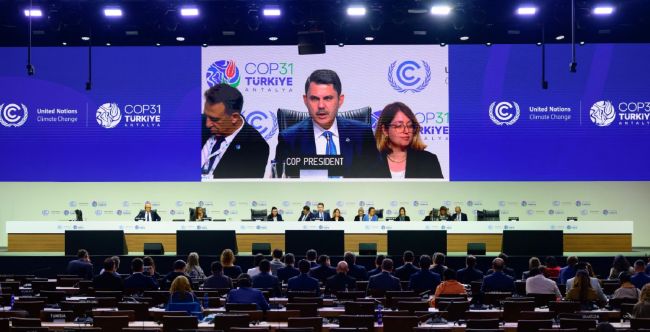
The failure of countries to agree on a major political outcome at the UN climate summit in Türkiye has exposed deep divisions over fossil fuels and climate finance. For African countries already facing rising climate risks, the setback raises urgent questions about who will fund adaptation, protect vulnerable communities and deliver on years of climate promises.
For communities dealing with devastating floods, prolonged droughts, extreme heat and declining agricultural productivity, climate change is not an argument taking place in an international conference hall. It is a daily reality affecting food supplies, household incomes, public infrastructure and livelihoods.
Yet, at the international level, reaching agreement on how to respond to the crisis remains difficult.
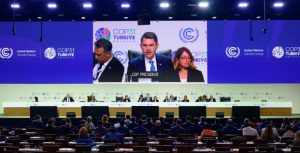
That challenge was on full display at the 31st United Nations Climate Change Conference, COP31, in Antalya, Türkiye, where negotiations ended on November 22, 2026, without agreement on the main overarching political text.
The summit, which brought together governments and climate stakeholders from around the world, continued more than two days beyond its scheduled closing date. The extended negotiations became the longest UN climate conference on record, but countries remained divided over the language that should guide future climate action.
At the centre of the disagreement were two issues with enormous consequences for the future of the planet: the transition away from fossil fuels and the financing required to help vulnerable countries respond to climate change.
The European Union and several other countries rejected the proposed final text because it did not explicitly mention fossil fuels. Developing countries also raised concerns that the proposed commitments on climate adaptation finance lacked sufficient clarity.
The failure to agree on the main political declaration does not erase previous climate agreements or mean that every COP31 negotiation failed. Some separate decisions and initiatives moved forward. However, the absence of consensus on the overarching text represents a significant setback for international climate diplomacy.
For Africa, the implications go beyond another disappointing international meeting. They touch on the continent’s ability to protect communities, strengthen food systems, finance infrastructure and pursue a fair transition to cleaner energy.
The Disagreement That Brought COP31 to a Standstill
One of the biggest disagreements at COP31 concerned whether countries should explicitly commit to transitioning away from fossil fuels such as coal, oil and gas.
These energy sources remain major drivers of global greenhouse gas emissions. At previous climate conferences, countries had already acknowledged the need to move away from fossil fuels, including through commitments made at COP28 in Dubai.
However, the proposed COP31 political text did not include an explicit reference to transitioning away from them.
The omission triggered strong objections from the European Union, the United Kingdom, Panama, several small island nations and other countries concerned about the consequences of continued fossil fuel dependence.
More than 130 countries had reportedly called for the final agreement to include language on transitioning away from fossil fuels. However, resistance from oil-producing countries contributed to the disagreement.
Reuters reported that Saudi Arabia played a significant role in opposing language that explicitly mentioned fossil fuels. The Turkish COP presidency, however, maintained that no country or group received preferential treatment during the negotiations.
The disagreement also extended to carbon capture and storage technologies.
Supporters argued that these technologies could help remove or capture carbon emissions. Critics questioned whether giving them greater prominence could allow countries to continue producing fossil fuels without making sufficiently deep emissions reductions.
The second major disagreement concerned climate finance.
Developing countries wanted clearer and more substantial financial commitments to help them adapt to climate impacts. The proposed text included an ambition to triple adaptation finance, but did not establish a clear baseline for measuring the increase.
Without clarity on how much funding would be provided, where it would come from and how vulnerable countries would access it, many developing nations considered the proposal insufficient.
Ultimately, the countries could not reach the consensus required to adopt the main political declaration.
Why Africa Has So Much at Stake
Africa’s climate vulnerability makes the outcome particularly significant.
The continent contributes a relatively small share of global greenhouse gas emissions but faces considerable exposure to climate-related hazards. Rising temperatures, unpredictable rainfall, droughts, floods and extreme weather events threaten agriculture, water resources, public health, infrastructure and economic stability.
The World Meteorological Organization has previously highlighted how climate-related hazards disproportionately affect African communities and economies. Its reporting has linked these risks to food insecurity, displacement, economic losses and pressure on already vulnerable communities.
More recent research reinforces the scale of the challenge.
A September 2026 report by the Organisation for Economic Co-operation and Development, the Global Green Growth Institute and the World Bank found that Africa contributes approximately four per cent of global energy-related greenhouse gas emissions while remaining highly vulnerable to climate risks.
This creates an important imbalance: countries with limited resources and relatively low historical contributions to global emissions are being asked to manage increasingly expensive climate consequences.
For farmers, this can mean losing crops to prolonged dry periods or unexpected flooding. For fishing communities, changing environmental conditions can threaten livelihoods. For urban residents, intense rainfall can expose weaknesses in drainage systems, housing and transport infrastructure.
Climate change also places additional pressure on governments that must balance emergency response, infrastructure development, healthcare, education and other public spending priorities.
The consequences are not limited to environmental damage. They affect employment, household income, food prices, business continuity and the ability of communities to recover after disasters.
The Climate Finance Gap Remains a Major Problem
For African countries, climate finance is not simply about receiving international support. It is about having the resources to prepare for climate risks before they become humanitarian and economic emergencies.
Building flood-resistant infrastructure, improving irrigation systems, developing early-warning services, restoring degraded land and strengthening climate-resilient agriculture all require substantial investment.
Yet, access to the necessary financing remains a major challenge.
At COP31, the United Nations Economic Commission for Africa highlighted that the continent received approximately $52 billion annually in climate finance in 2022, against estimated needs of about $190 billion per year.
That means Africa was receiving only a fraction of the resources required to meet its climate priorities.
The problem is not only the amount of funding available. The terms under which it is provided also matter.
A significant portion of climate finance reaches developing countries as loans. For African governments already managing debt obligations and competing development needs, additional borrowing can create further financial pressure.
This raises an important question about climate justice: should countries already facing the consequences of a crisis they contributed relatively little to be expected to finance much of their response through additional debt?
The United Nations Environment Programme’s 2026 Adaptation Gap Report provides further context. It estimates that developing countries will need approximately $305 billion annually by 2035 for climate adaptation, while international public adaptation finance flows remain far below that level.
The report also warns that even achieving the ambition to triple adaptation finance would cover only a portion of the estimated requirement.
The disagreement at COP31 therefore matters because climate finance commitments must move beyond broad political language. Vulnerable countries need predictable funding, accessible financing arrangements and support that does not worsen their debt burdens.
What Does This Mean for Nigeria?
Nigeria has significant climate-related vulnerabilities across different parts of the country.
In the North, prolonged dry conditions and changing rainfall patterns can affect agricultural productivity, water availability and pastoral livelihoods.
In the Middle Belt and other agricultural regions, flooding and unpredictable rainfall can damage farmland, disrupt transportation and threaten food production.
Coastal communities face additional pressures from erosion, flooding and rising sea levels, while urban centres must contend with drainage problems, heat and infrastructure that may not be designed for increasingly severe weather conditions.
These risks have economic consequences.
When flooding destroys farms, the impact extends beyond individual farmers. It can affect food supply chains, market prices, transportation businesses, food processors and households.
When communities lose homes and businesses, recovery requires more than emergency relief. It requires investment in resilient infrastructure, livelihood restoration, reliable early-warning systems and long-term planning.
Nigeria’s energy transition also presents a difficult balancing act.
The country must expand reliable electricity access, support industrial development and reduce emissions while ensuring that energy remains affordable and accessible.
This requires investment in renewable energy, modern electricity infrastructure, energy efficiency, storage technologies and cleaner industrial processes.
However, these changes cannot happen at the necessary scale without financing, effective policies, technical capacity and a clear transition plan.
For Nigeria, the outcome of COP31 should therefore reinforce the importance of strengthening domestic climate action while continuing to advocate for fairer international climate finance.
The country cannot afford to make its climate response entirely dependent on the outcome of annual negotiations.
The Responsibility of Businesses Cannot Be Put on Hold
Although governments play a central role in international climate negotiations, businesses also have significant responsibilities.
Companies across agriculture, manufacturing, energy, construction, transportation and finance contribute to economic activity, but their operations can also increase environmental pressures and expose communities to climate risks.
A manufacturing company that depends heavily on diesel generators, for example, must consider the environmental and financial implications of its energy consumption.
An agricultural business must assess how changing rainfall patterns, water shortages and extreme weather could affect production and supply chains.
Construction companies must consider flood risks, drainage, building materials and the long-term resilience of infrastructure.
Financial institutions also have a role in directing investment towards climate-resilient businesses and projects rather than financing activities without adequately assessing their environmental and social risks.
These responsibilities should not be treated as optional commitments that depend on whether governments reach a new international agreement.
Businesses can make progress through emissions measurement, energy efficiency, renewable energy adoption, responsible resource management, climate-risk assessments and investment in resilient supply chains.
They must also be transparent about their environmental performance. Sustainability claims should be supported by credible data, measurable targets and evidence of progress.
For companies operating in vulnerable communities, climate responsibility should extend beyond their immediate operations to include how their activities affect local livelihoods, natural resources and community resilience.
The collapse of the COP31 political agreement does not remove these responsibilities.
Africa Must Move from Climate Promises to Practical Action
While the outcome of COP31 is disappointing, it should not become an excuse for African governments to delay domestic climate action.
International climate finance remains important, but countries also need stronger institutions, credible climate policies and projects capable of attracting and managing investment.
African governments must improve climate data collection, strengthen disaster preparedness, invest in resilient infrastructure and integrate climate considerations into economic planning.
They must also ensure that climate funding, whether domestic or international, reaches the communities and sectors that need it most.
For Nigeria, this means treating climate resilience as an economic development priority rather than a separate environmental concern.
Agricultural investment should consider changing weather conditions. Urban planning should account for flood risks. Infrastructure projects should be designed to withstand climate-related pressures. Energy policies should balance affordability, access, industrial growth and environmental sustainability.
The private sector must be part of this process, while civil society organisations and local communities should have meaningful opportunities to participate in decisions that affect their livelihoods.
African countries also need a stronger collective voice in international negotiations. Shared positions on climate finance, adaptation, technology transfer and a just energy transition can strengthen the continent’s ability to advocate for its priorities.
The World Cannot Afford to Keep Delaying Climate Action
COP31 has exposed how difficult it remains for countries to agree on the direction and financing of global climate action.
The disagreement over fossil fuels reflects competing economic interests and different ideas about how quickly the world should change its energy systems. The disagreement over climate finance reveals another persistent challenge: countries facing the greatest climate risks still struggle to secure the resources needed to respond.
But climate impacts do not wait for diplomatic consensus.
Farmers still need reliable rainfall and resilient agricultural systems. Coastal communities still need protection. Cities still need infrastructure that can withstand extreme weather. Businesses still need to prepare for disruptions, and households still need protection from the economic consequences of climate-related disasters.
The failure to adopt COP31’s main political declaration should therefore be treated as a warning, not an excuse for inaction.
For Africa, the priority must be to turn climate commitments into investments, stronger institutions and measurable improvements in people’s lives.
For businesses, it is a reminder that sustainability cannot depend entirely on government promises or international agreements.
And for global leaders, it is evidence that the cost of failing to agree on meaningful climate action will ultimately be borne by communities, economies and future generations.
The world may have left Antalya without a common political declaration, but the climate crisis has not paused. Neither should the work of addressing it.
[give_form id="20698"]