ROSEMARY IMOBHIO
The Pee-to-Power project is already a novelty as it turns waste into electricity. However, the fact that the project can use biodigester technology to convert urine and faecal waste in Lagos into biogas and organic fertiliser is timely.
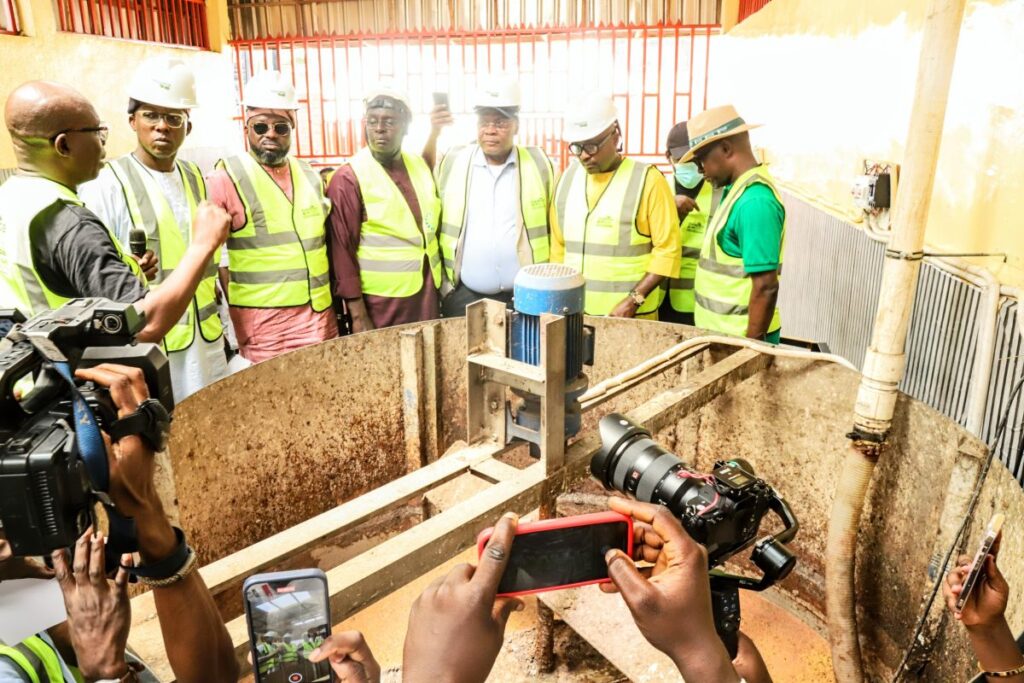
Fellows from the Lateef Jakande Leadership Academy (LJLA) recently unveiled the WEEPOO Pee-to-Power Project in Lagos. This arrives at a moment when Nigeria is struggling to meet its sanitation, climate and circular economy targets. For sustainability professionals, the launch is not just a curiosity. It is a signal that one of Africa’s most overlooked development problems, human waste management, is finally attracting real innovation.
What the WEEPOO Pee-to-Power Project Actually Does
Stripped of jargon, the project works simply. Toilets feed human waste into a sealed biodigester tank. Inside that tank, anaerobic bacteria break the waste down without oxygen, much like a stomach digesting food. As the bacteria work, they release methane-rich biogas. That gas can power cooking stoves, streetlights or small generators. Meanwhile, what remains after digestion is a nutrient-dense slurry known as digestate. Once dried, this digestate becomes organic fertiliser for farms and gardens.
This process closely mirrors what Lagos State recently did at its Ikosi Fruit Market biodigester plant. That facility, converts organic market waste into cooking gas, electricity and biofertiliser. WEEPOO essentially applies the same science to a different feedstock. Human excreta is that feedstock, and Lagos produces it in far greater volume than market waste ever could.
Nigeria’s Sanitation Crisis Is Bigger Than Most Realise
To appreciate why this matters, consider Nigeria’s sanitation numbers. According to the 2021 WASH National Outcome Routine Mapping (WASHNORM) survey, roughly 48 million Nigerians still practise open defecation (1). Nearly a quarter of the population also lacks access to any proper sanitation facility.
Consequently, Nigeria has long ranked among the countries with the highest open defecation burden globally. The federal government’s 2018 “Clean Nigeria: Use the Toilet” campaign set a target of ending open defecation by 2025. Progress, however, has been slow, partly because the country builds only a fraction of the toilets it needs annually.
Meanwhile, the economic toll is staggering. WASH specialists estimate that poor sanitation costs Nigeria over a trillion naira every year. That figure covers healthcare spending, lost productivity and preventable deaths.
Diarrhoeal disease alone sickens millions of Nigerian children annually, largely because untreated waste contaminates water sources, farmland and food. In this light, WEEPOO is not simply an energy experiment. It is a direct response to a public health emergency that Nigeria has struggled to solve for over a decade.
The Climate Connection Nobody Talks About
Poor sanitation is also a climate problem, though it rarely gets framed that way. When human waste decomposes untreated in pit latrines or open drains, it releases methane. Methane is a greenhouse gas many times more potent than carbon dioxide in the short term.
Consequently, uncontrolled waste decomposition across Lagos quietly feeds the same emissions that corporate ESG reports claim to fight. Biodigester projects like WEEPOO capture that methane before it escapes. They then redirect it into productive use instead.
In other words, this technology tackles public health, water contamination and climate mitigation all at once. That combination is rare in sustainability work.
Turning Waste Into Wealth: The Circular Economy Angle
The circular economy conversation often centres on plastic recycling or fashion resale. Yet sanitation offers one of its purest applications.
Rather than treating human waste as a liability to flush away, biodigester technology reframes it as a resource stream. That stream produces two marketable outputs: energy and fertiliser. For farmers, digestate offers a cheaper alternative to imported chemical fertiliser, which has grown expensive amid currency pressures. For households, biogas offers a cleaner alternative to firewood or charcoal.
This, in turn, reduces both deforestation and indoor air pollution. Therefore, every biodigester installed does triple duty. It treats waste safely, generates renewable energy and produces farm inputs, all from a resource Lagos already has in abundance.
Why Sanitation Deserves a Seat at the ESG Table
Corporate ESG strategies in Nigeria tend to gravitate toward education, healthcare outreach or tree planting. These initiatives photograph well and generate quick goodwill.
Sanitation, by contrast, rarely receives similar attention. Yet it sits squarely within the “S” of ESG, touching water security, gender equity and community health. Women and girls, for instance, bear a disproportionate burden of poor sanitation. They often walk long distances or wait until dark to relieve themselves safely.
Given this reality, sustainability leaders who want to move beyond symbolic CSR should treat sanitation infrastructure as core to their social investment, not peripheral to it.
Lessons From Elsewhere in Africa
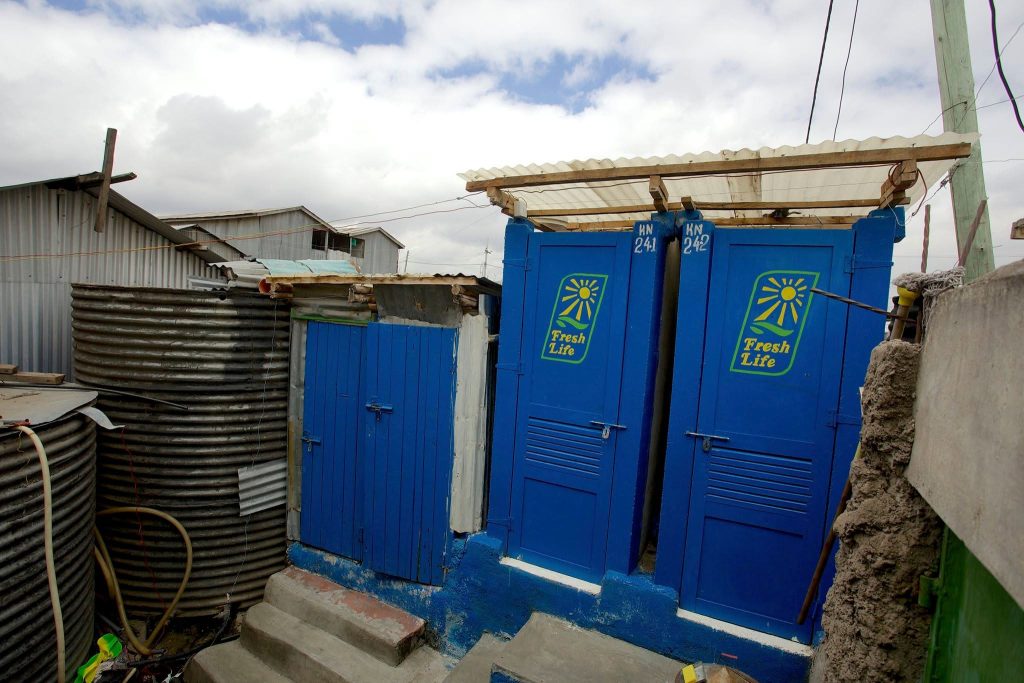
Nigeria is not alone in exploring this space. Kenya’s Sanergy, through its Fresh Life toilets, has spent over a decade converting urban faecal sludge into organic fertiliser and insect-based animal feed. The venture now serves well over 100,000 residents daily across Nairobi’s informal settlements.
Ghana’s Clean Team and similar container-based sanitation ventures follow comparable models elsewhere on the continent. These examples show that waste-to-value sanitation can scale commercially, not just survive as a donor-funded pilot. Nigerian companies and investors could learn from how these ventures built franchise networks, trained local waste collectors and created dignified jobs around a once-undignified sector.
Partnerships, Innovation and Behaviour Change
None of this works without collaboration. Government agencies provide land, policy support and regulatory clearance. Meanwhile, private technology providers bring the engineering expertise. Community leaders, in turn, drive the behavioural shift needed to get residents using new facilities correctly.
Corporate Nigeria can plug into this ecosystem in several ways. Companies can make direct CSR investments in biodigester infrastructure. They can also form impact partnerships with sanitation startups or run employee volunteering programmes around hygiene education. Beyond funding, firms can lend technical staff, logistics support or communications expertise. Public trust in new sanitation technology, after all, often depends on how well it gets explained to the people expected to use it daily.
Aligning With Nigeria’s Global Commitments
Projects like WEEPOO map neatly onto several Sustainable Development Goals:
- SDG 3, good health, benefits from reduced disease transmission.
- SDG 6, clean water and sanitation, addresses the core infrastructure gap directly.
- SDG 7, affordable and clean energy, gains from biogas generation.
- While SDG 11, sustainable cities, benefits from better urban waste management.
- Responsible consumption and production, or SDG 12, is served through the circular reuse of waste.
- Reduced methane emissions, meanwhile, support SDG 13 on climate action.
Few single interventions touch this many goals at once. That breadth is precisely why sanitation deserves more strategic attention from Nigeria’s development and corporate sectors alike.
A Small Project With Larger Implications
The WEEPOO Pee-to-Power Project will not solve Nigeria’s sanitation crisis on its own. Its current scale also remains modest compared with the size of the problem. Still, it demonstrates something important. Young Nigerian leaders are willing to tackle unglamorous problems with practical, science-based solutions.
Lagos State, corporate partners and civil society can build on this momentum, rather than letting it fade after the launch photos are taken. Projects like WEEPOO could help reshape how Nigeria thinks about waste, energy and dignity. That shift is already underway, one biodigester at a time.
References
- Federal Ministry of Water Resources (FMWR), Government of Nigeria, National Bureau of Statistics (NBS) and UNICEF (2022). Water, Sanitation and Hygiene: National Outcome Routine Mapping (WASHNORM) 2021: A Report of Findings. FCT Abuja. Nigeria