EU–Egypt Energy Partnership Signals New Momentum for Africa’s Clean Energy Transition
 ONYINYECHI NWAIGBA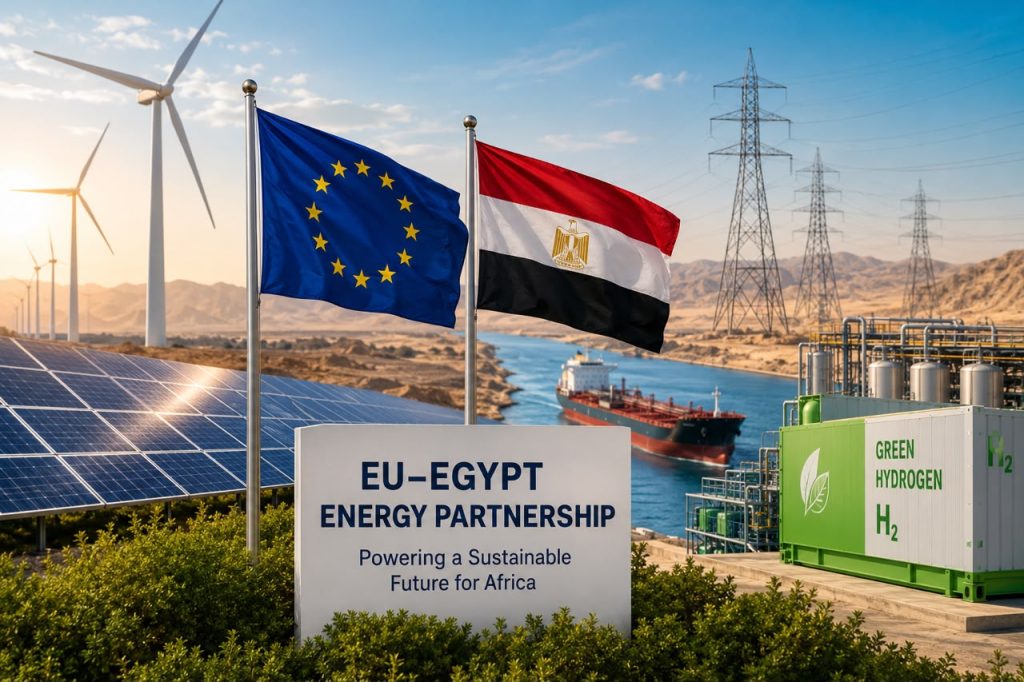
As countries around the world accelerate efforts to reduce carbon emissions and strengthen energy security, international partnerships are becoming increasingly important in driving the clean energy transition. One of the latest examples is the growing collaboration between the European Union (EU) and Egypt, which has entered a new phase through initiatives designed to support sustainable energy development, renewable power expansion and infrastructure modernisation.
The renewed cooperation reflects a broader commitment to tackling climate change while promoting economic growth, energy resilience and sustainable development. For Egypt, the partnership represents another step towards becoming a regional clean energy hub. For the European Union, it reinforces efforts to support neighbouring countries in achieving shared climate and energy goals.
Beyond financing and technical cooperation, the initiatives underscore the growing recognition that achieving global climate targets will require stronger cross-border collaboration, increased investment in green infrastructure and policies that encourage long-term sustainability.
Strengthening Egypt’s Renewable Energy Ambitions
Over the past decade, Egypt has steadily increased investments in renewable energy as part of its national development agenda. The country has expanded its solar and wind generation capacity while seeking to reduce dependence on fossil fuels and diversify its energy mix.
Egypt’s geographical location provides significant advantages for renewable energy development. Vast desert landscapes receive abundant sunlight throughout the year, while coastal regions benefit from favourable wind conditions. These natural resources have positioned the country as one of Africa’s most promising destinations for renewable energy investment.
The government has also introduced reforms aimed at attracting private-sector participation in clean energy projects, encouraging both domestic and international investors to contribute to the country’s energy transition.
Recent cooperation with European partners further strengthens these ambitions by supporting projects that improve electricity infrastructure, encourage renewable energy integration and enhance the efficiency of the national power system.
Why Modern Electricity Grids Matter
Renewable energy development extends beyond building solar farms or wind parks. One of the greatest challenges facing many developing economies is ensuring that electricity networks are capable of transporting clean energy from production sites to homes, industries and businesses.
Without modern transmission infrastructure, renewable energy projects may struggle to deliver electricity efficiently, resulting in energy losses, congestion and reduced reliability.
Grid modernisation therefore plays a critical role in any successful energy transition. Smarter and more resilient electricity systems can accommodate larger volumes of renewable energy, improve supply reliability and reduce operational costs over time.
For Egypt, strengthening electricity infrastructure is expected to support future renewable energy projects while improving energy security for a growing population and expanding economy.
Climate Finance Continues to Shape Africa’s Energy Future
The latest cooperation also highlights the growing importance of climate finance in supporting sustainable development across Africa.
Many African countries possess enormous renewable energy potential but continue to face financing challenges that limit project implementation. Large-scale investments are often needed to develop power infrastructure, improve transmission networks and deploy modern technologies.
International climate finance helps bridge this gap by providing funding, technical expertise and policy support that make ambitious clean energy projects more achievable.
See: REA Launches New $188m Green Facility to Boost Clean Energy.
Global financial institutions, development banks and international partners have increasingly prioritised investments that contribute to emissions reduction, climate resilience and sustainable economic growth.
These investments not only support environmental objectives but also create jobs, stimulate innovation and improve access to reliable electricity.
Green Hydrogen Opens New Opportunities
One area receiving growing international attention is green hydrogen.
Produced using renewable electricity, green hydrogen is widely regarded as one of the technologies capable of helping industries reduce emissions, particularly in sectors that are difficult to decarbonise, such as heavy manufacturing, shipping and aviation.
Egypt has emerged as one of Africa’s leading candidates for green hydrogen production due to its renewable energy resources, strategic location and access to international shipping routes through the Suez Canal.
International partnerships are expected to accelerate investment in this sector by supporting infrastructure development, technology transfer and market creation.
If successfully developed, green hydrogen could create new export opportunities while strengthening Egypt’s position in the global clean energy economy.
Economic Benefits Beyond Environmental Goals
The transition towards sustainable energy is often viewed primarily through an environmental lens, but its economic implications are equally significant.
Renewable energy projects generate employment across construction, engineering, manufacturing, operations and maintenance. They also encourage local supply chains, stimulate technological innovation and improve investor confidence.
Reliable electricity is essential for industrial productivity, digital transformation and business growth. By strengthening energy infrastructure, countries can improve competitiveness while reducing the economic risks associated with energy shortages or volatile fossil fuel prices.
For households, improved electricity systems can enhance quality of life through more reliable power supply, supporting education, healthcare and digital inclusion.
The broader economic impact therefore extends well beyond emissions reduction, contributing to inclusive and sustainable development.
Africa’s Energy Transition Is Gathering Pace
Across the continent, governments are increasingly recognising renewable energy as both an environmental necessity and an economic opportunity.
Countries including Morocco, South Africa, Kenya and Egypt have launched ambitious renewable energy programmes aimed at expanding clean electricity generation and attracting international investment.
At the same time, African governments continue to explore opportunities in solar energy, wind power, battery storage and green hydrogen as part of broader strategies to strengthen energy security.
International partnerships have become central to these efforts, providing access to finance, technology and expertise that may otherwise be difficult to obtain.
The renewed cooperation between the European Union and Egypt illustrates how collaborative approaches can accelerate progress while supporting broader regional sustainability goals.
Challenges Remain
Despite encouraging progress, significant challenges remain.
Large-scale renewable energy expansion requires continued investment, supportive policies and efficient regulatory systems. Electricity grids must keep pace with growing renewable generation, while workforce development is needed to provide the technical skills required by emerging green industries.
Climate change itself also presents risks, with rising temperatures, water scarcity and extreme weather events placing additional pressure on infrastructure and energy systems.
Long-term success will depend on sustained political commitment, transparent governance and continued collaboration between governments, development partners, financial institutions and the private sector.
Balancing energy security, affordability and sustainability will remain a complex task for many countries undergoing the energy transition.
A Model for Regional Cooperation
The evolving partnership between the European Union and Egypt demonstrates how international cooperation can support both climate objectives and economic development.
Rather than viewing sustainability solely as an environmental responsibility, the initiatives recognise that clean energy investment can strengthen economies, create employment opportunities and improve long-term resilience.
For Africa, where millions still lack reliable access to electricity, investments in renewable energy and modern infrastructure offer an opportunity to pursue development pathways that are both inclusive and environmentally responsible.
As global demand for clean energy continues to grow, partnerships that combine finance, technology and policy support are likely to play an increasingly important role in shaping the continent’s future.
The latest collaboration between Egypt and the European Union is therefore more than a bilateral energy initiative. It reflects a broader shift towards integrated solutions that connect climate action, sustainable finance and economic transformation. If successfully implemented, the partnership could provide valuable lessons for other African countries seeking to expand renewable energy, modernise infrastructure and build more resilient, low-carbon economies.
[give_form id="20698"]