csrreporters
The world’s energy order is shifting faster than most boardrooms care to admit. France’s landmark fossil fuel roadmap is not just a European policy document. It is a mirror held up to every oil-dependent economy, and Nigeria should look closely.
A Roadmap That Changes the Rules
On 28 April 2026, France announced a national roadmap with explicit end-of-consumption targets for coal by 2030, oil by 2045, and fossil gas by 2050. This is not a vague aspiration tucked into a climate summit communique. It is a structured, sector-by-sector plan with investment timelines, regulatory triggers, and defined milestones.
Furthermore, it was presented at the first international conference dedicated entirely to transitioning away from fossil fuels, held in Santa Marta, Colombia, in the wake of COP30.
Although the roadmap does not introduce new climate commitments, it brings together existing policies and targets to form a single, comprehensive strategy with clear timelines. In practical terms, therefore, this means that businesses operating in or trading with France now have a predictable regulatory horizon.
Investors know what to fund. Insurers know what to price. And regulators know what to enforce. The signal to the global business community is unmistakable: fossil fuel assets are becoming stranded assets, and the transition is no longer optional.
For the CSR and ESG community, this matters enormously. Environmental, social, and governance frameworks have long called on companies to align their operations with credible decarbonisation pathways. France’s roadmap provides exactly that kind of pathway for a major economy. As a result, it raises the bar for what counts as genuine ESG commitment versus mere disclosure exercise.
What France Is Actually Doing
The scale of France’s sectoral ambition deserves attention.
France is focusing on electrification in transport, seeking to ensure that two out of three new cars sold by 2030 are electric. The government also intends to expand charging infrastructure and promote the use of electric buses and heavy-duty vehicles.
In the buildings sector, the changes are equally decisive. Gas boilers will be banned in new buildings by the end of the year. To aid that, the country wants to install one million heat pumps each year by 2030.
Beyond that, France’s electricity sector already relies relatively little on fossil fuels. This is largely thanks to its extensive use of nuclear energy, which provides around two-thirds of its electricity. Consequently, the country is building on a strong clean energy base rather than starting from scratch.
Critically, the roadmap also signals France’s intention to support the global energy transition. This includes commitments to finance decarbonization efforts in other countries and phase out fossil fuel production, as well as consumption. Meaning France is not simply decarbonising its own backyard. It is actively reshaping the terms of international investment and development finance. For developing economies, therefore, this creates both a warning and an opportunity.
Nigeria’s Uncomfortable Position
Nigeria sits at a crossroads that few countries face quite so starkly. Oil exports consistently provide the bulk of Nigeria’s revenue. They account for around 80% to over 90% of total government revenue and foreign exchange earnings. At the same time, roughly 39% of Nigeria’s population has no access to electricity. This is the highest proportion of people without electricity of any nation.
This paradox is precisely what makes the French roadmap so consequential for Nigeria. While France is systematically reducing its demand for the oil that Nigeria exports, Nigeria still depends on that same oil to fund its development. The math, consequently, is troubling.
As more major economies publish transition roadmaps, global oil demand will decline. The value of Nigeria’s primary export will therefore shrink over the long term, even as the country remains structurally dependent on it.
Nigeria is aware that its heavy dependence on fossil fuel makes the country especially vulnerable. Especially in a world that has a target to reduce or even eliminate fossil fuel as a key driver of the global economy.
Several trading partners, such as China, the European Union, India, Japan, and the United States have decided to go net zero. Additionally, a number of these countries are already setting bans on the sale of oil-consuming vehicles. The risk is not theoretical. It is already being priced into long-term investment decisions.
The CSR Gap Nigeria Must Close
The challenge in Nigeria is not simply economic. It is also deeply embedded in how CSR has been practiced in the country. ESG adoption in Nigeria remains nascent and often limited to superficial corporate social responsibility projects rather than embedded in institutional governance structures. Weak governance systems, corruption, and the absence of mandatory frameworks have slowed progress.
The oil and gas industry reveals the inherent contradictions of corporate social responsibility in lower-income economy contexts, where global standards confront local socio-political complexities, and corporate environmental commitments frequently fail to achieve their intended impact. For communities in the Niger Delta, this has been a lived reality for decades. Gas flaring, oil spills, and inadequate remediation have eroded public trust. They’ve deepened environmental injustice, even as companies published polished CSR reports.
Nevertheless, change is beginning to take shape. The Federal Government’s commitment to adopt the International Sustainability Standards Board framework marks the beginning of a new era for Nigerian businesses.
Moreover, Nigeria’s Financial Reporting Council and Stock Exchange are rolling out sustainability disclosure mandates under IFRS S1 and S2. Voluntary compliance is expected by 2027. These are genuine steps forward. However, voluntary timelines and disclosure frameworks alone will not be enough if global trading partners are moving to mandatory transition roadmaps with hard deadlines.
ESG as Strategy, Not Compliance
The deeper lesson from France’s roadmap is that ESG is no longer a reporting exercise. It is a strategic tool for managing systemic transition risk. For businesses and investors, decisions taken today, from capital allocation and asset lifecycles to financing structures and disclosures, will increasingly be assessed against their consistency with national transition trajectories.
Nigeria’s energy sector is beginning to absorb this logic. For stakeholders across the energy value chain, 2026 is shaping up to be quite the year. One where strategic positioning, regulatory alignment, and execution discipline will be critical.
The integration of energy transition considerations, including gas as a transition fuel, renewable and distributed generation, and broader ESG priorities, is increasingly central to investor readiness.
Furthermore, the recent passage of the Nigeria Tax Act of 2025 introduces a 5% surcharge on chargeable fossil fuel products. It excludes clean or renewable energy products, signalling the nation’s clear shift towards cleaner energy. This is notable progress. Yet it is modest relative to France banning gas boilers in new buildings this year. Or their targeting two-thirds of all new car sales to be electric by 2030.
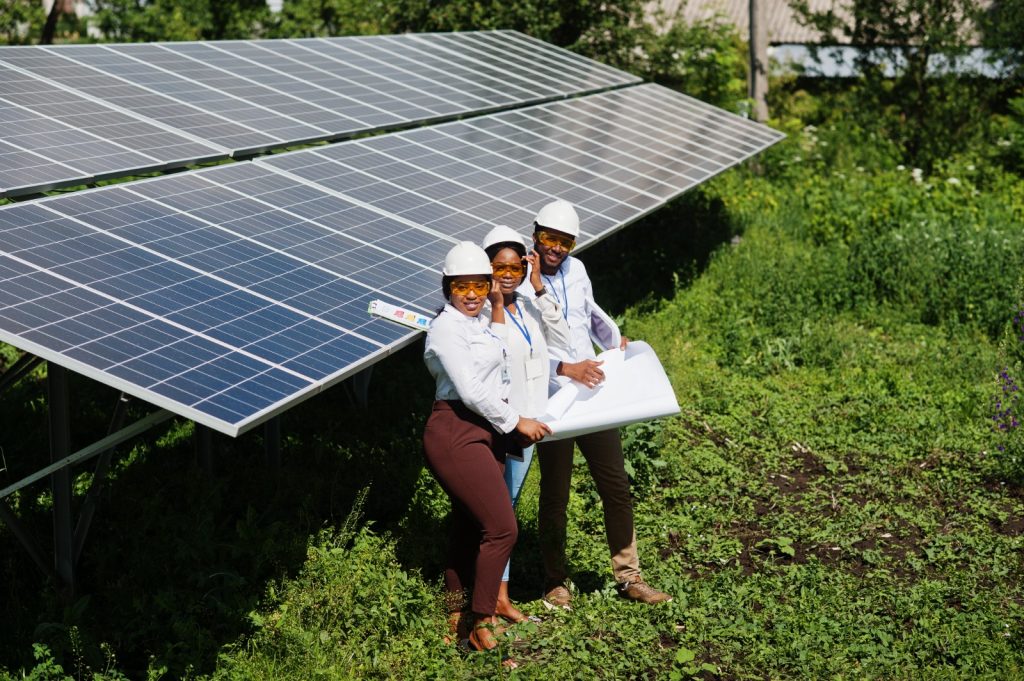
Nigeria also possesses abundant renewable energy resources across the country, which are largely untapped. She has solar, hydro, geothermal and wind, providing new opportunities. Therefore, the argument that Nigeria must choose between development and decarbonisation is increasingly false. The real question is whether Nigerian businesses and policymakers will seize those opportunities before global capital flows fully realign toward green economies.
The World Is Not Waiting
France is not alone in moving. More than 90% of new power capacity added in 2024 came from renewable energy sources. 2025 saw similar growth.
Meanwhile, globally, the International Energy Agency expects investment in renewable energy in 2025 to be twice that of fossil fuels. The direction of capital is clear, even if politics complicates the pace.
For Nigerian companies, this trajectory carries an urgent message. International investors increasingly screen portfolios against ESG criteria. Trading partners are adopting carbon border mechanisms and green procurement standards. Companies that delay transition planning will find themselves locked out of export markets, international finance, and global supply chains. CSR cannot remain a community relations budget line. It must evolve into a comprehensive framework for managing climate risk, energy transition, and long-term social license to operate.
The good news is that Nigeria’s Energy Transition Plan, updated in 2024 and targeting net-zero by 2060, provides a framework to build on. It estimates that achieving net zero by 2060 would require a capital investment of approximately USD 500 billion above business-as-usual spending. However, this investment would result in fuel savings of USD 686 billion. This demonstrates significant economic and environmental benefits. In other words, the transition is not a cost. It is ultimately a return.
A Call to Act Now
The editorial message here is simple, though the execution is not. France’s fossil fuel roadmap is a data point in a much larger pattern. Major economies are publishing hard timelines and sectoral targets.
ESG frameworks are moving from voluntary to mandatory. Investment capital is flowing toward transition-aligned assets. And Nigeria, despite its vast renewable potential, still runs on a fossil fuel economy. One that accounts for the vast bulk of government revenue.
Nigerian businesses need to treat France’s announcement not as distant foreign news. Rather see it as a leading indicator of where their own operating environment is heading. Boards should begin stress-testing capital allocations against a low-demand oil scenario.
CSR strategies should be redesigned around genuine environmental impact, not just community philanthropy. ESG disclosures should move from annual checkbox exercises toward real-time, performance-embedded reporting that meets the ISSB standard.
Above all, Nigeria’s public and private sectors must work together. The aim is to ensure that the energy transition creates jobs, expands electricity access, and builds economic resilience. This is better than approaching it as simply replacing one set of dependencies with another.
The world is changing. France has shown one path. Nigeria must now find its own, and find it urgently. Because the countries that act early will shape the rules. Those that wait will live by them.
[give_form id="20698"]