csrreporters
Nigeria’s Securities and Exchange Commission (SEC) has issued one of its strongest warnings yet on sustainability disclosure, signaling that companies with weak environmental, social, and governance reporting may struggle to attract global investors in the years ahead.
The warning came during the launch of the Nigerian Corporate Sustainability Report in Abuja. However, beyond the speeches and statistics, the message reflected a concern many sustainability advocates have raised for years.
For a long time, CSR Reporters has highlighted the growing gap between corporate sustainability claims and measurable disclosures in Nigeria. Now, regulators appear to be echoing that same concern with greater urgency.
Speaking at the event, Emomotimi Agama the DG of SEC said many listed firms still lack structured and verifiable sustainability disclosures. According to him, that weakness could affect Nigeria’s ability to compete for international capital.
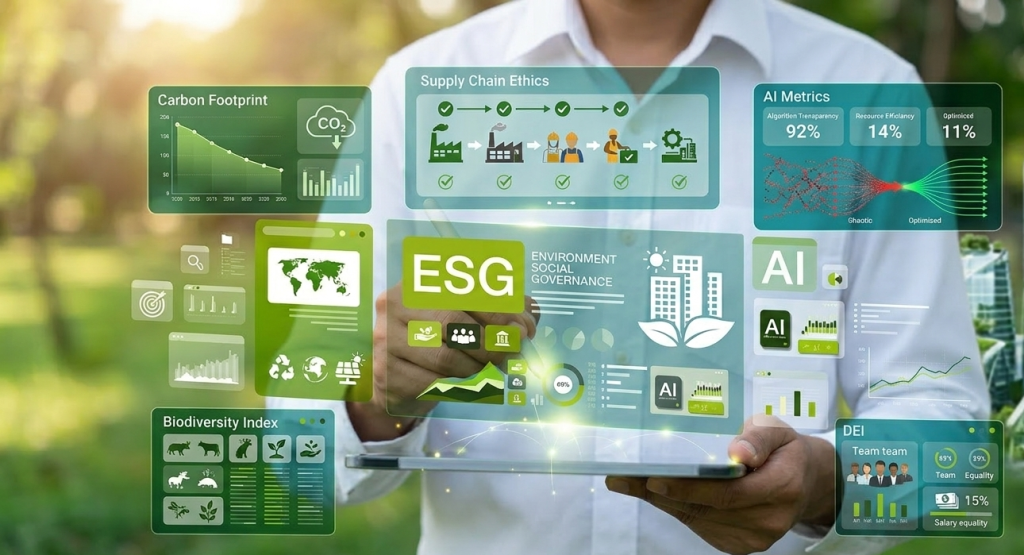
He explained that global investors increasingly use ESG performance as a major factor when deciding where to invest. As a result, companies that fail to provide credible sustainability information may lose access to long-term funding opportunities.
Agama stressed that disclosure is now the price of entry into global capital markets. He added that investors want reports that are consistent, comparable, and backed by evidence.
ESG Disclosure Now Drives Investment Decisions
The SEC boss noted that ESG considerations have moved beyond secondary screening tools. Instead, they now shape core investment decisions across global markets. That shift matters for Nigeria because foreign investors increasingly prefer markets with transparent governance systems and reliable sustainability data. Therefore, companies with poor disclosure practices may find themselves excluded from major investment conversations.
Agama warned that Nigeria cannot afford to lag behind while other economies strengthen sustainability frameworks. He said the country is already aligning with standards developed by the International Sustainability Standards Board.
According to him, the SEC plans to deepen engagement with listed companies while also strengthening sustainability reporting guidance. In addition, the commission intends to create incentives for firms that adopt strong disclosure systems early.
His comments arrived at a time when ESG expectations continue to rise across global financial markets. Investors now examine issues such as climate risk, employee welfare, governance quality, and community impact before committing funds. Consequently, sustainability reporting is no longer a symbolic corporate document. It has become a strategic business requirement.
Agama described sustainability as a strategic imperative rather than a reputational accessory. He also warned that companies delaying action could pay a heavy price later.
Nigeria Faces Growing Pressure on ESG Standards
Importantly, Agama linked stronger disclosures to Nigeria’s wider economic ambitions. He pointed out that the country needs significant investment to close infrastructure gaps and support long-term growth. Yet investors may hesitate if reporting standards remain weak.
Nigeria’s capital market currently exceeds N140 trillion in market capitalization. Even so, experts believe stronger ESG systems could unlock far more international investment for the economy.
Meanwhile, John Enoh, minister of state for industry, trade and investment, said Nigeria still faces a serious shortage of reliable ESG data. He explained that transparent and standardized sustainability information remains essential for policymaking, investment decisions, and economic planning. Without accurate data, both investors and regulators may struggle to assess corporate performance properly.
Enoh also emphasized that global investors increasingly favor countries with stronger sustainability credentials. Therefore, improving ESG practices could boost investor confidence and enhance Nigeria’s competitiveness.
That position aligns with what many analysts have argued in recent years. Across Africa, countries seeking climate finance and sustainable investment are under pressure to improve transparency standards. In Nigeria, however, implementation remains uneven.
Sustainability Compliance Still Lags
Ibrahim Shelleng, senior special assistant to the president on climate finance and stakeholder engagement, said Nigerian law already requires companies with more than 50 employees to maintain sustainability desks. Still, he admitted implementation has not moved fast enough.
Shelleng added that stronger collaboration between government agencies and private businesses will be necessary if Nigeria hopes to achieve its climate and sustainability goals.
His comments reflect a wider challenge within Nigeria’s corporate environment. While many firms now use sustainability language in annual reports and advertising campaigns, fewer provide detailed metrics that investors can independently verify. That gap has continued to frustrate sustainability experts and ESG-focused investors.
At the same event, Tony Edeh, group managing director (GMD) of Norrenberger, presented findings suggesting that ESG-compliant companies outperform competitors by as much as 28 to 30 percent. According to Edeh, the top ESG-performing firms already dominate a large share of Nigeria’s capital market.
He explained that 21 leading companies account for roughly 67 percent of the market, showing a strong relationship between sustainability performance and investor confidence.
CSR Reporters Has Long Raised This Concern
Over the past few years, ESG investing has shifted from a niche trend into a mainstream financial strategy. Large institutional investors now evaluate climate risks, labor standards, board diversity, and governance quality before allocating capital. As a result, Nigerian companies face growing pressure to improve both sustainability performance and disclosure quality.
For CSR Reporters, the latest warning from the SEC reinforces a conversation that has continued across Nigeria’s sustainability landscape for years. Businesses that fail to adapt may soon discover that weak ESG reporting carries real financial consequences. The era when companies could rely on vague sustainability claims without measurable evidence appears to be fading quickly.
Now, regulators, investors, and sustainability advocates are pushing for something stronger. They want transparency that can be tested, verified, and trusted. In the coming years, that demand may determine which Nigerian companies attract global capital and which ones get left behind.
[give_form id="20698"]