LAWMA Expands Olusosun Dumpsite: Will the Improvements Reach Every Lagos Community?
 ONYINYECHI NWAIGBA
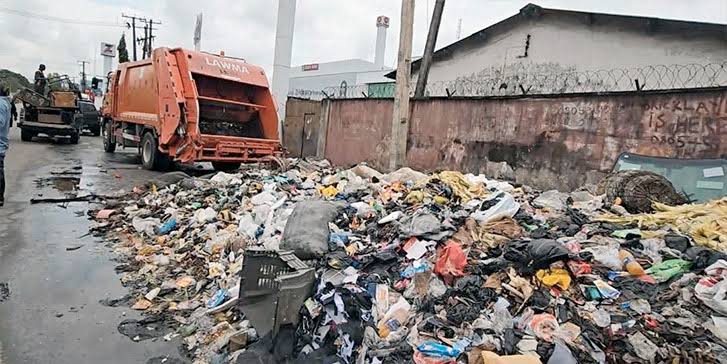
The Lagos Waste Management Authority has commenced expansion works at the Olusosun Dumpsite to improve waste evacuation and reduce delays. But with residents in several communities still reporting irregular collection and accumulated refuse, the bigger question is whether improvements at disposal facilities will translate into reliable waste management across the state.
Lagos generates thousands of tonnes of waste every day, making effective collection, transportation and disposal essential to the health and wellbeing of its residents.
From residential neighbourhoods and commercial centres to markets and industrial areas, the volume of waste generated across the state places considerable pressure on the systems responsible for keeping communities clean.
The Lagos Waste Management Authority (LAWMA) has now commenced stabilization and extension works on two tipping platforms, E1 and E2, at the Olusosun Dumpsite in Ojota. The project, being executed in partnership with Zoomlion Nigeria Limited, is expected to allow more waste trucks to discharge simultaneously, improve operational safety and reduce the time trucks spend waiting to offload refuse.
According to LAWMA’s Executive Director of Finance, Kunle Adebiyi, the Olusosun project forms part of wider improvements planned for other disposal facilities, including Solus III and Epe.
The authority says these interventions will strengthen waste evacuation infrastructure and improve service delivery across Lagos.
However, the announcement raises an important question for residents who continue to experience irregular waste collection: will improving the capacity of disposal facilities finally translate into dependable waste collection in every community?
What the Olusosun Expansion Is Expected to Achieve
Olusosun is one of the major waste disposal facilities serving Lagos. The efficiency of its operations matters because waste trucks must be able to discharge collected refuse and return to their assigned routes without spending excessive time waiting at disposal points.
When trucks experience long delays, their ability to complete collection schedules can be affected. A vehicle that spends several hours waiting to offload waste has less time available to serve households and businesses.
The expansion of the E1 and E2 tipping platforms is intended to address part of this operational challenge by accommodating more trucks at the same time.
If completed and operated effectively, the improvements could reduce truck turnaround time, support more efficient evacuation and ease some of the pressure on waste transportation.
The planned improvements at Solus III and Epe could further strengthen the network by improving operations across multiple disposal locations.
These are important infrastructure investments, particularly in a city where population growth, commercial activity and urban expansion continue to increase waste-management demands.
But there is an important distinction between improving the capacity to receive and dispose of waste and ensuring that refuse is collected from every household in the first place.
A more efficient dumpsite cannot independently solve problems involving missed collection schedules, inadequate trucks, poorly serviced routes or communities without dependable access to formal waste collection.
The Problem Lagos Residents Are Still Experiencing
Despite years of investment in waste management and private-sector participation, irregular refuse collection remains a concern in different parts of Lagos.
A recent investigation into the state’s waste management system documented complaints from residents in areas including Ikeja, Mushin, Alimosho, Surulere, Ikorodu, Abule Ado and Lagos Island.
In some communities, residents reported that waste collectors failed to maintain expected collection schedules, leaving refuse to accumulate around homes, roadsides, bus stops and road medians.
At Jakande Estate, for example, a former estate association official told the investigators that collectors who were expected to visit regularly sometimes came only once a month.
Residents along Ijegun-Ijagemo Road in Alimosho also reported that formal waste collectors did not adequately service their area, leaving some households dependent on informal collectors using wheelbarrows.
The same investigation cited a World Bank assessment indicating that only 67 per cent of households in Lagos had access to some form of waste collection service.
This figure is an important indication of the coverage challenge, although it should be understood as an estimate from the assessment rather than a newly measured figure for every neighbourhood in 2026.
The experiences documented across these communities raise concerns about whether the existing system is reaching residents consistently and equitably.
For households without reliable collection services, the consequences are immediate. Refuse may accumulate within residential compounds, become an obstruction on roads or end up in drainage channels and waterways.
These conditions can create environmental health risks, attract pests and worsen flooding when waste blocks drainage systems.
The Challenge Is Not Only at the Dumpsites
The Olusosun expansion focuses on a particular part of the waste-management process: the disposal stage.
However, Lagos’s waste-management system depends on several connected activities, including household collection, transportation, transfer, sorting, recycling and final disposal.
The Private Sector Participation (PSP) system, through which licensed private operators collect and transport household waste in designated areas, is a major part of this arrangement.
For the system to work, operators need adequate vehicles, reliable equipment, trained workers, accessible disposal facilities and the financial resources to maintain regular collection schedules.
Residents also need clear information about their assigned operators, collection arrangements and payment responsibilities.
A recent investigation identified rising diesel prices, long distances to disposal facilities, traffic delays and low payment compliance among the challenges affecting waste collection operators.
Some operators said difficulties collecting service fees from residents made it harder to maintain trucks, pay workers and cover daily operating expenses.
These challenges show that waste collection is not simply a matter of having more disposal space. It requires an operational system that can function consistently from the point where waste is generated to the point where it is properly managed.
The expansion at Olusosun could reduce one bottleneck, but it will need to be supported by improvements in the wider collection network.
LAWMA’s Own Figures Reveal the Scale of the Challenge
LAWMA has acknowledged that service gaps remain a concern and has been taking steps to improve the performance of private waste operators.
In its third-quarter 2026 customer care report, the authority disclosed that it received 2,230 waste-related complaints between July and September.
Of these, 1,291 were reported as resolved, while 939 remained under review at the end of the reporting period.
The authority said complaints about service gaps had prompted direct waste evacuation operations and stakeholder engagements in communities including Abraham Adesanya, Isefun, Oshodi, Oke-Ira and Ramoni Ward in Lawanson.
It also said it was analysing complaint patterns and field reports to identify areas requiring additional attention and strengthen monitoring of PSP operators.
In October 2026, LAWMA also withdrew the operating licences of six private waste collection operators following concerns about their ability to provide adequate services in their assigned locations.
The affected areas included parts of Igbogbo-Baiyeku, Olorunda, Ojo, Orile Agege, Ajeromi-Ifelodun and Ojodu.
These actions demonstrate that the authority recognises shortcomings in parts of the collection system. They also reinforce the need for stronger monitoring, adequate operator capacity and clear accountability when services are not delivered.
However, the number of complaints resolved should not be the only measure of progress. Residents need to know whether the underlying problems have been corrected and whether collection has become more reliable.
For a complaint involving missed waste collection, a meaningful resolution should ultimately mean that the refuse is removed and the collection schedule becomes dependable, not simply that the complaint has been acknowledged or closed administratively.
Will the Improvements Reach Communities Outside Major Roads?
One of the biggest questions facing Lagos’s waste-management system is whether improvements will benefit communities beyond the major roads and easily accessible urban areas.
Waste collection can be more difficult in densely populated neighbourhoods, inner streets and communities with inadequate road infrastructure.
Some areas may be difficult for large compactor trucks to access, while others may generate more waste than their assigned operators have the capacity to collect.
LAWMA’s leadership has acknowledged this challenge. In a recent interview, the authority’s Managing Director, Muyiwa Gbadegesin, explained that the agency was deploying smaller compactor tricycles and LAWMA trucks to communities where existing collection arrangements were inadequate.
He also said the authority was reviewing routes and considering restructuring or reallocating areas where operators lacked sufficient capacity.
The authority identified 27 routes for restructuring or reallocation during its second-quarter operational assessment.
These measures suggest that LAWMA is considering the wider collection network rather than focusing exclusively on disposal infrastructure.
Nevertheless, residents need evidence that these interventions are translating into regular services within their own communities.
Expanding the capacity of Olusosun will be more meaningful if trucks can move efficiently from homes and business districts to disposal facilities, while underserved communities receive appropriate collection arrangements.
A cleaner Lagos cannot be achieved only by ensuring that waste trucks have somewhere to discharge their loads. The collection system must also reach the people generating the waste.
The Public Health and Environmental Cost of Poor Waste Collection
Irregular waste management carries consequences that extend beyond unpleasant surroundings.
When refuse accumulates in residential areas, it can attract rodents and insects, create unpleasant odours and contribute to unsanitary conditions.
Improperly discarded waste can also enter drainage channels, streams and waterways, increasing the risk of blockages and environmental pollution.
During heavy rainfall, blocked drainage systems can contribute to flooding, particularly in communities already vulnerable to poor drainage infrastructure.
Plastic waste presents another challenge because it can persist in the environment, break into smaller particles and contribute to pollution when it is not properly collected or recovered.
Poor waste management also affects livelihoods. Businesses operating around refuse-filled streets may experience reduced customer activity, while residents may incur additional expenses to find alternative ways to dispose of household waste.
These consequences make effective waste collection an important public-health and sustainable-development priority.
It also highlights why waste management should not be treated only as an operational responsibility of government agencies. It is directly connected to the quality of life, economic activities and environmental conditions experienced by residents.
What Should LAWMA Be Measured Against?
The Olusosun project provides an opportunity for LAWMA to demonstrate how infrastructure improvements can produce wider benefits for Lagos residents.
To establish whether the expansion is delivering results, the authority should communicate clear information about the project’s completion, operational capacity and measurable effect on truck turnaround times.
But beyond the disposal facility, the wider collection system also needs to be assessed.
Important measures should include:
- The number of households and communities receiving regular collection services.
- The frequency with which assigned operators visit their service areas.
- The number of routes operating consistently and those requiring intervention.
- The proportion of complaints that result in actual service improvements.
- The time taken to resolve reports of missed collection.
- The quantity of waste collected, recycled, recovered and properly disposed of.
- The extent to which low-income and difficult-to-access communities are included.
These indicators would help residents understand whether investments are improving the system as a whole or simply increasing capacity at selected facilities.
LAWMA should also make it easier for communities to report missed collections and track the actions taken in response. Regular public reporting could improve trust and encourage greater participation in proper waste disposal.
Residents, in turn, have a responsibility to use approved collection channels, comply with applicable service arrangements and avoid indiscriminate dumping.
However, public participation must be matched by reliable services and effective enforcement.
A Bigger Dumpsite Capacity Must Mean Better Service for Residents
LAWMA’s expansion works at Olusosun could address an important operational challenge in Lagos’s waste evacuation system. Improving the ability of trucks to discharge waste efficiently, alongside upgrades at other facilities, may help reduce delays and strengthen disposal operations.
But the authority is not being judged only by how efficiently trucks move through a dumpsite. Residents also judge the system by whether waste is collected from their streets, whether collection schedules are reliable and whether their communities remain clean.
Previous interventions and the continued withdrawal of underperforming waste operators show that the problem requires attention across the entire service chain.
The question, therefore, is not simply whether the Olusosun expansion will be completed. It is whether the benefits will extend beyond the facility to communities that have continued to experience irregular waste collection.
For Lagos to achieve a cleaner and healthier environment, improvements at disposal facilities must go hand in hand with stronger household collection, better-equipped operators, accessible services and consistent accountability.
Ultimately, the success of this project should not be measured only by how many more trucks Olusosun can accommodate at once. It should also be measured by how many Lagos residents can finally depend on regular and reliable waste collection.
[give_form id="20698"]