NBA, UNICEF Commit ₦120m to Expand Access to Justice for Vulnerable Children in Nigeria
 ONYINYECHI NWAIGBA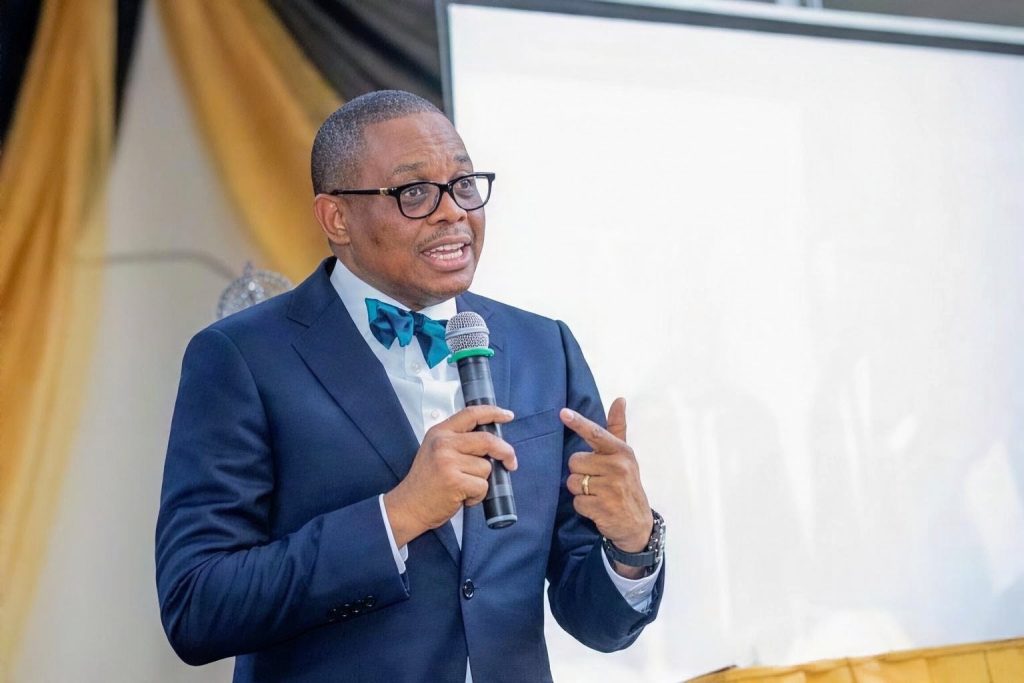
The Nigerian Bar Association (NBA) and the United Nations Children’s Fund (UNICEF) have launched a ₦120 million partnership aimed at expanding access to free legal services for children across Nigeria, strengthening child-sensitive justice systems and improving protection for children who come into conflict with the law.
The Justice for Children and Young People program will mobilize lawyers across the country to provide pro-bono legal representation for children, while also strengthening referral pathways between the justice and child protection systems.
The partnership is designed to address a critical gap in Nigeria’s justice system, where vulnerable children can face significant barriers to legal representation, protection and fair treatment.
Beyond providing legal services, the initiative will also focus on building the capacity of legal professionals to handle cases involving children and promoting a justice system that places the best interests of the child at its center.
Putting Children at the Centre of Justice
For children who come into conflict with the law, the consequences of entering the justice system can extend far beyond the courtroom.
Without adequate legal representation and child-sensitive procedures, children can spend prolonged periods in detention, face inappropriate treatment or struggle to access the protection and rehabilitation services they need.
This is one of the issues the NBA-UNICEF partnership is seeking to address.
The programme will support lawyers to provide quality pro-bono representation while strengthening connections between legal professionals and child protection actors.
According to NBA President Afam Osigwe, the partnership will also support the development of a justice system that prioritises the best interests of children and strengthens the ability of lawyers to manage child-sensitive cases.
The approach recognises that protecting children within the justice system requires more than simply providing a lawyer.
It requires coordination between courts, lawyers, correctional institutions, social welfare services, child protection agencies and other institutions responsible for safeguarding children.
A Response to Nigeria’s Child Detention Challenge
The partnership comes against the backdrop of concerns about the treatment of children who come into conflict with the law in Nigeria.
The Nigerian Correctional Service recently disclosed that 1,205 children were on remand across the country’s three Borstal institutions in Abeokuta, Kaduna and Ilorin. The disclosure also highlighted the limited availability of dedicated facilities for children in conflict with the law.
The situation illustrates why access to legal representation is an important part of child protection.
A child who has access to competent legal support is better positioned to understand the proceedings, have their rights represented and potentially benefit from alternatives to detention where appropriate.
It also underscores the importance of ensuring that children are not treated in the same way as adults within the justice system.
The NBA has called for greater intervention where children face incarceration and emphasised the need for children to be placed in age-appropriate facilities rather than being detained alongside adults.
Beyond Pro-Bono Legal Representation
The significance of the ₦120 million initiative extends beyond the number of children who may receive free legal representation.
One of its more important components is strengthening the capacity of legal professionals to respond appropriately to cases involving children.
Children interact with the justice system differently from adults, and their age, vulnerability and developmental needs require specialised approaches.
Training lawyers to understand these needs can help improve the quality of representation while contributing to a broader shift towards child-sensitive justice.
The programme will also strengthen referral pathways between justice and child protection actors.
This matters because legal challenges involving children are rarely isolated from other social issues.
A child in conflict with the law may also face family instability, poverty, abuse, neglect, displacement or lack of access to education and social services.
Effective intervention therefore requires different institutions to work together rather than treating each case as a standalone legal matter.
UNICEF’s Wider Child Protection Agenda
The new partnership also builds on a longer collaboration between UNICEF and the NBA around justice reform and child protection.
In 2025, the two organisations called for reforms to safeguard the rights of children within Nigeria’s legal and justice systems, with a focus on alternatives to detention, stronger child protection systems, expanded access to legal aid and implementation of the Child Rights Act.
UNICEF’s wider child protection work in Nigeria also includes strengthening legislative and institutional frameworks, improving the capacity of justice and social welfare systems and supporting legal reforms for children.
The organisation’s 2025 annual report noted progress in justice reform, including support for legal aid services and measures that helped more than 1,000 children leave detention through diversion or non-custodial approaches, alongside aftercare and reintegration services.
The latest partnership therefore represents another step in a broader effort to make Nigeria’s justice system more responsive to the needs and rights of children.
Why Access to Justice Is a Social Impact Issue
Access to justice is sometimes viewed primarily as a legal or institutional issue.
For vulnerable children, however, it is also a question of social equity.
A child whose family cannot afford legal representation may face a very different experience within the justice system from one whose family has the financial resources to secure professional support.
Providing pro-bono legal services can help narrow that gap.
It can also strengthen the principle that a child’s access to justice should not depend on their family’s ability to pay.
This is particularly relevant in Nigeria, where poverty and inequality can influence access to essential services and opportunities.
The NBA-UNICEF partnership therefore places legal support within a broader child-development and protection framework.
The objective is not only to represent children in legal proceedings, but to help ensure that the justice system does not deepen the vulnerabilities they already face.
The Role of Professional Institutions in Social Impact
The partnership also demonstrates how professional institutions can use their expertise to address social challenges.
For the NBA, the initiative goes beyond its traditional role as a professional association for lawyers.
By mobilising members to provide pro-bono services and strengthening professional capacity around child-sensitive cases, the legal profession becomes part of a wider social protection response.
This model is significant because sustainable social impact does not always require creating entirely new systems.
Existing professional networks can also be mobilised to address gaps in public services.
Nigeria has a large legal community with branches and professionals spread across the country. Harnessing that network could help expand access to legal support beyond major urban centres, where specialist services are often more readily available.
The effectiveness of the programme will therefore depend partly on how successfully lawyers are mobilised and how consistently children are connected to the services they need.
Measuring the Impact
The ₦120 million commitment provides a significant foundation, but the long-term value of the partnership will ultimately be measured by its outcomes.
How many children will receive legal representation?
How many cases will be resolved or diverted from detention?
How many lawyers will be trained in child-sensitive justice?
How much will referral systems improve?
And, importantly, how many children will leave the justice system with access to rehabilitation, reintegration and continued protection?
These are the kinds of outcomes that can turn a partnership announcement into measurable social impact.
For an initiative focused on vulnerable children, success should not be defined simply by the amount of money committed or the number of lawyers involved.
It should be reflected in whether children experience a justice system that protects their rights, respects their dignity and gives them a meaningful opportunity to rebuild their lives.
Strengthening Nigeria’s Child Protection System
The NBA-UNICEF partnership arrives at a time when Nigeria continues to face challenges around child protection, access to justice and the treatment of children in conflict with the law.
Addressing these challenges requires collaboration across government institutions, professional bodies, development organisations and communities.
No single organisation can reform the child justice system alone.
The ₦120 million initiative provides an opportunity to strengthen one part of that system while creating stronger links between legal services and broader child protection mechanisms.
Its success will depend on implementation, coordination and the ability to reach children who are most vulnerable and least likely to have access to legal support on their own.
For Nigeria, ensuring that children receive fair treatment within the justice system is not simply about meeting legal obligations.
It is about protecting human dignity, reducing inequality and giving vulnerable children a better chance of returning to education, family and community life.
The NBA and UNICEF partnership is therefore more than a legal aid programme.
It is an investment in a justice system that recognises children as rights holders and treats their protection as a shared responsibility.
If effectively implemented, the initiative could help close an important gap in access to justice while demonstrating how professional expertise and institutional partnerships can deliver practical social impact.
For the children who encounter Nigeria’s justice system at some of the most difficult moments of their lives, that difference could be significant.
[give_form id="20698"]