Nigeria Approves New Deep Offshore Framework to Unlock $50bn Investment and Revive Stalled Oil Projects
 ONYINYECHI NWAIGBA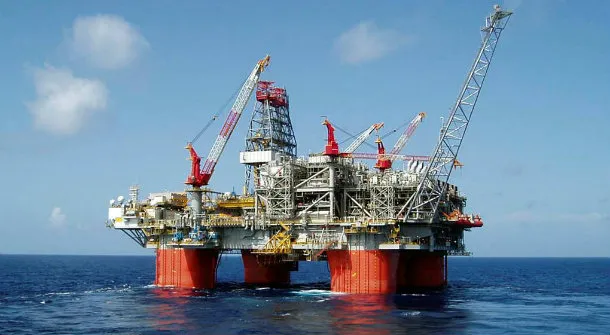
Nigeria is taking a fresh step to attract major investment into its offshore oil and gas sector, with President Bola Ahmed Tinubu approving a new deep offshore investment framework designed to unlock up to US$50 billion in potential investment and revive large-scale projects that have remained stalled for years.
The new framework is expected to replace the previous project-by-project approach to negotiating incentives with a more transparent, rules based structure aimed at providing investors with greater certainty and improving the commercial attractiveness of deep offshore developments.
The move comes as Nigeria seeks to increase oil and gas production, attract long term capital and strengthen the contribution of the petroleum sector to the wider economy.
Rather than representing a direct US$50 billion government expenditure, the figure refers to the potential investment the new framework is expected to unlock from oil companies and other private sector investors.
For Nigeria, the significance of the development goes beyond the size of the potential investment. If effectively implemented, the framework could influence production, government revenue, foreign exchange, employment, local content and the future competitiveness of the country’s upstream petroleum industry.
Why Nigeria Is Targeting Deep Offshore Investment
Deep offshore oil and gas projects require substantial capital, sophisticated technology and long development timelines.
While Nigeria has significant offshore resources, several major projects have experienced delays as investors have assessed their commercial viability and navigated regulatory and fiscal uncertainties.
The government is now attempting to create a clearer investment environment that can encourage companies to commit capital to projects that may otherwise remain on hold.
The Presidency said the new framework is designed to provide greater predictability for investors and support the development of large-scale offshore projects that have been delayed for extended periods.
This is particularly important as competition for international oil and gas capital intensifies. Energy companies are increasingly selective about where they deploy capital, considering not only the size of available reserves but also taxation, regulation, operating costs, political stability and the speed with which projects can move from approval to production.
For Nigeria, improving the investment environment is therefore central to maintaining its position as a major oil and gas producer.
A Potential $50 Billion Investment Pipeline
The potential to attract up to US$50 billion is the most significant figure attached to the new framework.
However, the figure should be understood as an investment opportunity rather than money already committed to Nigeria.
The government’s objective is to create conditions under which investors can move forward with offshore projects that require billions of dollars in capital.
The potential scale is considerable. Nigeria’s upstream regulator had already identified at least 22 offshore projects that could begin production by 2030, with potential investment estimated at between US$30 billion and US$50 billion.
The newly approved framework could therefore provide an important policy foundation for moving some of these projects closer to development.
One of the major projects expected to benefit from the renewed investment push is Shell’s Bonga South West development, which has been identified as an initial project under the new approach and is estimated to require around US$10 billion in investment.
If projects of this scale progress, the impact could spread beyond oil production into engineering, construction, logistics, marine services, financial services and other supporting industries.
What It Could Mean for Nigeria’s Economy
The oil and gas industry remains an important part of Nigeria’s economy, particularly in relation to government revenue and foreign exchange.
Reviving stalled offshore projects could increase production over time and strengthen the country’s capacity to generate revenue from its petroleum resources.
Higher investment could also create demand across the domestic supply chain.
Large offshore developments require a wide network of companies and professionals, including engineering firms, equipment suppliers, construction companies, logistics providers, financial institutions, technology companies and technical consultants.
This creates an opportunity for increased economic activity beyond the operators themselves.
The benefits, however, will depend on how much of the value generated by these projects remains within Nigeria.
That makes local participation a critical part of the conversation around the new framework.
Local Content Will Be a Key Measure of Success
For Nigeria, attracting foreign investment is only one side of the equation.
The bigger question is how effectively the country can convert that investment into opportunities for Nigerian businesses, workers and professionals.
The Federal Government has previously linked its deep offshore investment incentives to job creation, foreign exchange inflows, local content and greater in-country value addition.
This means the success of the new framework should not be judged solely by the number of dollars committed by international investors.
It should also be assessed by the number of Nigerian companies participating in project supply chains, the technical skills developed locally, the jobs created and the extent to which Nigerian businesses are able to move into higher-value segments of the industry.
For local contractors and service providers, a new wave of offshore investment could create opportunities to expand capacity, develop specialized expertise and participate in projects that require increasingly sophisticated technical services.
For young Nigerians entering the energy sector, increased project activity could also create opportunities for skills development in engineering, data, technology, project management, environmental services and other specialized fields.
From Investment to Measurable Impact
One of the challenges Nigeria has faced over the years has been the gap between investment announcements and actual project delivery.
A project may attract significant attention when an investment figure is announced, but the wider economic benefits only begin to materialise when financing is secured, contracts are awarded, construction begins and production eventually starts.
That makes implementation particularly important.
The new framework may improve the conditions for investment, but investors will ultimately assess whether the reforms provide sufficient certainty to justify committing billions of dollars over long project cycles.
Nigeria will also need to maintain regulatory consistency and ensure that the framework delivers the predictability it promises.
The more stable the investment environment becomes, the easier it may be for companies to make long-term decisions about capital-intensive developments.
The Energy Transition Dimension
The renewed push for oil and gas investment also raises a broader question about Nigeria’s energy future.
The global energy industry is undergoing significant change as countries seek to reduce emissions, expand renewable energy and improve energy efficiency.
Nigeria is simultaneously trying to attract investment into its oil and gas industry while pursuing an energy transition that can expand access to cleaner and more reliable energy.
For a country whose economy remains closely linked to hydrocarbons, managing this transition will require careful planning.
The question is not simply whether Nigeria should continue attracting oil and gas investment. It is also how the revenues, infrastructure, skills and economic opportunities generated by the sector can contribute to longer-term national development.
This makes responsible investment and effective resource management increasingly important.
The new offshore framework therefore sits within a much larger conversation about how Nigeria can use its existing energy resources to support economic development while preparing for a changing global energy landscape.
What Investors and Nigerians Will Be Watching
The approval of the framework sends a clear signal that the Federal Government wants to make Nigeria’s deep offshore sector more attractive to long term investors.
But the real test will come with implementation.
Investors will be watching whether the new rules deliver the regulatory certainty and commercial conditions promised by the government.
Nigerian businesses will be watching whether local companies receive meaningful opportunities within the emerging project pipeline.
Workers and communities will be watching whether increased investment translates into jobs, skills and wider economic opportunities.
And the government will ultimately need to demonstrate that the investment attracted contributes to production, revenue, foreign exchange and sustainable economic growth.
The US$50 billion figure is therefore only the beginning of the story.
A Test of Nigeria’s Ability to Convert Resources into Value
Nigeria has significant offshore petroleum resources, but the economic value of those resources depends on the country’s ability to create the right conditions for responsible development.
The new deep offshore investment framework could help remove some of the barriers that have delayed major projects and provide investors with a clearer path towards long-term commitments.
If successful, it could unlock billions of dollars in new capital, revive stalled developments and stimulate activity across the oil and gas value chain.
But investment alone will not be enough.
The bigger opportunity is to ensure that the capital entering the sector translates into stronger Nigerian businesses, quality employment, technical capacity, government revenue and lasting economic value.
For Nigeria, the next phase will be about moving from policy approval to project delivery.
And ultimately, the success of the US$50 billion investment push will not be measured by the size of the headline figure, but by what it delivers for the Nigerian economy and the people who depend on it.
See: ECOWAS Approves $25bn Nigeria-Morocco Gas Pipeline Amid Sustainability Debate
[give_form id="20698"]