csrreporters
Global investors are not stepping away from sustainable investing. Instead, they are becoming more selective and far more demanding. A new report by Morgan Stanley shows that interest in sustainable investing has climbed to 92 percent worldwide. However, actual investment behaviour tells a more cautious story. Portfolio allocations to sustainable assets have dipped slightly, revealing a gap between enthusiasm and execution.
That gap is where the real story lies.
Interest Is High, But Confidence Is Uneven
At first glance, the numbers look strong. Investors across regions continue to express interest in ESG. Yet, beneath that optimism, hesitation is growing.
The average share of portfolios allocated to sustainable investments dropped from 33 percent to 31 percent. While this decline appears small, it signals a deeper concern. Investors are no longer satisfied with broad promises. Instead, they want consistent performance and clearer proof of impact.
Therefore, sentiment alone is no longer enough.
This shift matters for Nigeria. ESG conversations have increased across sectors, from banking to energy. However, actual investment backed by credible data remains uneven. As a result, the country risks being grouped with markets where sustainability claims outpace delivery.
In a competitive global market, that perception can be costly.
Returns Now Drive ESG Decisions
For years, sustainable investing was often framed around ethics and long-term impact. Today, the conversation has changed.
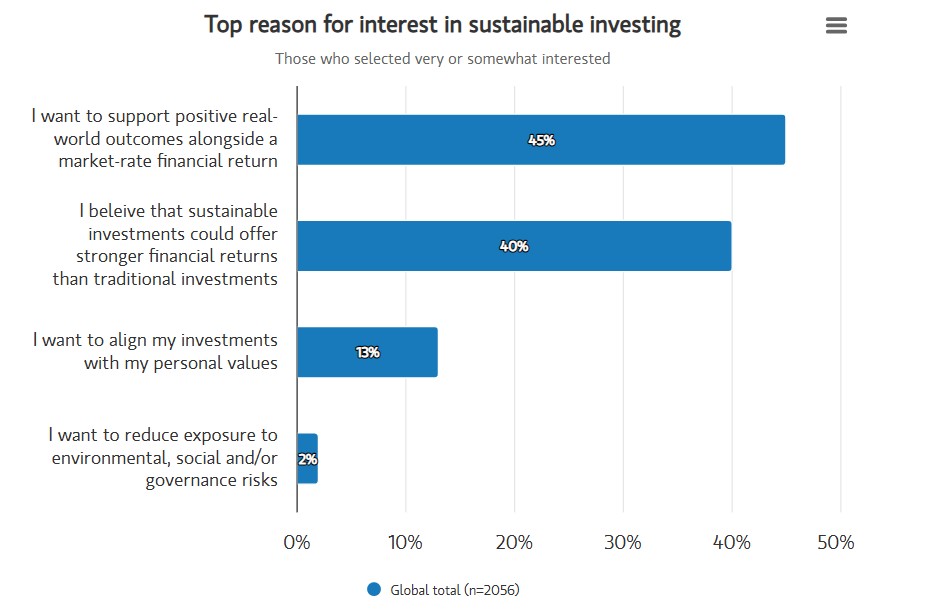
More than 80 percent of investors now say financial returns are central to their interest in ESG. In addition, nearly two-thirds plan to increase their allocations over the next year, largely because they expect strong performance.
This shift is important. It confirms that ESG is no longer treated as a side strategy. Instead, it is increasingly viewed as a core investment approach.
For Africa, this creates a clear opportunity.
Across the continent, sectors such as renewable energy, financial technology, agriculture, and healthcare combine impact with growth. For example, off-grid solar companies are expanding electricity access while generating revenue. At the same time, fintech platforms are improving access to finance for millions.
Because of this, Africa does not need to reposition itself. It already offers what investors are looking for. However, the challenge lies in packaging these opportunities in ways that meet global expectations for transparency and performance.
Greenwashing Concerns Are Raising the Bar
While demand for ESG investments continues to grow, trust is becoming the decisive factor. A significant share of global investors now cite greenwashing as a major concern. This reflects growing scepticism about sustainability claims that cannot be verified.
Read More: GREENWASHING: Vital guide to Communicate Impact Without Exaggeration
As a result, investors are paying closer attention to data quality, reporting standards, and measurable outcomes. They are also becoming more selective about where they deploy capital.
For Nigeria, this presents a direct challenge.
Many organisations publish CSR reports and highlight sustainability initiatives. However, reporting practices remain inconsistent. In some cases, disclosures lack depth. In others, impact is difficult to measure or compare.
Consequently, investors often struggle to distinguish between genuine ESG performance and well-crafted narratives.
This issue goes beyond reputation. It directly affects capital flows. When trust is weak, investment slows. When transparency improves, capital tends to follow.
Private Markets Are Leading the Shift
Another major trend shaping sustainable investing is the growing role of private markets.
A majority of investors believe that the best ESG opportunities now exist in private equity, venture capital, and infrastructure rather than in publicly listed assets. This reflects a broader shift toward innovation-driven sectors.
Interestingly, this trend aligns closely with Africa’s economic reality.
Across the continent, much of the growth is happening outside public markets. Cities like Lagos have become hubs for startups and innovation. These businesses are tackling real-world challenges while building scalable models.
Recent developments highlight this momentum. African startups continue to attract global attention, particularly in areas such as climate technology and financial inclusion. As international investors search for high-impact opportunities, the region is increasingly on their radar.
Therefore, Africa is not on the sidelines of the ESG movement. Instead, it is positioned at the centre of where future growth could emerge.
Africa’s Priorities Align with Global Demand
Another advantage lies in alignment. Global investors are prioritising themes such as economic empowerment, financial inclusion, and health and wellness. These priorities closely match Africa’s development needs.
This alignment is significant.
For example, expanding access to finance supports small businesses and drives economic growth. Improving healthcare systems strengthens long-term resilience. Meanwhile, investing in clean energy addresses both climate concerns and energy access.
Because of this overlap, Africa does not need to reshape its ESG narrative. Instead, it needs to strengthen how that narrative is structured and communicated to global investors. Clarity, consistency, and data will be key.
Nigeria’s ESG Crossroads
Nigeria now stands at a critical intersection.
On one side, global capital is actively seeking sustainable investment opportunities, particularly in emerging markets. On the other side, investors are demanding higher levels of accountability and transparency. This creates both risk and opportunity.
If ESG reporting remains inconsistent, Nigeria could struggle to attract long-term capital. However, if standards improve, the country could position itself as a leading destination for impact-driven investment in Africa.
To move forward, several steps are necessary.
First, companies need to move beyond surface-level CSR initiatives. Instead, they should focus on measurable outcomes that can be independently verified. Second, regulators must strengthen ESG disclosure frameworks and ensure compliance. Third, investors should prioritise transparency and data quality when making decisions.
Each of these steps will help build credibility.
Trust Will Define the Next Phase
Sustainable investing is no longer a niche idea. It is becoming a central part of how global capital is allocated. However, the key question has changed. Investors are no longer asking whether ESG matters. Instead, they are asking where it can be trusted.
For Nigeria, the answer will shape its economic future. The country already has the scale, the market demand, and the development needs that align with global ESG priorities. What remains is execution.
Credibility will not be built overnight. It will require consistent reporting, transparent data, and a clear commitment to measurable impact. Yet, the reward is significant. Countries that earn investor trust will attract the capital needed to drive sustainable growth.
Nigeria has the opportunity to be one of those countries.
The global ESG boom is real. However, only markets that can prove their value will fully benefit from it.
Investors are watching. Are you ready?
List your organisation in the CSR Reporters Nigeria CSR Impact Ranking 2026 and demonstrate the credibility global capital is now demanding. Submit your report here or send to enquiries@csrreporters.com