NNPC Ltd’s Ogoni Re-Entry: A Model for CSR, Reconciliation, and Sustainable Growth in Nigeria’s Oil Sector
 csrreporters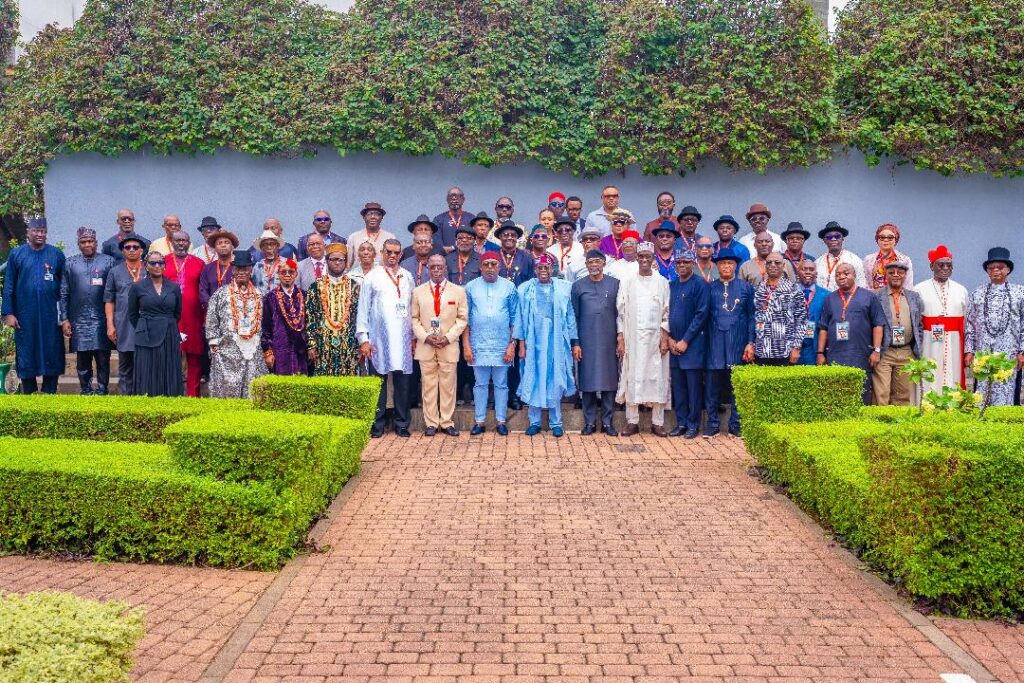
NNPC Ltd’s Ogoni Re-Entry: A Model for CSR, Reconciliation, and Sustainable Growth in Nigeria’s Oil Sector
The Ogoni Re-entry led by NNPC Ltd marks a milestone in Nigeria’s journey toward sustainable development and environmental reconciliation, balancing energy growth with community inclusion
Nigeria’s long and troubled history with oil in the Niger Delta may finally be entering a new chapter.
With the federal government’s formal endorsement of the Ogoni Re-entry initiative, the move is being hailed as a landmark in corporate social responsibility (CSR), sustainability, and environmental justice.
Unveiled at the State House in Abuja during the presentation of the Ogoni Consultations Report, the re-entry signals not only a return of operations but also a moral and environmental reckoning.
For many observers, it stands as a powerful symbol of reconciliation—between the state, its oil industry, and the people of Ogoniland.
Acknowledging a Painful History
President Bola Ahmed Tinubu struck a reflective tone during the event, acknowledging the decades of suffering endured by the Ogoni people. “We are not, as a government, taking lightly the years of pain endured in Ogoniland. We recognise that, otherwise we would not be here today… We declare with conviction that hope is here and is back with us,” he said.
The President’s remarks underscored a rare moment of political and corporate humility in a region that has long symbolized the darker side of Nigeria’s oil wealth.
Tracing the Roots: From Exploitation to Activism
The Ogoni story is one of both tragedy and tenacity. Oil exploration began in the area in the 1950s, bringing immense national revenue but devastating local ecosystems.
By the late 1980s and early 1990s, repeated oil spills, gas flaring, and contaminated water had crippled agriculture and fishing—the lifeblood of Ogoni livelihoods.
Amid the crisis, the Movement for the Survival of the Ogoni People (MOSOP), led by writer and activist Ken Saro-Wiwa, rose to global prominence.
MOSOP’s demands were simple: environmental remediation, fair revenue sharing, and community participation in resource governance.
Their campaign, however, met brutal suppression. In 1995, Saro-Wiwa and eight other Ogoni activists were executed after a military tribunal—an event that drew global outrage and forever altered the discourse on corporate accountability and human rights in extractive industries.
The executions halted oil operations in Ogoni territory and fractured trust between the community, government, and oil companies.
For nearly three decades, Ogoniland remained a painful reminder of environmental neglect and social exclusion.
The Re-Entry: From Conflict to Collaboration
Today, that history casts a long shadow over the re-entry process—but also lends it meaning. According to Engr. Bashir Bayo Ojulari, Group Chief Executive Officer of NNPC Ltd, the re-entry marks a conscious effort to rewrite that history.
“The re-entry into Ogoniland is not just about oil and gas. It is about justice, healing, and charting a new future for our nation,” Ojulari said during the presentation.
He described the initiative as a reaffirmation of NNPC Ltd’s commitment to responsible operations, community trust, and environmental integrity.
The new engagement model, developed through months of consultations with traditional leaders, youth representatives, women’s groups, and civil society, prioritizes dialogue over extraction and collaboration over control.
CSR and Sustainability: The New Benchmark
From a CSR and sustainability lens, the Ogoni re-entry could reshape how the Nigerian oil sector measures success.
The move places community inclusion, environmental restoration, and economic empowerment at the heart of operations—a marked shift from the extractive models that defined earlier decades.
1. Community-Driven Engagement
The consultations report offers a blueprint for participatory governance. By engaging local stakeholders early, NNPC Ltd is attempting to rebuild trust that was eroded by decades of neglect.
This participatory model is in line with global ESG (Environmental, Social, and Governance) standards, which emphasize shared ownership and transparency in host-community relations.
2. Environmental Accountability
The UNEP Environmental Assessment of Ogoniland (2011) exposed widespread contamination and recommended a long-term cleanup.
Subsequent efforts through HYPREP (Hydrocarbon Pollution Remediation Project) have made progress, but challenges remain.
Integrating remediation with responsible re-entry ensures that environmental sustainability is not an afterthought but a guiding principle.
3. Economic Inclusion
CSR in the energy sector now goes beyond charity projects.
The re-entry offers opportunities for local content participation, youth employment, and skills transfer, providing economic resilience to communities.
This directly supports the UN Sustainable Development Goals (SDGs)—particularly Goals 8 (Decent Work), 9 (Industry & Innovation), and 11 (Sustainable Cities & Communities).
4. Governance and Transparency
For sustainability to endure, governance must be open and accountable.
Observers argue that a multi-stakeholder oversight framework—incorporating civil society, local government, and industry players—will be essential in ensuring that promises translate into measurable progress.
Broader Implications: A Test Case for the Renewed Hope Agenda
The Ogoni re-entry resonates deeply with President Tinubu’s Renewed Hope Agenda, which emphasizes economic inclusion, responsible investment, and national unity.
It also dovetails with NNPC Ltd’s transformation into a limited liability company, positioning it as both a profit-driven enterprise and a custodian of public interest.
For Nigeria, this re-entry represents more than a return to oilfields—it’s a test of credibility. Can the country demonstrate that extractive industries can coexist with environmental stewardship and social justice?
If successful, the Ogoni model could serve as a template for future engagements across the Niger Delta and beyond.
Cautious Optimism and Challenges Ahead
While optimism is high, experts caution that sustaining progress will require transparency, communication, and consistent delivery.
Environmental remediation must be continuous, not episodic.
Revenue-sharing mechanisms must be clear and fair.
And most importantly, communities must see tangible benefits—not just in rhetoric, but in livelihoods, education, and infrastructure.
Without these, old wounds could reopen.
Yet, for the first time in years, the tone is changing—from confrontation to cooperation.
And that alone marks significant progress.
Conclusion: Building Hope, Responsibly
The Ogoni re-entry embodies more than an industrial restart—it symbolizes Nigeria’s maturity in addressing historical injustices through partnership, accountability, and vision.
If executed faithfully, it will not only revitalize Ogoniland but also stand as a global benchmark for corporate responsibility in emerging economies.
It proves that progress is not merely measured in barrels of oil, but in the trust rebuilt, the land restored, and the people empowered.
As President Tinubu put it, “Hope is here and is back with us.”
For Ogoni, that hope now has a sustainable roadmap.
Eche Munonye
[give_form id="20698"]