CSR Reporters Editorial Team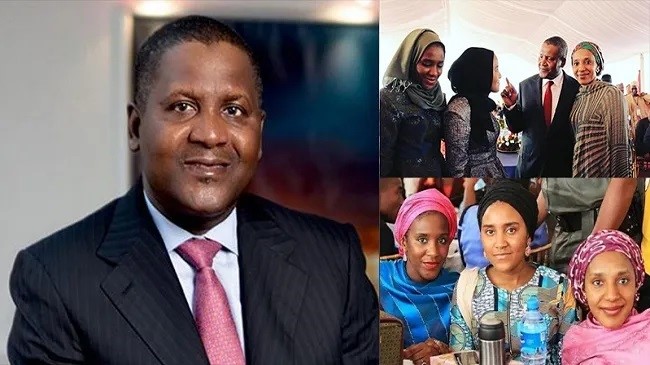
RANKED: Africa’s 20 Most Philanthropic Families, Ranked on Evidence
Africa’s wealthiest families now announce philanthropy on a scale that would have been unusual a generation ago: a ₦1 trillion education plan, a pledge to give away half of family income, a perpetual trust that owns an asset manager. The announcements are impressive. They are also not the same thing as giving.
This ranking asks a harder question. Which families can show sustained giving, a structure that outlives the founder, transparent reporting and some evidence that the money changed something? It orders twenty families on that basis, and where the evidence is thin it says so, even for famous names.
The Top 20 at a glance
| Rank | Family | Main vehicle | Base |
| 1 | Dangote family | Aliko Dangote Foundation | Nigeria |
| 2 | Masiyiwa family | Higherlife Foundation, Delta Philanthropies | Zimbabwe |
| 3 | Motsepe family | Motsepe Foundation | South Africa |
| 4 | Elumelu family | Tony Elumelu Foundation | Nigeria |
| 5 | Gray family | Allan Gray Orbis Foundation; Allan & Gill Gray Foundation | South Africa |
| 6 | Oppenheimer family | Oppenheimer Memorial Trust; Generations Foundation | South Africa |
| 7 | Sawiris family | Sawiris Foundation for Social Development | Egypt |
| 8 | Chandaria family | Chandaria Foundation | Kenya |
| 9 | Benjelloun family | BMCE Bank Foundation | Morocco |
| 10 | Rabiu family | ASR Africa Initiative; BUA Foundation | Nigeria |
| 11 | Otedola family | Direct giving; no foundation | Nigeria |
| 12 | Rupert family | Rupert family and Remgro giving | South Africa |
| 13 | Dewji family | Mo Dewji Foundation | Tanzania |
| 14 | Alakija family | Rose of Sharon Foundation | Nigeria |
| 15 | Ovia family | Jim Ovia Foundation | Nigeria |
| 16 | Ackerman family | Ackerman Family Educational Trust | South Africa |
| 17 | Dippenaar family | Dippenaar Family Trust; FirstRand scholarships | South Africa |
| 18 | Ibrahim family | Mo Ibrahim Foundation | Sudan / UK |
| 19 | Ruparelia family | Ruparelia Foundation | Uganda |
| 20 | Mansour family | Mansour family foundations | Egypt |
How we ranked
Families were assessed on five criteria, applied as a judgment-based ordering with no numerical scores:
- Scale and sustained giving: how much has been given, over how long, relative to the family’s means.
- Permanence and structure: whether giving runs through an endowed foundation, a trust or a governance structure that outlives the founder.
- Transparency: whether the family or foundation publishes reports, spend and beneficiary data.
- Verified impact: independent evaluation, audited figures or third-party recognition, not only counts of beneficiaries.
- Reach: how widely the giving extends across communities and across Africa.
We treated pledges as pledges. A commitment announced is not credited as money delivered until there is evidence of disbursement. A “family” here means a founder and relatives, or a family-led foundation, including some whose giving runs through company-linked foundations, which we flag.
Limits of this edition. There is no common disclosure standard, so figures are not comparable across currencies or years, and the Giving Pledge, which several families signed, is a public commitment and not a legally binding one. Many sources are dated, and several totals come from the families’ own communications. A family with less public information is not necessarily giving less.
The ranking
1. Dangote family
Evidence: Foundation figures; independent recognition; new pledges unverified
The Aliko Dangote Foundation, set up in 1994, is the largest private foundation on the continent by reported endowment. In December 2025 it announced an education programme of ₦100 billion a year, starting in 2026 with 45,000 new students a year and rising to 155,000, tied to a commitment of 25% of Aliko Dangote’s wealth. In July 2026 his daughter Halima Dangote, a trustee, said a third of his estate is written into his will with the heirs’ approval. About 70% of the foundation’s spending goes to Nigeria and 20% to other African countries.
On record: A reported endowment of $1.25 billion and average annual spending of about $35 million; a place on TIME’s 2025 list of top philanthropists; a ten-year programme to be reviewed in 2030.
Missing or contested: The education fund and estate commitment are pledges, and reports describe the rollout details as not yet shared. Student figures differ between outlets (45,000 growing to 1.33 million over a decade, versus 155,000 at a time). We found no published audited foundation accounts. The Dangote Group’s separate community disputes, covered in our stakeholder engagement ranking, are a different record from the foundation’s.
2. Masiyiwa family
Evidence: Foundation figures; multi-generational leadership
Strive and Tsitsi Masiyiwa founded the Higherlife Foundation in 1996 and Delta Philanthropies in 2017. The foundations are led by Tsitsi and their eldest daughter Elizabeth, which gives them an unusually clear generational structure, and the family are Giving Pledge signatories. Their work centres on scholarships for orphaned, vulnerable and gifted children, plus health and rural transformation across several African countries.
On record: More than 300,000 scholarships reported across Africa, over 50 learning hubs reported in earlier years, and a long record of more than two decades.
Missing or contested: The earlier stated target of reaching two million African scholars by 2020 sits well above the 300,000 scholarships now reported, and the two figures may measure different things. We found no independent tally or published spend.
3. Motsepe family
Evidence: Public pledge; limited disclosure by the family’s own account
Patrice and Precious Motsepe founded the Motsepe Foundation in 1999, and in 2013 became the first Africans to join the Giving Pledge, committing at least half of the funds generated by family assets to the foundation. In March 2020 the family gave R1 billion to Covid-19 relief. A 2018 review reported that the foundation supported 222 schools and churches, had given 1,800 bursaries and distributed toys to more than two million children.
On record: A signed pledge letter, a 1999 foundation, the 2020 gift, and third-party reporting of programme reach.
Missing or contested: The family has said most of its donations have been private, which limits verification. One fact-check page cites a claim that cumulative giving exceeds $2 billion, which we could not confirm. We found no published annual report with totals.
4. Elumelu family
Evidence: Programme figures; selection assisted by EY; outcomes self-reported
Tony and Awele Elumelu’s foundation is the most transparent programme on this list. Since 2015 it has funded more than 24,000 entrepreneurs with $5,000 non-refundable grants, trained 2.5 million people and says it has disbursed $100 million. The 2026 cohort of 3,200 entrepreneurs was drawn from more than 265,000 applications, and an audit firm took part in earlier selection rounds.
On record: Published programme data, a rigorous public selection process and reach across all 54 African countries.
Missing or contested: Much of the funding comes from partners including the European Commission, German development bodies and the IKEA Foundation, so not all of it is family money. Outcome claims such as 1.5 million jobs and $4.2 billion in revenue are self-reported, and the number of people lifted out of poverty was reported as 2.1 million by one outlet and 3.1 million by another. A five-year survival rate of 77.5% for funded entrepreneurs has not been independently verified.
5. Gray family
Evidence: Published impact report; perpetual structure
Allan Gray founded the Allan Gray Orbis Foundation in 2005 to develop young South African entrepreneurs, seeded with an initial endowment and an ongoing share of company profits. In 2015 the Allan & Gill Gray Foundation took the family’s controlling interests in the Allan Gray and Orbis asset managers, designed so that distributable profits go to philanthropy in perpetuity. That is the strongest permanence structure on the list.
On record: A 20-year impact report, more than 600 Allan Gray Scholars and over 975 Fellows (56% female) reported, and a reported 37% of Fellows who are active entrepreneurs.
Missing or contested: Reported endowment figures differ (R1 billion initial endowment in one source, and a $150 million endowment in another). The giving is concentrated in Southern Africa, and we found no independent evaluation of long-term outcomes.
6. Oppenheimer family
Evidence: Published governance; self-reported outcomes
The Oppenheimer Memorial Trust was founded in 1958 and requires non-family trustees, which strengthens governance. In 2012 the family endowed it with a further R1 billion, the largest addition since its founding, with a shift towards funding individuals’ education. In March 2020 Nicky and Jonathan Oppenheimer gave R1 billion through the South African Future Trust, and Mary Oppenheimer and her daughters gave another R1 billion to the Solidarity Fund.
On record: A 68-year-old trust, a mandated governance structure and three coordinated Covid-19 gifts.
Missing or contested: The head of the Future Trust said 97% of supported small businesses proved resilient, but this is self-reported. Branches of the family give separately, so there is no consolidated family figure.
7. Sawiris family
Evidence: Published annual reports; evaluation culture
The Sawiris Foundation for Social Development was established in 2001 and describes itself as moving beyond charity to a data-driven approach. It converted its original shares to a cash endowment, and its 2023 to 2028 strategy targets multidimensional poverty. Yousriya Loza-Sawiris chairs the foundation, with Naguib, Samih and Nassef Sawiris on its board and a third generation now involved.
On record: About EGP 960 million budgeted since 2001 and 280,000 beneficiaries across 24 governorates by 2019; EGP 100 million for Covid-19 relief in 2020; annual reports published for 2020 and 2021.
Missing or contested: Later annual reports cite larger beneficiary counts (over half a million in 2020 and close to 700,000 in 2021), but how those are counted is not clear from our review. In dollar terms the scale is modest.
8. Chandaria family
Evidence: Independent recognition; spend figure from press
Manu Chandaria and his family have given through the Chandaria Foundation for nearly seven decades. In 2022 he became the first African to receive the Carnegie Medal of Philanthropy. The foundation has funded the Chandaria Accident and Emergency Centre at Nairobi Hospital, a cancer and chronic disease centre in Eldoret and a medical centre at Gertrude’s Children’s Hospital, plus a business school and incubation centre at Kenyan universities.
On record: The Carnegie Medal, named buildings and facilities, and scholarships for more than 150 students a year.
Missing or contested: Press reports say the foundation has spent over Ksh11 billion, but we found no audited foundation accounts. Succession and the next generation’s role are not documented in what we reviewed.
9. Benjelloun family
Evidence: Independent recognition; funded through the bank
Othman and Leila Benjelloun co-chair the BMCE Bank Foundation, set up in 1995 to fight rural illiteracy. The bank funds up to 4% of its revenue to the foundation each year, a rare formal funding commitment. Its Medersat programme has enrolled more than 29,000 students, half of them girls, through 309 pre-schools and schools, six of them outside Morocco.
On record: The 4% funding rule, more than 100 rural community schools, and recognition from the Rockefeller Foundation and the Middle East Institute.
Missing or contested: Funding comes through a company, so it is partly corporate rather than purely family wealth. We found no data on school completion or later outcomes.
10. Rabiu family
Evidence: Pledge; delivery not independently confirmed
Abdul Samad Rabiu launched the ASR Africa Initiative in March 2021 with an annual fund of $100 million, half for Nigeria and half for the rest of Africa. The first phase gave ₦1 billion each to six Nigerian universities. He promised annual reports and a board of trustees, and invited beneficiaries to hold the initiative to account.
On record: Six ₦1 billion university grants, a $500,000 grant in Ghana, and a stated accountability framework.
Missing or contested: The initiative’s own chief executive described 2021 disbursements as tens of millions of dollars, which is below the stated $100 million. We did not find the promised annual reports or independent confirmation of later years.
11. Otedola family
Evidence: Recorded donations; no permanent vehicle
Femi Otedola has chosen to give directly and not through a foundation, after weighing the operating costs in his memoir. Reported donations exceed ₦11 billion. His largest single gift was ₦5 billion (about $14 million) in 2019 to Save the Children through his daughter’s foundation. He has also funded scholarships for 750 Augustine University students and pledged ₦4 billion for an engineering block.
On record: A tracked list of named donations, mostly in education and children’s welfare.
Missing or contested: There is no endowed vehicle, annual reporting or documented succession, so giving depends on one person. We could not confirm how much of the university pledge has been paid.
12. Rupert family
Evidence: Single large gift; wider record not found
In March 2020 the Rupert family, with Remgro, committed R1 billion to Covid-19 relief, administered through Business Partners as soft loans and grants for small businesses. Business Partners said capital would be retained in the trust after the crisis.
On record: The R1 billion commitment and its administration through an established SME lender.
Missing or contested: Critics said the money was a loan and not a donation. We found little evidence on the family’s wider giving, so the placement is provisional and could rise with better information.
13. Dewji family
Evidence: Foundation claims; no totals
Mohammed Dewji set up the Mo Dewji Foundation in 2014 and in 2016 became the first Tanzanian to sign the Giving Pledge. It works on education, health and clean water, including a scholars programme. The foundation says its administrative costs are covered by MeTL Group, so external donations go to programmes.
On record: The pledge, the foundation and its stated funding model.
Missing or contested: Reports say hundreds of thousands of Tanzanians have benefited, but we found no totals, spend or independent evaluation.
14. Alakija family
Evidence: Reported counts, unreconciled
Folorunso Alakija and her husband founded the Rose of Sharon Foundation in 2008 to support widows and orphans through interest-free loans, scholarships and training. In 2025 she was reported to have funded a medical research and training hospital for Osun State University.
On record: By 2018 the foundation reported 970 widows empowered, 1,366 widows’ children and 72 orphans on scholarships.
Missing or contested: A later report quoted her as saying more than 3,500 widows had been reached and about 10,000 households indirectly, which is not reconciled with the earlier counts. No audited reports were found.
15. Ovia family
Evidence: Foundation claims; third-party administered fund
The Jim Ovia Foundation says it has supported more than 1,500 students with scholarships and has awarded over ₦1 billion in educational and entrepreneurial grants. In 2017 it announced a $2 million leaders scholarship fund administered with the Africa-America Institute, and it established James Hope College, where over half the pupils receive scholarships.
On record: A third-party administered fund, a school with a stated scholarship share and a long-running scholarship scheme.
Missing or contested: An earlier page described ₦100 million invested for 1,500 beneficiaries, which does not match the later ₦1 billion figure. The family also founded a private university, which is separate from the scholarship work.
16. Ackerman family
Evidence: State recognition; modest scale
Raymond and Wendy Ackerman set up the Ackerman Family Educational Trust in the 1970s, funded with 2% of their personal Pick n Pay shares, and in 1997 set aside R30 million for the Ackerman Pick n Pay Foundation. The trust supports about 60 students a year. Raymond Ackerman received the Order of the Baobab in 2014 and died in 2023.
On record: Decades of continuous funding, hundreds of graduates, and a business academy founded in the 2000s.
Missing or contested: The scale is modest. The family has reduced its Pick n Pay shareholding, and how that affects the trust’s funding is not disclosed in what we found.
17. Dippenaar family
Evidence: One dated source
A 2018 review of South Africa’s billionaires reported that FirstRand’s Laurie Dippenaar and the FirstRand Foundation fund scholarships for postgraduate study abroad, and that the Dippenaar Family Trust had helped more than 350 Stellenbosch University students who would otherwise have dropped out.
On record: Named scholarship programmes and a reported 350 students supported.
Missing or contested: The evidence comes from a single dated article. We found no amounts, annual reports or independent evaluation.
18. Ibrahim family
Evidence: Public pledge; dated evidence
Mo Ibrahim signed the Giving Pledge in 2013 and funds the Ibrahim Prize for African leadership, worth $5 million over ten years and $200,000 a year for life. His giving is aimed at governance and leadership, not direct grants to communities.
On record: The 2013 pledge and a long-running prize.
Missing or contested: We found no giving totals, and the evidence is dated. The foundation is more an individual-led institution than a family structure.
19. Ruparelia family
Evidence: Activity reports; no spend data
Sudhir and Jyotsna Ruparelia founded the Ruparelia Foundation in 2012. It donated food to 5,000 families in Kampala during the Covid-19 lockdown, has given equipment to Mulago, Nsambya and Mengo hospitals, and in 2025 donated beds to a children’s hospital in his home district.
On record: Several hundred reported interventions across health, education and relief.
Missing or contested: Reporting describes activities, not totals. The foundation refers to its work as corporate social responsibility, which blurs the line between company and family giving.
20. Mansour family
Evidence: Limited and unreliable public evidence
The Mansour family, one of Egypt’s largest business families, is associated with foundations working on poverty and education, and Youssef Mansour’s family foundation states a mission to eradicate illiteracy. Mohamed Mansour was knighted in the UK in 2024 for services to business, charity and political service.
On record: The existence of family foundations and a stated education mission.
Missing or contested: We found no verified totals, reports or independent evaluation, and several of the sources were unreliable. A £5 million donation to a UK political party is political giving and not counted as philanthropy. Its placement reflects the absence of evidence, not necessarily the absence of giving.
What the list tells us
- Pledges are running ahead of reporting. The biggest numbers on the list, from Dangote and Rabiu, are commitments whose delivery is not yet independently tracked.
- Permanence is rare. Only a handful of families, including Gray, Oppenheimer, Sawiris and Masiyiwa, have a documented structure that outlives the founder. Several rely on one person’s continued giving.
- Women lead much of the institutional work. Tsitsi Masiyiwa, Yousriya Loza-Sawiris, Leila Benjelloun, Precious Motsepe and Folorunso Alakija all help lead or founded the vehicles on this list.
- Education dominates. Scholarships and schools are the most common form of giving, which is measurable but often reported as reach and not as results.
- Independent evidence is scarce. Most totals come from the families’ own communications. Few foundations publish audited accounts or commission outside evaluations.
How to climb the next ranking
Positions can change quickly with better evidence. For every family, especially those ranked 11 to 20, the following would improve placement:
- Publish annual reports with audited spend, beneficiary totals and the basis for counting them.
- Publish a pledge tracker that shows amounts pledged, amounts disbursed and the schedule.
- Commission independent evaluation and publish the findings, including what did not work.
- Document governance and succession, including non-family trustees and the next generation’s role.
- Invite a CSR Reporters site visit and beneficiary interviews.
Right of reply
Every family and foundation named is invited to submit documentation or corrections. Evidence received will be reflected in the next edition. Send material to enquiries@csrreporters.com.
| DON’T JUST ANNOUNCE YOUR IMPACT. PROVE IT. CSR REPORTERS helps organisations verify, assess, document and communicate the real impact of their CSR and sustainability initiatives. Project Verification | Beneficiary Feedback | Impact Assessment | Impact Storytelling | Stakeholder Engagement Have an initiative worth documenting? Let us verify it. Document it. Tell the story. Talk to CSR REPORTERS enquiries@csrreporters.com 📞 Call/WhatsApp: 0803 401 2198 | 0903 329 6374 | 0905 024 4468 | 0803 209 8499 www.csrreporters.com |