ONYINYECHI NWAIGBA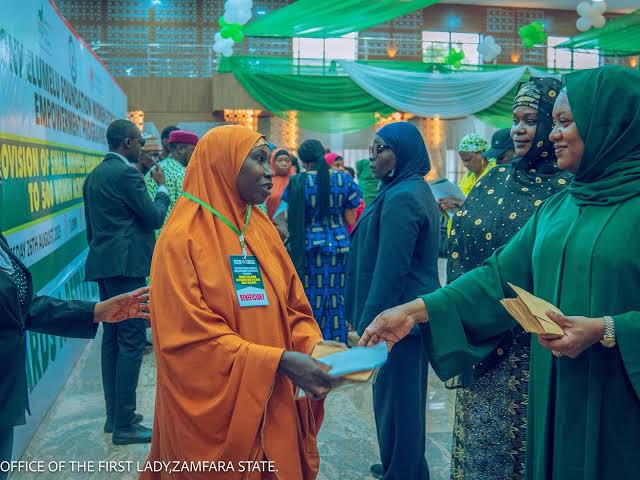
In a significant step toward expanding economic inclusion and strengthening livelihoods across northern Nigeria, the Zamfara State Government has launched a large-scale Women Economic Empowerment Initiative designed to support up to one million women entrepreneurs across the state.
The initiative, which is anchored on a broader policy framework for women’s economic advancement, is positioned as a long-term intervention aimed at improving access to opportunities, strengthening small-scale enterprises, and enabling women to play a more active role in local and state-level economic development.
At a time when conversations around inclusive growth and gender responsive development are gaining momentum across Africa, Zamfara’s announcement reflects a growing recognition of women as critical drivers of grassroots economic transformation.
A Policy Push for Inclusive Growth
The Women Economic Empowerment Initiative is designed as a structured intervention that focuses on expanding access to skills, financial opportunities, and enterprise development support for women.
While details of implementation are expected to unfold in phases, the programme is framed around addressing long-standing barriers that limit women’s participation in formal and informal economic systems. These barriers typically include limited access to capital, restricted business training opportunities, low financial literacy levels, and structural challenges that affect market access.
By targeting one million women, the initiative signals a large-scale ambition that goes beyond pilot interventions or short-term empowerment schemes. Instead, it suggests a population-level approach aimed at embedding women more deeply into the economic fabric of the state.
Stakeholders describe the policy direction as one that prioritises sustainability over temporary relief, focusing on building capabilities that can support long-term business growth and resilience.
Strengthening Women Led Enterprises
Women-owned and women-led enterprises play a crucial role in Nigeria’s informal and small business sectors, often dominating areas such as agriculture processing, petty trade, retail distribution, and services. However, many of these enterprises remain constrained by limited access to structured support systems.
The Zamfara initiative is expected to provide targeted interventions that may include entrepreneurship training, business development support, and improved access to financial services. These interventions are critical in transitioning women from subsistence-level activities into more structured and scalable enterprises.
In many developing economies, research has consistently shown that when women gain access to economic resources, the ripple effects extend beyond individual households to entire communities. Increased income in the hands of women often translates into improved education outcomes for children, better health investments, and stronger community resilience.
By focusing on women entrepreneurs, Zamfara’s initiative aligns with this broader development understanding that empowering women is not only a social goal but also an economic strategy.
Aligning With Broader Development Priorities
The programme also reflects alignment with national and global development priorities, particularly those focused on gender equality, poverty reduction, and economic inclusion.
Across Africa, governments and development institutions are increasingly integrating women-focused economic policies into their broader development frameworks. These efforts are often linked to the Sustainable Development Goals (SDGs), particularly Goal 5 (Gender Equality) and Goal 8 (Decent Work and Economic Growth).
In Zamfara’s case, the initiative can be seen as part of a wider effort to stimulate local economies through inclusive participation. By expanding opportunities for women entrepreneurs, the state is also indirectly strengthening household incomes and encouraging small business growth across rural and semi-urban communities.
Economic empowerment programmes of this scale are also often linked to long-term stability outcomes. When women have access to sustainable livelihoods, communities tend to experience reduced vulnerability to economic shocks and improved social cohesion.
Addressing Structural Barriers to Women’s Participation
Despite their significant contributions to informal economies, women in many parts of Nigeria continue to face systemic challenges that limit their economic potential. These challenges include limited access to credit, cultural constraints in some communities, and insufficient institutional support for small enterprises.
The Zamfara initiative appears to be designed with these realities in mind, seeking to create pathways that can help women overcome these barriers.
Access to finance remains one of the most significant obstacles for women entrepreneurs. Without collateral or formal credit histories, many women are unable to secure loans from traditional financial institutions. As a result, they often rely on informal savings groups or personal networks to fund their businesses.
By introducing structured empowerment mechanisms, the initiative has the potential to bridge some of these gaps, particularly if it incorporates financial literacy training and partnerships with financial institutions.
Equally important is capacity building. Many small-scale entrepreneurs operate without formal business training, which limits their ability to scale operations, manage finances effectively, or access larger markets. Training components within such initiatives often play a critical role in improving business survival rates and long-term sustainability.
The Role of Implementation in Determining Impact
While the announcement of large-scale empowerment programmes often generates optimism, the success of such initiatives ultimately depends on implementation.
Effective execution will require clear coordination mechanisms, transparency in beneficiary selection, and strong monitoring and evaluation frameworks. Without these elements, even well-intentioned programmes risk being fragmented or failing to reach their intended impact.
For Zamfara’s initiative to achieve its target of one million women, institutional capacity will be a key factor. This includes the ability to identify beneficiaries across urban and rural communities, deliver training at scale, and ensure that financial and non-financial support reaches those who need it most.
Partnerships are also likely to play an important role. Government-led empowerment programmes often achieve greater impact when they are implemented in collaboration with development organisations, private sector actors, and community-based groups.
Such partnerships can help expand reach, improve efficiency, and introduce innovation into programme delivery.
Potential Economic and Social Impact
If effectively implemented, the Women Economic Empowerment Initiative could have far-reaching implications for Zamfara’s economy.
At the household level, increased income generation among women can lead to improved living standards, better access to education for children, and enhanced healthcare outcomes. At the community level, stronger women-led enterprises can contribute to job creation and increased local trade activity.
At the state level, expanding the base of economically active citizens can improve overall productivity and reduce dependency ratios. Over time, this can contribute to more balanced and resilient economic growth.
There is also a social dimension to consider. Empowerment initiatives often contribute to shifting perceptions around women’s roles in society, particularly in communities where traditional norms may have limited women’s participation in economic activities.
By positioning women as central actors in economic development, the initiative may help strengthen broader conversations around equality and inclusion.
A Step Toward Long-Term Transformation
The launch of the Women Economic Empowerment Initiative represents more than a policy announcement; it reflects an attempt to structurally reposition women within the state’s economic development strategy.
While challenges around implementation, scale, and sustainability will inevitably arise, the ambition behind the programme signals a recognition that inclusive growth cannot be achieved without deliberate investment in women’s economic participation.
As the initiative progresses, its effectiveness will be measured not only by the number of women reached but also by the quality of outcomes achieved whether women are able to build sustainable businesses, increase income levels, and participate more fully in economic decision-making processes.
For now, Zamfara’s commitment adds to the growing number of subnational efforts across Nigeria seeking to translate gender empowerment policies into tangible economic outcomes. The real test, however, will lie in how these commitments are executed on the ground and the extent to which they create lasting change for women across the state.
[give_form id="20698"]