csrreporters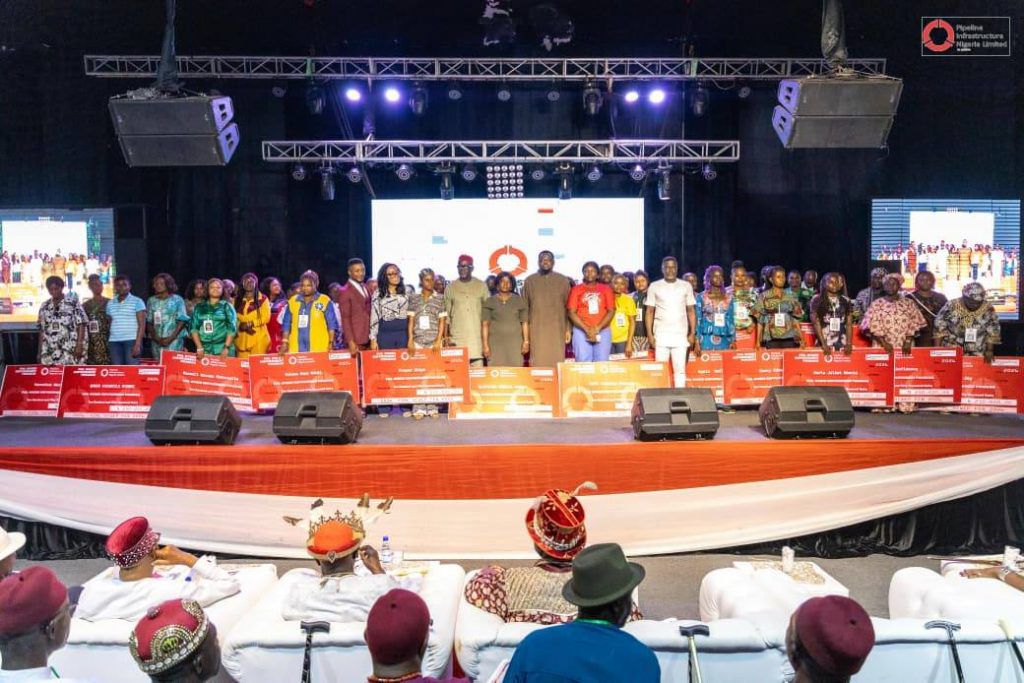
Pipeline Infrastructure Nigeria Limited (PINL) has announced the disbursement of ₦750 million to support 3,000 women across Niger Delta communities, in a move aimed at strengthening economic inclusion, boosting small-scale enterprise development, and supporting grassroots livelihoods.
The initiative forms part of the company’s broader community engagement and sustainability efforts, with a focus on empowering women as key drivers of household income, local commerce, and community stability.
By targeting women-led economic participation, the programme reflects a growing recognition that sustainable development must include direct investment in local communities, particularly in regions where economic opportunities remain limited.
Strengthening Women-Led Economic Participation
At the heart of the initiative is the goal of improving access to financial resources for women in the Niger Delta.
Women in many rural and semi-urban communities continue to face barriers such as:
- Limited access to formal financing
- Low capital for business expansion
- Restricted access to credit facilities
- Economic exclusion from mainstream investment systems
By providing direct financial support, the programme seeks to reduce these barriers and enable women to expand or strengthen their small businesses.
These businesses often operate in sectors such as:
- Small-scale trading
- Agriculture and food processing
- Services and retail
- Local production and craft industries
The ₦750 million intervention is expected to stimulate microeconomic activity and improve household income levels across participating communities.
A Community-Centered Development Approach
The Niger Delta has long been a region of both economic importance and development challenges. Despite its contribution to national revenue through oil and gas infrastructure, many host communities continue to face issues related to unemployment, limited infrastructure, and economic exclusion.
Corporate-led community development initiatives have therefore become a key component of efforts to bridge this gap.
PINL’s intervention reflects a community-centered development approach, where corporate entities invest directly in the socio-economic wellbeing of host communities.
This model is increasingly being used as part of broader corporate social responsibility strategies, particularly in sectors with high community impact such as oil and gas infrastructure.
Women as Drivers of Grassroots Development
Women play a critical role in sustaining local economies, particularly in rural communities where they are often responsible for household income generation, food production, and small business management.
Supporting women economically has been widely recognised as one of the most effective ways to improve community welfare because:
- Women tend to reinvest income into family wellbeing
- Female entrepreneurs support local supply chains
- Women-led businesses strengthen informal economies
- Financial empowerment improves education and health outcomes in households
By targeting 3,000 women, the initiative has the potential to create a multiplier effect that extends beyond individual beneficiaries to entire households and communities.
Financial Inclusion and Economic Empowerment
Access to finance remains one of the most significant challenges for small business owners in Nigeria, particularly women in rural areas.
Traditional banking systems often exclude individuals without collateral, credit history, or formal employment documentation. As a result, many small businesses remain underfunded or operate below capacity.
Programmes like this help to address that gap by providing:
- Direct financial grants or support
- Seed capital for business expansion
- Opportunities to scale micro-enterprises
- Improved financial stability for low-income households
In the long term, such interventions contribute to broader financial inclusion goals by integrating underserved populations into economic systems.
Impact on Local Economies
The injection of ₦750 million into local communities is expected to generate significant economic ripple effects.
At the community level, such funding can lead to:
- Increased trading activity in local markets
- Expansion of small-scale businesses
- Job creation within informal sectors
- Improved circulation of income within communities
When small businesses grow, they often create indirect employment opportunities by hiring additional workers, sourcing from local suppliers, and increasing demand for goods and services.
This creates a cycle of economic activity that supports wider community development.
Corporate Social Responsibility and Community Investment
PINL’s initiative reflects a broader trend in corporate social responsibility where companies move beyond traditional philanthropy to more structured community investment programmes.
In modern CSR frameworks, companies are increasingly expected to:
- Contribute to local economic development
- Support inclusive growth initiatives
- Invest in long-term community stability
- Align operations with sustainable development goals
In sectors such as oil and gas infrastructure, community engagement is particularly important due to the direct impact of operations on host environments.
By investing in women-led economic empowerment, PINL demonstrates an approach that combines social responsibility with community sustainability.
The Niger Delta Context
The Niger Delta remains one of Nigeria’s most economically strategic yet socially complex regions.
While it is central to the country’s oil production and export revenues, many communities continue to experience:
- High unemployment rates
- Limited access to infrastructure
- Environmental challenges
- Unequal distribution of economic benefits
In this context, development interventions that focus on local empowerment are essential for improving stability and reducing economic disparity.
Supporting women in particular is seen as a strategic approach, given their central role in household and community-level economic systems.
Sustainability and Inclusive Development
The initiative also aligns with broader sustainability goals, particularly those focused on poverty reduction, gender equality, and inclusive economic growth.
Within the framework of the United Nations Sustainable Development Goals (SDGs), the programme contributes to:
- SDG 1: No Poverty
- SDG 5: Gender Equality
- SDG 8: Decent Work and Economic Growth
By investing in women’s economic empowerment, the programme supports long-term development outcomes that go beyond immediate financial assistance.
Challenges and Considerations for Long-Term Impact
While financial disbursement programmes provide immediate relief and opportunity, long-term impact depends on sustainability and support structures.
Key considerations include:
- Whether beneficiaries receive business training or mentorship
- Access to markets for expanded business activities
- Monitoring and evaluation of fund usage and impact
- Continuity of support beyond initial funding
- Integration with broader economic development programmes
Without these supporting systems, financial interventions risk delivering short-term relief rather than sustained economic transformation.
Conclusion
The disbursement of ₦750 million by Pipeline Infrastructure Nigeria Limited to empower 3,000 women in Niger Delta communities represents a significant investment in grassroots economic development and gender inclusion.
By focusing on women-led enterprises, the initiative addresses key barriers to financial inclusion while strengthening local economies and supporting household livelihoods.
More broadly, it reflects a growing shift in corporate responsibility—from isolated philanthropic gestures to structured, impact-driven community investment strategies.
As Nigeria continues to navigate economic and development challenges, initiatives like this highlight the critical role of women in driving inclusive growth and the importance of sustained investment in community-level empowerment.
Ultimately, the success of such programmes will be measured not only by the funds disbursed, but by the long-term economic resilience and opportunities they help create across communities.
Further reading: Minister unveils women empowerment fund
[give_form id="20698"]