Eche Munonye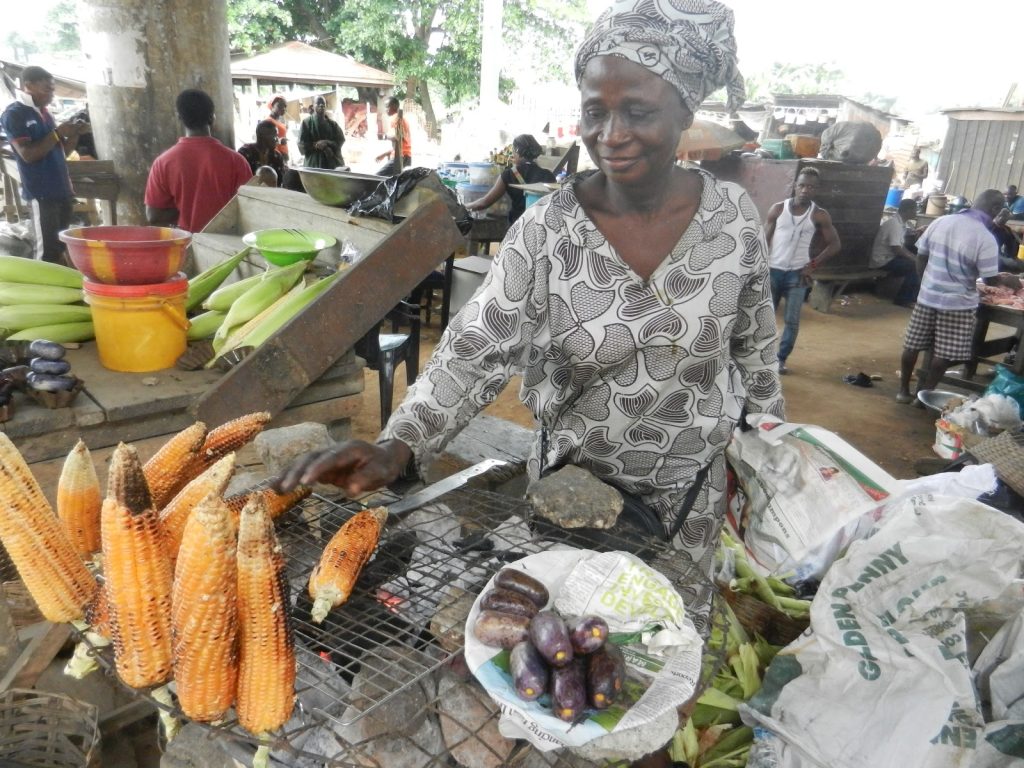
The Democratisation of Disempowerment in Nigeria
When empowerment programmes scale poverty instead of ending it
There is a particular cruelty in being told you have been empowered when nothing in your life has meaningfully changed.
It becomes even harder to accept when the announcement arrives with speeches, banners, cameras, and the quiet expectation that gratitude should follow.
Recent reports that Nigeria’s First Lady empowered women through support packages for roadside food vending have sparked debate across the country. Some reactions have been emotional. Others defensive. But much of the conversation has missed the deeper issue beneath the headlines.
This is not simply a political argument. It is a question about what empowerment actually means, what it should achieve, and what it reveals about the assumptions behind many public intervention programmes in Nigeria.
The Dignity Question
Roadside food vending is honest work. Millions of Nigerians survive through small-scale trade carried out under difficult conditions. The women who sell akara, roasted corn, groundnuts, and other roadside foods are hardworking people navigating an economy that often offers limited alternatives.
But survival should not be confused with transformation.
For many women, roadside vending is less a chosen aspiration than an economic pathway shaped by necessity. When government programmes present that same survival model as a development outcome, an important question must be asked: what exactly has changed?
Programmes are not just interventions. They are statements about what a society believes people deserve.
At a time when African women are building technology companies, leading financial institutions, managing investment portfolios, and driving innovation across industries, the ambition of national empowerment programmes cannot remain trapped at the level of subsistence trading.
A charcoal stove and a roadside table may help someone survive for a while. But survival alone is not empowerment. Development should expand possibilities, not simply formalise hardship.
The Economics of Recycled Struggle
There is also a practical economic problem with many empowerment initiatives designed around low-entry informal trading.
Development economists often describe this as supply-side intervention without demand-side planning. People are trained, starter kits are distributed, photographs are taken, and success is declared. What is rarely examined seriously is the market itself.
Who is buying?
If one hundred women in the same community are all empowered to sell akara, roasted corn, or groundnuts, the programme has not necessarily created one hundred sustainable businesses. In many cases, it has simply intensified competition within an already fragile informal economy.
The customer base remains limited. Prices fall. Margins shrink. Earnings become thinner. The women compete against one another for the same small pool of buyers while operating within an environment that offers little protection against inflation, illness, insecurity, or extortion.
At scale, programmes like this risk reproducing subsistence rather than reducing it.
The irony is difficult to ignore: the wider the programme spreads identical low-income activities, the harder it may become for individual participants to earn meaningful income from them.
When everyone is empowered to do the same thing, the only thing that becomes widely shared is the struggle itself.
What Real Empowerment Requires
Real empowerment is not a starter pack distributed at a public event. It is a structured economic intervention designed around measurable and sustainable outcomes.
It asks difficult but necessary questions.
What skills create long-term economic value?
Not simply skills that can be acquired quickly with minimal barriers to entry, but skills linked to growing sectors and stable demand — digital literacy, technical services, agribusiness processing, logistics, healthcare support, financial management, manufacturing, renewable energy, and other areas capable of generating upward mobility.
It asks what assets improve a person’s long-term economic position.
Land access. Cooperative structures. Equipment ownership. Market access. Savings systems. Financial inclusion. Business networks.
It asks what protection exists.
What happens when illness prevents a woman from trading for two weeks? What happens when floods destroy inventory? What happens when local officials demand informal payments? What happens when insecurity disrupts business activity or household income disappears?
Empowerment without protection can quickly become exposure with a certificate.
Most importantly, serious empowerment programmes ask the question many public interventions avoid: what does success look like twelve months later?
Not how many people attended an event.
Not how many starter packs were distributed.
Not how many photographs circulated online.
But how many participants experienced measurable improvements in income, stability, opportunity, or quality of life.
Without that evidence, empowerment risks becoming performance rather than policy.
The Corporate Accountability Problem
There is another dimension to this issue that deserves scrutiny.
Many empowerment programmes are supported directly or indirectly by corporations seeking visibility through CSR and sustainability partnerships. Public ceremonies are organised. Branding opportunities are secured. Press releases are issued. Headlines celebrate intervention numbers.
Yet too often, the actual economic outcomes for beneficiaries remain unclear long after the event ends.
Businesses genuinely committed to women’s empowerment should be investing in systems that create mobility rather than dependence:
- structured skills development,
- supply-chain integration,
- cooperative financing,
- market access,
- mentorship,
- technology access,
- and outcome tracking.
Serious social investment measures impact beyond attendance figures. It tracks whether incomes improved, businesses survived, children remained in school, or participants gained greater financial stability months after intervention programmes concluded.
Anything less risks reducing vulnerable people into instruments for institutional reputation management.
A Final Word
The women selling akara by the roadside are not the problem.
They are doing what millions of Nigerians do every day: adapting, surviving, and working within the limits imposed by a difficult economy.
The larger problem is a development culture that too often confuses visibility with impact and short-term intervention with structural change.
Real empowerment begins with respect. It begins with recognising that poor people do not merely need activities to occupy them; they need opportunities capable of expanding their choices, protecting their dignity, and improving their long-term economic reality.
And if empowerment programmes are serious, they must be willing to prove that those outcomes actually happened.
Until then, Nigeria risks continuing a cycle where struggle is redistributed, survival is rebranded as progress, and hardship is repeatedly presented as empowerment.
Nigeria’s women deserve more than that.
[give_form id="20698"]