csrreporters
What should have been a flagship sustainability initiative has instead triggered a transport crisis
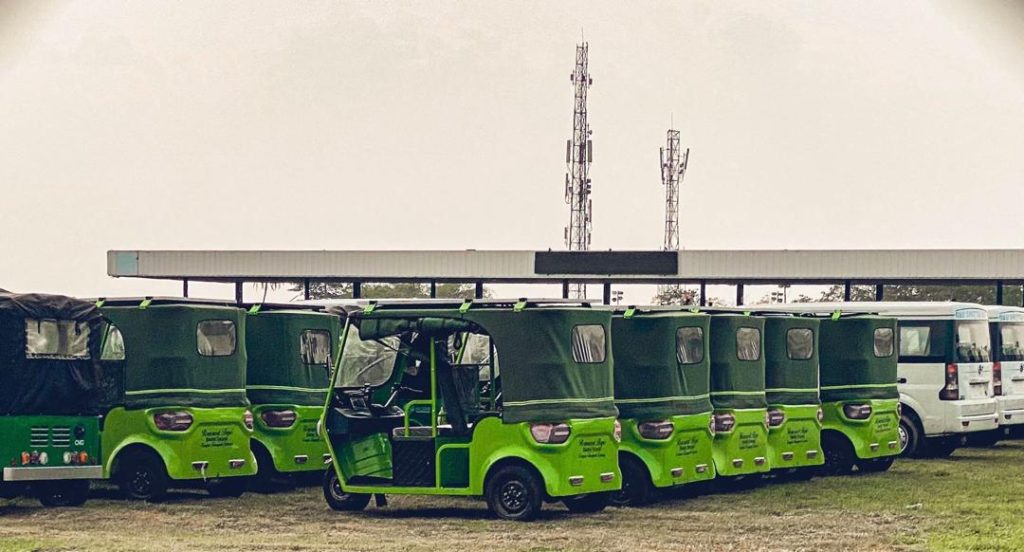
At first glance, the introduction of compressed natural gas transport at Obafemi Awolowo University looks like progress. Cleaner buses, reduced emissions, and a modernised campus mobility system should have been a win. In fact, the donation of 50 CNG buses and 30 CNG tricycles by Nigeria’s First Lady, Senator Oluremi Tinubu, positioned the university as a potential model for sustainable transport in Nigerian institutions.
However, what should have been a flagship sustainability initiative has instead triggered a transport crisis. Just 2 weeks into the semester and students are stranded, academic schedules are disrupted, and tensions have escalated into a 72-hour lecture boycott. The problem is not the idea itself. It is the timing, planning, and execution.
This is where the conversation must move beyond campus complaints and into the broader framework of responsible institutional practice and sustainability governance.
A Sustainability Idea Without Social Balance
CNG buses are undeniably better for the environment. They emit fewer pollutants than petrol and diesel vehicles, and they align with global efforts to transition to cleaner energy. Therefore, introducing them into a large university setting could have served as a practical pilot for Nigeria’s green transition.
However, sustainability is not only about the environment. It must also consider people.
Interestingly, even before the new system was introduced, students were already dealing with long queues due to a severe shortage of buses. The commissioning of the CNG buses was therefore expected to bring relief and improve an already strained system. Instead, the outcome has been the opposite.
At OAU, the environmental benefit came at a significant social cost. The university management phased out motorcycles and commercial buses almost immediately, replacing a flexible, functioning system with a limited fleet of about 80 vehicles for over 30,000 students.
As a result, students now face long queues, overcrowding, and delayed commutes. Many miss lectures, while others spend hours trying to return to their hostels. For off-campus students, the situation is even worse, as transport costs have nearly doubled due to reduced options.
In other words, a policy designed to improve mobility has made movement more difficult.
From a responsibility standpoint, this reflects a failure to balance environmental goals with stakeholder welfare. Sustainability cannot succeed when it creates hardship for the very people it is meant to serve.
When Good Intentions Meet Poor Implementation
Timing is everything in policy execution. Unfortunately, the rollout at OAU ignored this basic principle.
The transition happened abruptly. There was no gradual phase-out of the old system, no pilot testing across peak periods, and no adequate buffer to absorb demand shocks. Instead, the university took out existing transport options and brought in a system that was not yet ready to carry the full load.
Even the Students’ Union acknowledged that the initiative may be in a “teething phase.” However, the reality on the ground suggests something deeper than early-stage inefficiencies.
Students report that buses are too few, routes are insufficient, and operational logistics remain unclear. Meanwhile, management projections that the system could handle up to 20,000 students within two hours have not translated into lived experience.
Consequently, frustration has grown. The 72-hour lecture boycott is not just a protest against inconvenience. It is a response to systemic planning gaps.
From a governance perspective, this highlights a failure in foresight, stakeholder engagement, and risk assessment.
The Human Cost of Policy Decisions

Policies often look neat on paper. However, their real impact is measured in everyday experiences.
At OAU, students now wake earlier, wait longer, and still arrive late. Some trek long distances across one of the largest university campuses in Nigeria. Others abandon lectures altogether due to transport uncertainty.
Additionally, the removal of motorcycles and commercial buses has affected livelihoods. Many operators who depended on campus transport for income have been displaced without a clear transition plan.
This is a critical blind spot in responsible leadership. Social responsibility extends beyond direct beneficiaries to include all stakeholders impacted by a decision.
Moreover, the perception gap between management and students has widened. While official statements suggest the system will “ease transportation,” student feedback tells a different story. This disconnect erodes trust and weakens institutional credibility.
When stakeholders feel unheard, even well-intentioned initiatives lose legitimacy.
Lessons for CSR and ESG Projects in Nigeria
The OAU situation offers an important lesson for organisations and institutions across Nigeria.
First, sustainability must be holistic. Environmental gains should not come at the expense of social well-being. Responsible leadership is not a checklist. It is a balancing act.
Second, stakeholder engagement is not optional. Students are the primary users of the transport system. Therefore, their input should have shaped the design and rollout. While consultations did occur, they appear to have had limited influence on final decisions.
Third, transition planning is critical. Any major system overhaul requires phased implementation, contingency measures, and real-time adjustments.
Finally, transparency matters. When expectations are not met, clear communication can prevent frustration from escalating into conflict.
A Better Way Forward
Despite the current challenges, the situation is not beyond repair. In fact, OAU still has an opportunity to turn this into a model sustainability case study, if it takes the right steps.
First, the university should adopt a hybrid transport model. Instead of an outright ban, it can reintroduce motorcycles and commercial buses temporarily to complement the CNG fleet. This would immediately reduce pressure on the system.
Second, there should be a phased transition plan. As the school acquires more CNG buses, reliance on older transport modes can gradually decrease. This ensures continuity without disruption.
Third, route optimisation and scheduling must improve. Data-driven planning can help identify peak demand periods and high-traffic routes, allowing for better allocation of buses.
Fourth, stakeholder engagement must be strengthened. Regular feedback sessions with students, transport operators, and staff can provide valuable insights and build trust.
Fifth, there should be targeted support for off-campus students. Subsidised transport options or extended routes could ease their burden.
Finally, the school should introduce accountability mechanisms. Clear performance metrics for the transport system will help track progress and ensure continuous improvement.
Turning Crisis into Opportunity
Interestingly, the OAU transport crisis could still become a success story.
If managed correctly, the university can demonstrate how institutions can transition to cleaner energy without compromising user experience. It can also provide a blueprint for other Nigerian universities looking to adopt sustainable transport solutions.
However, this requires a shift in approach. Sustainability must move from being policy-driven to people-centered. Right now, the system reflects ambition without alignment. Yet, with the right adjustments, it can evolve into a model of responsible innovation.
Final Thoughts
The introduction of CNG buses at OAU was never the problem. In fact, it represents the kind of forward-thinking initiative Nigeria needs. However, ideas alone are not enough. Execution determines impact.
At present, students are paying the price for a system that prioritised speed over structure and vision over viability. That is not sustainable. For responsible and sustainable systems to truly work, they must start with one simple principle. Do no harm while trying to do good.
OAU still has time to get this right. The question is whether it will listen, adapt, and lead or remain a cautionary tale of how not to implement change.
At CSR Reporters, we track how policies impact people, not just headlines. Follow us for more insights on sustainability, governance, and social impact across Nigeria. Have a story or perspective to share? Partner with us or submit your insights to be featured.
[give_form id="20698"]