The Potential of Nigeria’s Lithium Plant Is Not in Doubt – But First, Let’s Resolve the Nagging Illegal Mining Question
 CHUKS OLUIGBO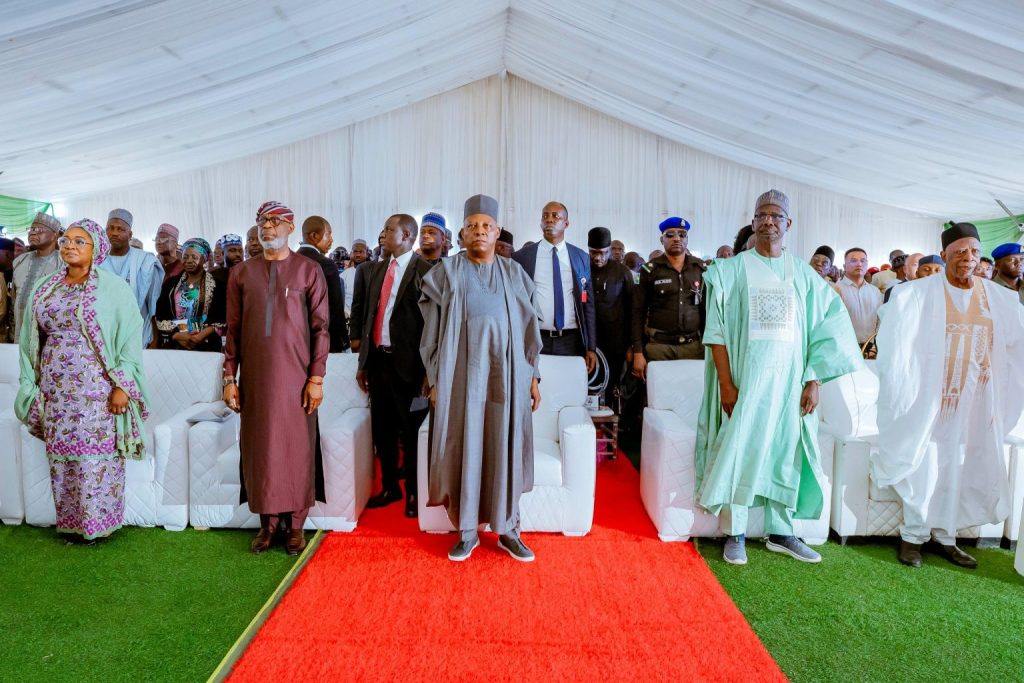
Image credit: State House Media
Nigeria on Thursday, 2 July 2026 took a bold step forward in its quest to shift away from exporting raw minerals to processing them locally when it inaugurated what the government called West Africa’s largest lithium processing plant in Nasarawa State.
With the inauguration of the 3,000,000-metric-tonnes per annum plant developed by Diamond New Energy, Nigeria postitions itself as a critical participant in the clean energy transition and the growing global battery minerals market.
Lithium is today one of the world’s most strategic minerals because it powers the global production of rechargeable lithium-ion batteries used in electric vehicles (EVs), smartphones, laptops, and renewable grid systems. The demand will keep growing as global sustainability ambitions drive decarbonisation targets and accelerate the transition to cleaner energy sources.
At the inauguration, President Bola Tinubu, represented by Vice President Kashim Shettima, waxed poetic about how only vision can turn the blessing of natural resources into wealth.
“What changes a nation is a deliberate movement from extraction to processing, from potential to production, from raw materials to value-added goods, and from isolated investments to integrated industrial ecosystems,” he said.
But beyond the poetic words, there is a pressing question: will illegal mining allow the full realisation of the goals of the processing plant?
Nigeria’s Raw Materials Export Ban at Work
The development of the lithium processing plant is a response to the Raw Materials Research and Development Council (RMRDC) Amendment Bill that mandates a minimum of 30 per cent local value addition before any raw materials can be exported from Nigeria. The proposed legislation, which still awaits preseidential assent, is intended to drive industrialisation, generate local jobs, and conserve foreign exchange.
Chinese firms before now relied heavily on importing raw, unprocessed lithium ore out of Africa. However, the impending law compelled a team-up by two Chinese-owned lithium giants, Canmax Technologies Co. Ltd. and Jiangxi Jiuling Lithium Co. Ltd., to form Diamond New Energy that has now built the $250-million facility to refine the materials locally before shipment.
Not just Nigeria but several African countries, from Zimbabwe to Namibia, are moving in a similar direction as they seek to capture a larger share of the value generated by the global transition to electric vehicles, battery manufacturing and renewable energy.
A Step in the Right Direction
A lithium processing plant is in order. Possession of natural resources is just potential; transforming those resources into economic opportunities is what turns potential into prosperity. The potential benefits are immense.
The benefits come in the form of massive job creation, economic diversification, and increased Internally Generated Revenue (IGR) as Nigeria strategically shifts from exporting raw minerals to in-country processing.
Already, the company operating the facility has said the project has created more than 1,000 direct and 2,000 indirect jobs since operations began.
As the Federal Government seeks to diversify the economy away from over-reliance on crude oil, the mining sector presents itself as a great ally. And the shift from raw minerals export to local processing delivers far more revenue into the government coffers.
As it is for the Federal Government, so also for Nasarawa State Government. Massive improvement in IGR from tax as economic activities increase, and foreign exchange earnings from export of processed lithium salt and lithium…
Local communities around the facility will also benefit from local infrastructure and other community development projects put in place by the operators of the processing plant.
But illegal mining poses a huge threat to the realisation of these benefits.
A Challenge as Pressing as a Processing Plant
Tackling the challenge of illegal and artisanal mining across Nigeria’s estimated 1,759 illegal mining sites is perhaps as pressing as a processing plant.
Beyond lithium that is found in Nasarawa, Kogi, Kwara, Ekiti, Cross River, Oyo, and Kaduna States, Nigeria boasts of over 44 commercially viable minerals spread across different states.
Just ahead of the inauguration of the lithium plant, Minister of Solid Minerals Development, Dele Alake, announced the discovery of “a world-class polymetallic mineral province” in Kaduna State containing deposits of platinum group metals, gold, nickel, copper, lithium, and rare earth elements.
These minerals offer a pathway to Nigeria’s economic redemption. But illegal mining, fuelled by absence of economic opportunities and weak governance structures, deprives the country of the economic transformation that should accrue from the effective harnessing of its minerals.
Tobi Tunji, in a May 2025 article published on VerivAfrica, said, “Illegal mining has emerged as a major obstacle to the formalisation and growth of Nigeria’s mining industry. While the sector has the potential to contribute significantly to Gross Domestic Product, job creation, and foreign exchange earnings, illegal mining has stifled its progress.”
A Cost Too Huge to Ignore
The cost of illegal mining is huge. Nigeria loses approximately $9 billion annually to illegal mining and the smuggling of precious minerals, particularly gold, depriving the government of vital revenues. The mining sector contributed just 0.75 per cent to the GDP as of 2023.
But beyond the loss of revenue to government, the environmental consequences of illegal and unregulated mining are severe and often long-lasting – from deforestation to biodiversity loss, land degradation, water contamination, and air pollution. Ecosystems are destroyed, agricultural land is damaged, and food production is undermined, pushing farming-dependent rural communities into declining incomes, reduced food security, and increased vulnerability to poverty.
Illegal mining activities affect public health and community wellbeing. The 2010 lead poisoning epidemic in Zamfara State that claimed at least 400 lives and left hundreds of children with permanent neurological disabilities is a vivid example.
Reports have also linked illegal mining to organised criminal groups, banditry and mineral smuggling. For instance, a report by ENACT Africa said sponsors of illegal mining routinely fund banditry and cattle rustling in mining communities to orchestrate violent conflicts and displace local populations to gain unhindered access to mineral deposits.
The Way Forward
Nigeria has signalled its readiness to climb higher up the global lithium value chain. Solid Minerals Minister Alake said the government’s goal is “to produce lithium batteries, vehicles, phones, solar panels, solar-powered turbines, and every gadget that uses lithium as a base requirement for its performance”.
Yu Chongqiang, who spoke on behalf of Diamond New Energy at the inauguration, said the company is investing beyond mining by developing processing facilities, infrastructure, workforce training and partnerships with host communities. He noted further that the company’s long-term goal is to build an integrated industrial platform that will strengthen local manufacturing, support supply chains and contribute to Africa’s clean energy future.
But to actualise these ambitions, the government must ensure to address illegal mining.
At the end of the day, beyond addressing the social and economic factors that fuel illegal mining, the challenge boils down to regulatory effectiveness, institutional accountability, and the enforcement of existing laws. It is not rocket science.
[give_form id="20698"]