ROSEMARY IMOBHIO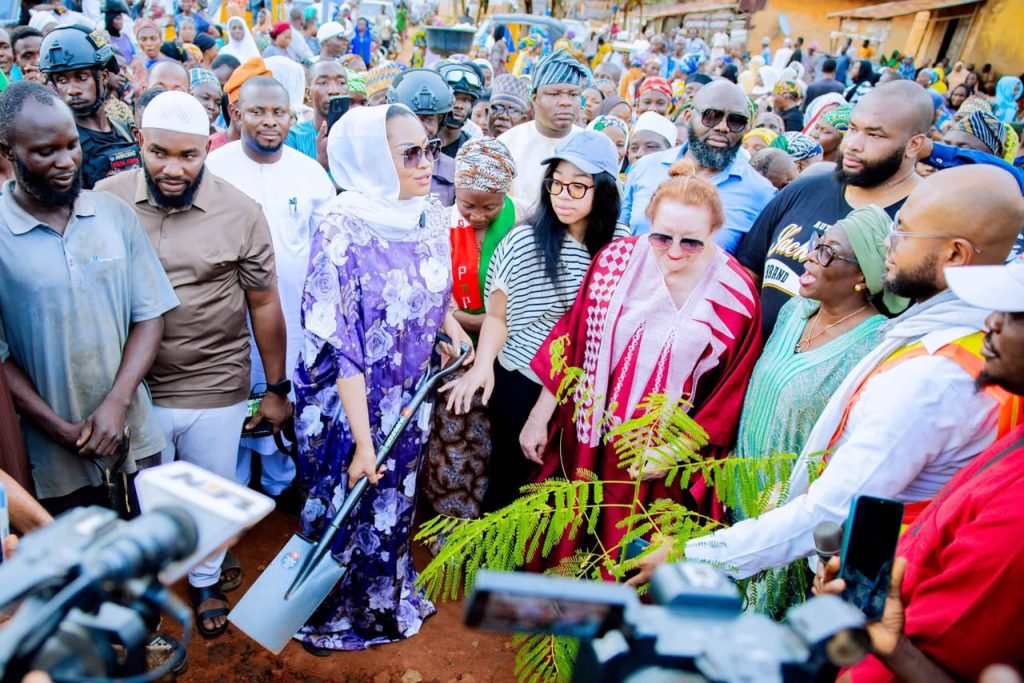
Senator Natasha Akpoti-Uduaghan has launched a 10,000 economic tree planting initiative across communities in Kogi Central, positioning the project as a grassroots response to climate change while creating new opportunities for food security, environmental restoration and rural livelihoods.
The initiative, themed “Growing Kogi Central, Building Our Future,” seeks to restore degraded landscapes and reduce soil erosion. It also aims to improve biodiversity and strengthen household incomes through the cultivation of fruit bearing and indigenous tree species. The project was unveiled as climate experts continue to call for greater investment in nature-based solutions across Africa.
According to the senator, the programme will distribute and plant species such as mango, guava, orange, moringa, neem and other indigenous trees valued for their environmental, nutritional, medicinal and commercial importance. Beyond increasing green cover, the project aims to encourage communities to view environmental protection as an economic opportunity rather than a burden.
Climate action meets community development
Speaking during the launch, Akpoti-Uduaghan described the programme as a long term investment in both people and the environment. She said Kogi Central was joining a growing global movement that recognises trees as one of the most practical tools for addressing climate change while supporting local economies. She also explained that the initiative aligns with international climate objectives that encourage ecosystem restoration, carbon sequestration and sustainable land management.
Furthermore, she noted that economic trees offer multiple benefits because they provide food, generate income and improve environmental resilience at the same time.
Across Africa, governments and development partners have increasingly embraced tree planting programmes. This is important as countries respond to rising temperatures, changing rainfall patterns and land degradation. While large scale afforestation campaigns have expanded in several regions, experts continue to stress that community ownership remains the deciding factor for long term success.
Why economic trees matter
Unlike ornamental trees, economic trees produce products that households can consume or sell. As a result, they create direct financial incentives for communities to protect and nurture them. Akpoti-Uduaghan said that approach informed the selection of fruit trees and indigenous species for the Kogi Central project.
She argued that environmental sustainability and economic prosperity should reinforce each other instead of competing for attention. According to her, the trees are expected to improve air quality, increase food production, and provide medicinal value. They’ll also create additional sources of household income through fruit harvesting and other commercial activities.
The senator also linked the project to Nigeria’s broader climate commitments, saying local communities have an important role in achieving national environmental goals.

Communities urged to protect the trees
A major focus of the initiative is long term maintenance rather than simply planting seedlings. For that reason, Akpoti-Uduaghan called on traditional rulers, schools, youth organisations, women groups, farmers and civil society organisations to take ownership of the project. She warned that climate change is already affecting local communities through erosion, higher temperatures, changing rainfall patterns and declining agricultural productivity.
Environmental advocates present at the launch welcomed the initiative, expressing confidence that it could deliver lasting environmental and economic benefits if communities remain committed to maintaining the trees after planting.
Nature-based solutions gain momentum
The launch comes at a time when nature-based climate solutions continue to receive growing attention globally. Scientists and environmental organisations have repeatedly identified afforestation and reforestation among the most cost effective approaches for reducing atmospheric carbon while restoring damaged ecosystems. In addition, healthy forests improve soil fertility, reduce flooding and erosion, protect biodiversity and strengthen agricultural productivity.
Across Africa, these benefits are becoming increasingly important as climate related disasters place additional pressure on food systems and rural livelihoods.
Tree planting alone cannot solve climate change. However, environmental experts argue that it forms an essential part of wider adaptation and mitigation strategies. When combined with sustainable land management, renewable energy investments and stronger environmental policies, impact can occur.
A wider lesson for Africa
The Kogi Central initiative also reflects a broader trend emerging across the continent. Many African leaders are beginning to integrate climate action with economic development instead of treating them as separate priorities.
Projects that combine environmental conservation with income generation often enjoy stronger public support. This is because local communities experience direct benefits from participation. Economic tree programmes can also contribute to national food security. They do this by increasing access to fruits and medicinal plants while improving soil health for farming communities.
As African countries prepare for future climate negotiations and work toward their national climate targets, locally driven initiatives such as this could complement government policies by encouraging greater citizen participation.
Nigeria is a country where erosion, desertification and deforestation continue to threaten many communities. Sustained investment in restoration projects could help strengthen climate resilience while supporting rural development here.
The success of the Kogi Central programme will ultimately depend on survival rates of the planted trees and continued engagement from residents. Nevertheless, environmental observers believe initiatives that place communities at the centre of climate action offer a stronger chance of creating lasting environmental and social impact.
If successfully implemented and maintained, the 10,000 tree project could become a model for similar community-led environmental restoration efforts. This can bring change across Nigeria and other African countries seeking practical ways to balance climate action with inclusive economic growth.
[give_form id="20698"]