CSR Reporters Editorial Team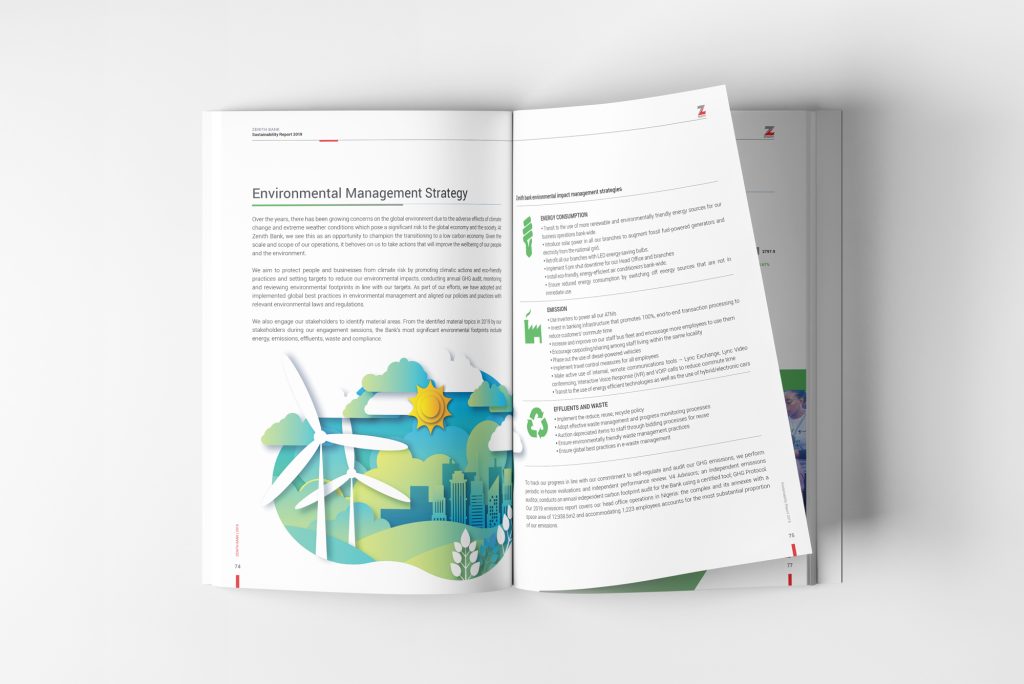
THE VERDICT | Who Kept their Word. Who Did not – Volume 16
Verified Climate Disclosure Meets an Unsettled ₦87 Billion Claim
This edition pairs two Nigerian companies whose stories intersect at the same question: what happens when a number is put on paper? For one, the answer is an assured disclosure a reader can check against a named standard. For the other, it is a community’s arithmetic — a specific naira figure, a specific historical payment pattern — that the company acknowledges without resolving. Both stories broke, or reached a new milestone, within the same reporting cycle, which is precisely the kind of same-week contrast The Verdict exists to hold up.
COMMENDED: Zenith Bank Plc
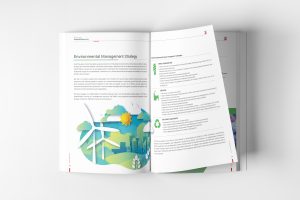
For FY2025, Zenith Bank published its first standalone sustainability report prepared under the ISSB’s IFRS S1 and IFRS S2 standards, explicitly labelled “Assured” with assurance statements included in the document. The bank’s Founder and Chairman, Jim Ovia, framed the report as the culmination of an eleven-year, unbroken sustainability reporting practice — a rare claim of longevity in a market where most sustainability disclosure only became a serious differentiator in the last three to four years.
What separates this from a marketing document is the specificity of what it discloses. On financial inclusion, the bank reports having supported 1,861 SMEs with ₦15.98 billion in loans in the reporting year — a 741% increase over the prior year — alongside ₦355.8 million disbursed specifically to women-owned businesses, addressing a financing gap that has been well documented but rarely quantified this precisely by a Tier-1 Nigerian lender. On environmental performance, the bank reports 397,440 MWh of renewable energy consumed across its operations and a 14.3% reduction in Scope 2 emissions — the kind of figure that only means something if it can be checked against a prior-year baseline, which the assured-report format is designed to allow.
The one qualification this edition must state plainly, in keeping with our own disclosure standard: the specific third-party assurance provider behind Zenith’s “Assured” designation was not confirmed from the public excerpts reviewed for this edition. Readers should treat the assurance claim as the bank’s own labelling until an assurer is named and independently verified — the same caveat CSR Reporters applied to Sunbeth Global Concepts in Vol. 15 when a report announcement did not name its assurance provider. A commendation for adopting the framework and publishing quantified metrics stands; a commendation for the assurance specifically should wait for that name.
CALLED OUT: Renaissance Africa Energy Company (RAEC)
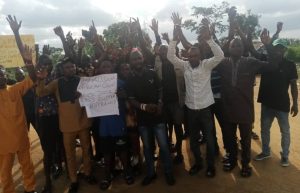
On September 24, 2026, community representatives from Abia, Akwa Ibom, Bayelsa, Delta, Imo and Rivers states gathered in protest outside the Port Harcourt headquarters of Renaissance Africa Energy Company, the entity formed after Shell’s 2024 divestment of its onshore Nigerian assets, formerly operating as the Shell Petroleum Development Company of Nigeria. Their demand was specific: ₦87 billion in outstanding ground-rent payments, which they say Shell had paid on a consistent five-year cycle from 2009 through 2014, before the payments stopped.
The claim is not framed as a new grievance invented against a new owner; it is framed as an inherited obligation. Community spokesperson Chief Ayiba Job alleged that RAEC’s non-payment defies both a Senate resolution and a Federal High Court directive addressing the matter — meaning this is not simply a company-community dispute sitting outside formal channels, but one where the country’s legislative and judicial arms have already weighed in, without the underlying payment following.
RAEC did respond on the record, through Igo Weli, its Vice President for Relations and Sustainable Development, who said relevant government agencies were already handling the matter and that the company had fulfilled its documented obligations to identified landlords. That response is worth reading carefully: it neither disputes the ₦87 billion figure nor commits to a payment timeline. It relocates responsibility to government process while the claim itself remains publicly unresolved — the same pattern this week’s RANKED edition on host-community grievances found repeated across Nigeria’s oil and gas, agribusiness, and mining sectors: acknowledgment without resolution.
The Pattern
Set side by side, these two stories are not simply a good company and a bad one — they are two different relationships to verifiability. Zenith’s climate numbers are checkable, even where one detail (the assurer’s name) still needs pinning down; that is a gap this edition can close with one more phone call or filing search. RAEC’s ₦87 billion figure is also checkable, in principle — there is a Senate resolution and a court directive that name it — but the company’s own response does not attempt to check it, only to redirect it. The difference between an incomplete disclosure and an unaddressed obligation is the difference this edition is built to surface.
[give_form id="20698"]