


 Eche Munonye
Toward an African Social Taxonomy: Rethinking ESG Beyond Borrowed Frameworks
Why the continent needs a social classification system built for its own realities — and why ISO 26000 may be the most credible place to start.
When the Sustainability Professionals Institute of Nigeria (SPIN) convened its inaugural conference, the gathering was billed as a milestone for the profession on the continent — a coming-together of practitioners, regulators, and corporate leaders to chart what credible sustainability practice should look like in African organisations. But it was a single provocation from the floor, raised by SPIN’s President, Prof. Kenneth Amaeshi, that has continued to reverberate long after the closing remarks: does Africa need its own social taxonomy?
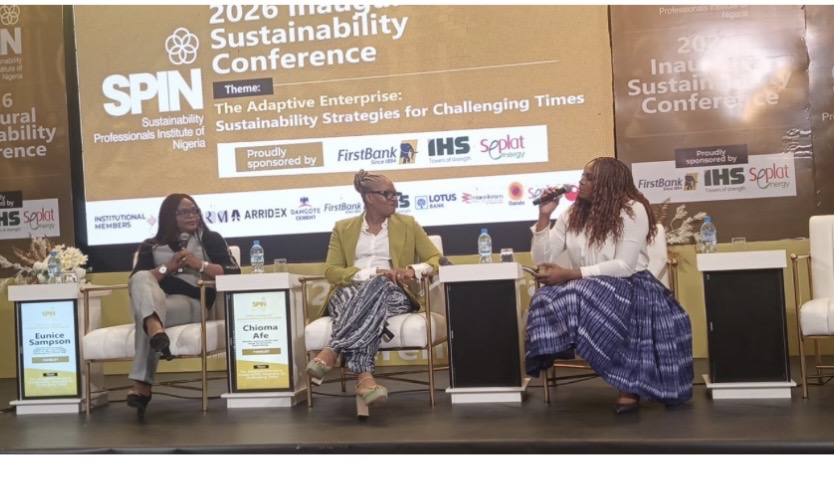
The question was directed, in part, at panellist Eustace Onuegbu, whose remarks on the day argued that global ESG standards should function as a flexible scaffolding for African organisations rather than a rigid, imported checklist. Time did not allow him to fully unpack Prof. Amaeshi’s challenge during the session. In the days since, Onuegbu has expanded on the idea — and the case he makes deserves a wider audience than a single panel could give it.
A Taxonomy Modelled on Whom?
The instinct to model an African social taxonomy on the European Union’s environmental frameworks is understandable. The EU Taxonomy has become the reference point for what a rigorous, investment-grade classification system can look like: a regulatory tool that defines which economic activities qualify as environmentally sustainable for reporting and capital-allocation purposes.
But this is precisely where Onuegbu urges caution. A common misconception, he notes, is to speak of “ESG taxonomy” as though it treats environmental, social, and governance issues with equal rigour. In reality, the EU framework is overwhelmingly an environmental sustainability taxonomy, with only limited social and governance elements built in as safeguards and minimum-compliance conditions. Borrowing its architecture wholesale for a social taxonomy, in other words, would mean building on a foundation designed for a different purpose.
The Case for ISO 26000
If not the EU model, then what? Onuegbu’s answer, drawn from years of engagement with some of Africa’s largest companies, points to an unlikely but compelling candidate: ISO 26000, the international guidance standard on social responsibility.
ISO 26000 is not, on its own, a formal taxonomy or index system. It offers no scoring thresholds, no pass/fail bands, no regulatory teeth. To function as a social taxonomy, it would need to be operationalised — translated into measurable criteria, indicators, and thresholds suitable for regulatory or investment use. But as a foundation, Onuegbu argues, it has few rivals.
The standard organises social responsibility around seven core subjects:
- Organisational governance
- Human rights
- Labour practices
- The environment
- Fair operating practices
- Consumer issues
- Community involvement and development
For the specific purpose of building a social taxonomy, the strongest of these — human rights, labour practices, fair operating practices, consumer issues, and community involvement and development — already span the full chain of relationships an organisation holds: with its workers, its suppliers, its consumers, the communities in which it operates, vulnerable groups, and public institutions. That breadth is the core of the argument. A social taxonomy that reduces “social” to labour conditions or philanthropic spend, as many current ESG frameworks effectively do, misses most of what social sustainability actually involves.
Five Reasons the Argument Holds
1. It captures the full social footprint
Most ESG social frameworks in current use narrow their focus to employee health and safety, diversity metrics, labour compliance, and community investment. ISO 26000 reaches considerably further — into due diligence and remediation, discrimination and the treatment of vulnerable groups, civil and political rights, economic and cultural rights, responsible political engagement, anti-corruption, fair competition, responsible marketing, access to essential services, and community development. That range moves it closer to a taxonomy architecture than a reporting checklist.
2. It travels across sectors and countries
The standard was designed for use by private companies, public institutions, and NGOs alike, across large firms and SMEs, in both developed and developing economies. That universality matters for a continental taxonomy: one that has to work in vastly different legal, cultural, and development contexts cannot lean on capital-market logic built for a single regulatory bloc. ISO 26000’s portability was built in from the start.
3. It is normatively grounded
ISO 26000 draws on internationally recognised instruments — human rights norms, ILO labour principles, anti-corruption conventions, and established concepts of stakeholder accountability. A taxonomy needs more than a list of indicators; it needs a moral and institutional basis for determining what counts as socially sustainable, and what counts as harmful. That grounding gives the standard legitimacy that a purely technical checklist would lack.
4. It links process to outcomes
A credible social taxonomy has to capture not only what an organisation does but how it behaves while doing it. ISO 26000 combines substantive issues — labour rights, consumer protection — with governance processes such as stakeholder engagement, due diligence, accountability, and transparency. This distinction matters in practice: two companies can report near-identical diversity numbers while operating very different grievance systems, supply-chain practices, and community relationships. Outcome metrics alone would miss that difference; ISO 26000’s structure does not.
5. It fits the complexity of social issues
Environmental taxonomies can often be built on technical thresholds — emissions intensity, water efficiency, pollution limits. Social issues resist that kind of clean quantification. They involve rights, fairness, power, inclusion, access, harm prevention, and remedy — dimensions that are relational and contextual rather than purely numerical. ISO 26000’s framing, Onuegbu argues, handles that complexity better than narrower KPI-driven frameworks, which tend to flatten social performance into whatever happens to be easiest to count.
“A social taxonomy cannot rely only on EU-style capital market logic; it has to be usable in different legal, cultural, and development contexts.”
Some African organisations have already aligned their operations with ISO 26000 in practice, among them IHS Nigeria Ltd and Seplat Energy Plc — early evidence, Onuegbu suggests, that the standard is not merely theoretical but workable at the scale of large, complex African corporates.
From Standard to National Pillar
Where the argument becomes most useful — and most relevant to policymakers and regulators, not only sustainability practitioners — is in its application beyond the level of individual companies. ISO 26000’s seven subject areas can be translated into national social pillars, giving governments and regulators a starting architecture for their own ESG social frameworks rather than requiring one to be built from nothing.
| ISO 26000 Area | Possible National Social Taxonomy Pillar |
| Human rights | Protection of civil, political, economic, and social rights |
| Labour practices | Decent work, occupational safety, social protection |
| Fair operating practices | Anti-corruption, ethical procurement, fair competition |
| Consumer issues | Product safety, data and privacy, access, fair treatment |
| Community involvement and development | Education, livelihoods, health, local inclusion |
Why This Matters Now
The timing of this conversation is not incidental. Across the continent, ESG disclosure expectations are tightening — driven by cross-border investors applying global scrutiny to African portfolios, by development finance institutions attaching sustainability conditions to capital, and by a new generation of African regulators beginning to draft their own reporting requirements. Much of that architecture, to date, has been imported wholesale: environmental thresholds calibrated for European industrial economies, social metrics borrowed from frameworks that treat African labour markets, informal economies, and community structures as an afterthought.
An African social taxonomy, built on a foundation like ISO 26000 and adapted through genuine African input, would represent something more than a technical exercise. It would be an assertion that African social realities — the informal sector’s weight in the economy, the centrality of community and extended obligation, the uneven reach of state protection — deserve to shape the definitions, not simply be measured against definitions set elsewhere. That distinction sits at the heart of what CSR Reporters has long argued: that credible sustainability practice in Africa cannot be a copy-paste exercise from frameworks built for different contexts. It has to be earned, tested, and made accountable to the realities it claims to measure.
Operationalising ISO 26000 into a working taxonomy — with defined thresholds, verification mechanisms, and regulatory or investment application — remains substantial unfinished work. But the SPIN conference, and the conversation it has opened between Prof. Amaeshi’s challenge and Onuegbu’s response, marks a serious starting point for a debate that African ESG practice can no longer defer.
ABOUT THIS PIECE
This feature is drawn from remarks by Eustace Onuegbu (DBA, CMSA, FSPIN, CMC, FECRMI) at the inaugural conference of the Sustainability Professionals Institute of Nigeria (SPIN), and from his subsequent commentary expanding on a challenge raised by SPIN President Prof. Kenneth Amaeshi. It has been developed into this feature by the CSR Reporters editorial team.
[give_form id="20698"]



1 thought on “Toward an African Social Taxonomy: Rethinking ESG Beyond Borrowed Frameworks”