


 CSR Reporters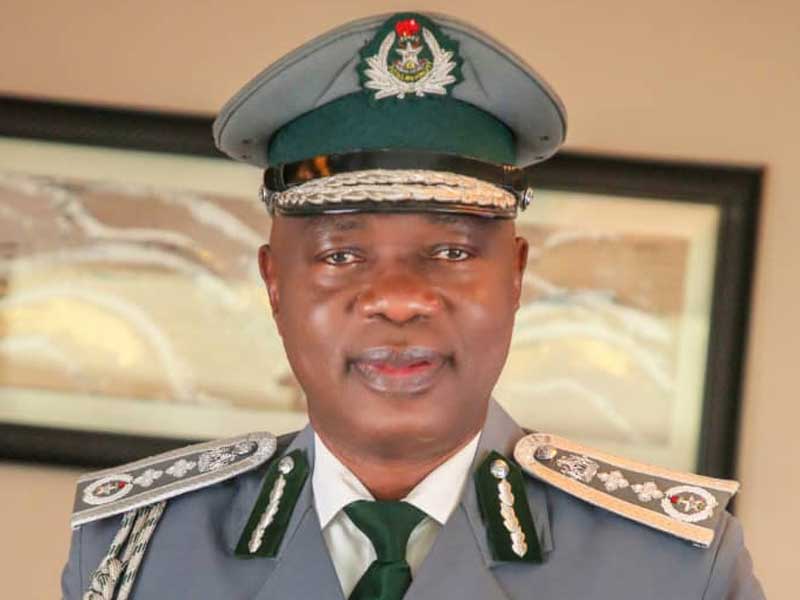
For decades, the Nigeria Customs Service has been associated with revenue, borders and enforcement. However, Bashir Adewale Adeniyi is building a broader story around the institution. As Comptroller-General of the Nigeria Customs Service, Adeniyi has placed trade facilitation, technology, institutional reform and community engagement alongside the Service’s traditional responsibilities.
That matters because Customs remains responsible for protecting Nigeria’s borders and collecting revenue. At the same time, it operates within communities that experience its presence every day. Therefore, Adeniyi’s leadership raises a bigger question.
Can an enforcement agency also become a meaningful force for community development? His leadership suggests that it can. The clearest expression of that thinking is Customs Cares, the Service’s structured corporate social responsibility programme.
Yet, the programme is only one part of a much larger leadership story.
Three Decades Inside Customs
Adeniyi’s understanding of Customs did not begin from the executive office. He joined the Nigeria Customs Service as a cadet officer in 1990, after graduating from the University of Ife, now Obafemi Awolowo University, with a degree in International Relations. He later earned a master’s degree in Communication Science from USI, Lugano, Switzerland.
His career has taken him through several areas of Customs administration. These include port operations, research and planning, public relations, training and strategic leadership. Consequently, he has experienced the institution from several angles.
That background is important because institutional change rarely succeeds through policy alone. It requires an understanding of the people expected to implement it. Adeniyi’s long career within Customs gives him that institutional memory.
President Bola Ahmed Tinubu appointed him Comptroller-General in 2023. His tenure has since combined operational reforms with a stronger focus on stakeholder engagement and institutional modernisation.
Reimagining the Customs Mandate
A modern Customs administration has to do more than collect money. It must also make legitimate trade easier. That requires technology, efficient processes and stronger relationships with businesses.
Adeniyi has therefore championed initiatives aimed at modernising Customs operations and improving trade facilitation. The Service has continued to advance digital customs systems and the National Single Window initiative. It has also promoted the Authorised Economic Operator programme.
These reforms have a CSR dimension that can easily be overlooked. When legitimate businesses face unnecessary delays, the consequences can spread beyond the company itself.
Costs can rise, consumers pay more, supply chains can become less predictable and small businesses can struggle to compete. Therefore, making trade more efficient can contribute to economic inclusion. That is an important part of understanding Adeniyi’s approach.
CSR does not always look like a donation. Sometimes, it looks like removing an unnecessary barrier.
Bringing Customs Closer to Communities
Still, Adeniyi’s most visible social intervention has been Customs Cares. The initiative was established as a structured CSR unit within the Nigeria Customs Service. Its pillars cover education, health, environment, food security, social investment and the creative economy.
The idea represents a significant departure from the traditional public perception of Customs. A community may know Customs officers primarily through inspections, border enforcement or revenue collection. Customs Cares introduces another point of contact.
Through it, schools can receive support, communities can access health outreaches, environmental projects can be introduced and young people can gain opportunities. In other words, the institution becomes visible through service as well as enforcement.
Public trust is not created by official mandates alone, it is built through people’s experiences with institutions.
Turning Projects Into Impact
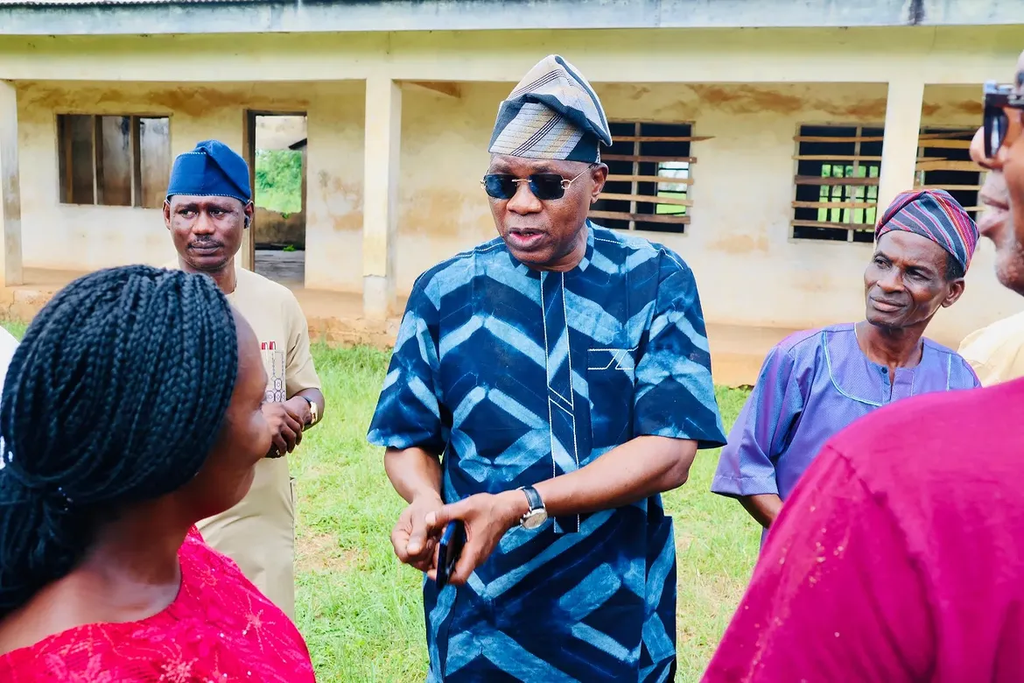
The programme’s education interventions offer a useful example. In 2025, Adeniyi said Customs Cares was targeting 50,000 students with educational materials. By July, the Service reported that 10,000 students had already been reached, including 3,000 in Lagos.
The same year, Customs renovated Christ Assembly Nursery and Primary School in Ajeromi/Ifelodun, Lagos, while distributing educational materials to students. Earlier, the Service reported that 2,000 students had received 10,000 notebooks, 2,000 school bags and 4,000 pens under the programme. A medical outreach also served 1,000 community members.
These numbers show activity. However, Adeniyi went further than celebrating the project. The Service said future interventions at the school would be assessed against its academic performance. That is a small but significant shift.
It suggests movement from measuring CSR by what is delivered to asking what changes afterward. A renovated classroom is an output. Improved learning outcomes are an outcome. Those are not the same thing.
For CSR professionals, this distinction is fundamental. Good CSR should not stop when the ribbon is cut. Instead, the real test begins afterward.
Are students performing better? Is attendance improving? Are facilities being maintained? Has the intervention solved the problem it was designed to address?
By linking future support to academic performance, Adeniyi is pointing toward a more outcome-focused approach.
A Human Face Beyond Enforcement
Customs Cares also reflects a wider attempt to change how communities experience the Service. Healthcare interventions have formed part of the programme alongside education and environmental initiatives.
Many communities around ports and borders face difficult social and economic conditions. Therefore, community investment can serve two purposes. It can address genuine needs. At the same time, it can strengthen relationships between the institution and the people living around its operations.
This is particularly relevant for Customs. Its work is inseparable from ports, border communities and trade corridors. Consequently, those communities should not experience the Service only as an enforcement authority. They should also see an institution willing to listen, engage and contribute.
Taking Nigerian Customs to the World
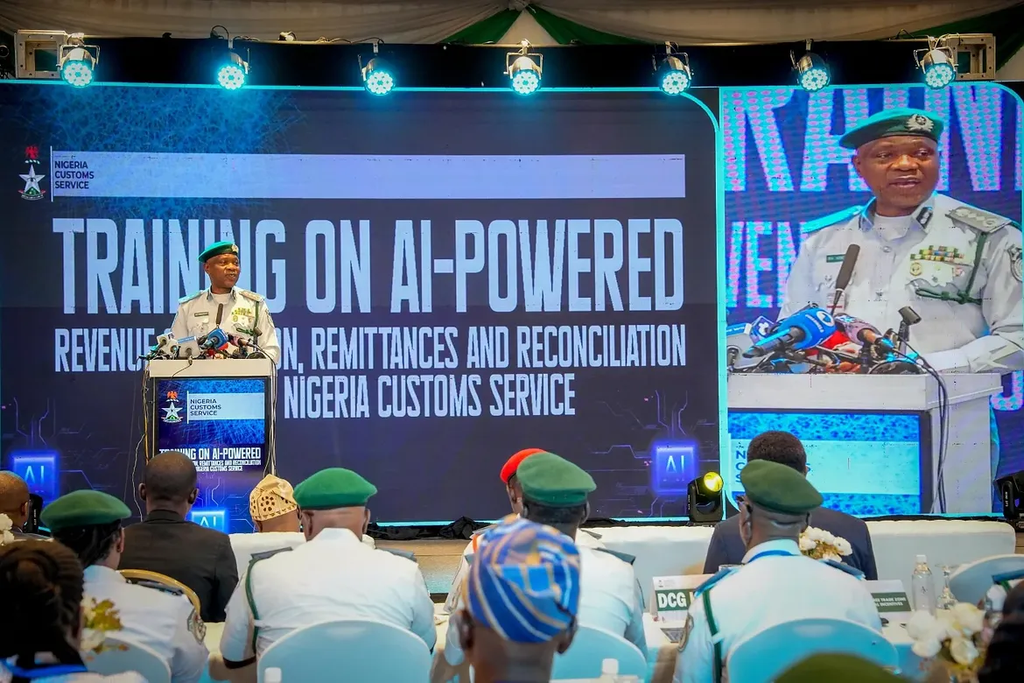
Adeniyi’s influence now extends well beyond Nigeria. In July 2026, he was unanimously re-elected Chairperson of the World Customs Organization Council during the organisation’s council sessions in Brussels. He had first assumed the position in July 2025.
The position places a Nigerian Customs official at the centre of international conversations about customs administration. Those conversations increasingly involve technology, supply chains, security and trade facilitation. They also involve sustainability and modernisation.
In April 2026, Adeniyi called for stronger global cooperation around emerging enforcement challenges. He highlighted technology adoption, institutional collaboration and capacity building as key elements of modern Customs administration.
That international role gives Nigeria an opportunity to influence global Customs conversations. It also places greater responsibility on Adeniyi’s leadership at home.
Why His CSR Approach Matters
The most significant development may not be any individual donation or school project. It is the attempt to institutionalise CSR within Customs.
Occasional donations can disappear when leadership changes. A structured programme has a better chance of surviving beyond individual projects. That is why Customs Cares matters.
It creates an organisational framework for planning and delivering social interventions. For a public institution, that structure is particularly important. Government agencies operate with public resources and public responsibilities. Therefore, their social programmes should be transparent, needs-based and measurable.
Adeniyi has an opportunity to demonstrate that public-sector CSR can move beyond ceremonial gestures.
The Leadership Test Ahead
Adeniyi’s record also comes with responsibility. The bigger the vision, the stronger the evidence must become. Customs Cares will need clear measurements of beneficiaries, outcomes and long-term community value.
Furthermore, projects will need maintenance plans. Schools need more than renovated buildings. Healthcare outreaches need continuity. Youth initiatives need pathways beyond the initial intervention. Environmental programmes need monitoring.
These are the questions that will determine whether Customs Cares becomes a lasting model or simply another public-sector CSR programme.
Beyond Revenue
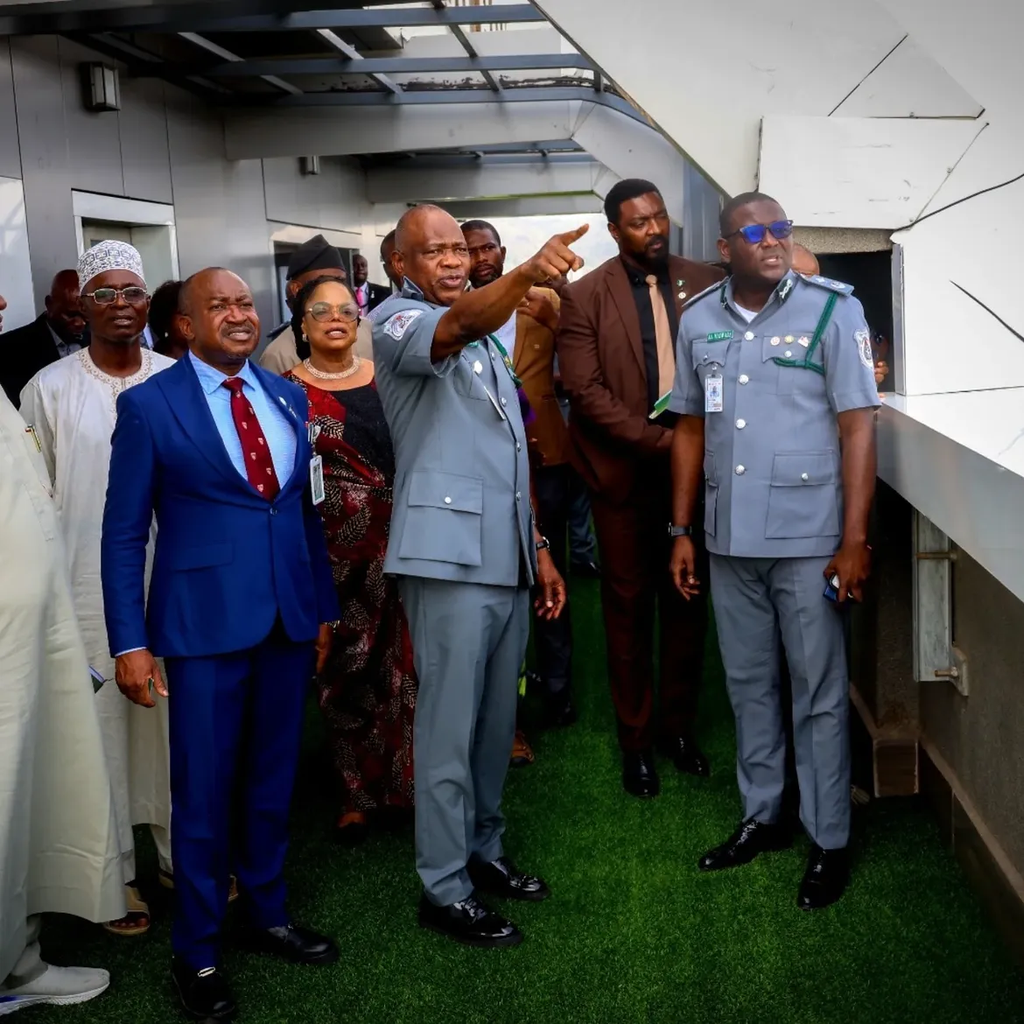
Bashir Adewale Adeniyi’s career has been shaped by Customs. He joined the Service more than three decades ago and rose through its ranks before becoming its chief.
Today, however, his leadership is increasingly defined by a wider question. What should Customs mean to Nigerians beyond the money it collects and the borders it protects?
His answer is taking shape through technology, trade facilitation, stakeholder engagement and Customs Cares. None of these removes the Service’s enforcement responsibilities. Instead, they expand the idea of public value.
That is what makes Adeniyi a compelling CSR Personality of the Week. His story is not simply about philanthropy. It is about whether an institution built around control and compliance can also build trust, opportunity and community value.
The real measure will not be another award or another commissioned project. It will be whether the communities touched by Customs Cares experience lasting change. If that happens, Nigeria Customs may become known for something more than what happens at the border. It may also become known for what it gives back beyond it.
[give_form id="20698"]


1 thought on “CSR Personality of the Week: Bashir Adeniyi Takes Customs Beyond Revenue”