ROSEMARY IMOBHIO
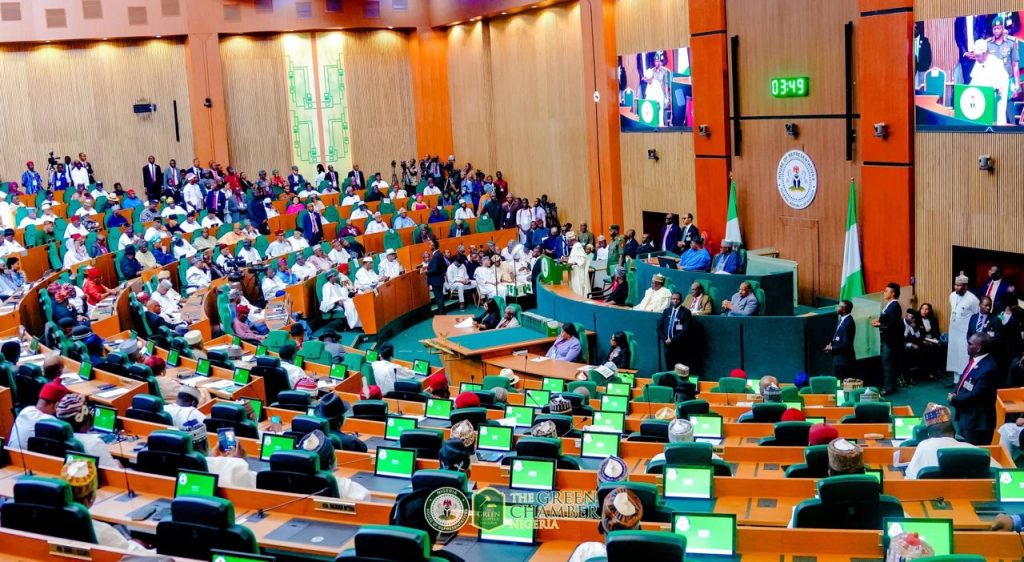
Nigeria’s House of Representatives has approved another extension of the capital component of the 2025 Appropriation Act, pushing the implementation deadline from June 30 to September 30, 2026. The move gives federal ministries, departments, and agencies an additional three months to complete ongoing projects and spend funds already allocated under the budget.
According to lawmakers, the extension became necessary because several capital projects captured in the 2025 budget remain unfinished. They argue that ending the budget cycle now could leave critical infrastructure projects abandoned and disrupt economic activities tied to government spending.
Yet the decision has also revived a familiar question in Nigeria’s public finance space: Is the country effectively running two budgets at the same time?
Are Two Budgets Running Concurrently?
Technically, no.
Legally, the extension applies only to the capital expenditure component of the 2025 budget. Meanwhile, the 2026 budget is already in operation. This means government agencies can continue implementing approved capital projects under the 2025 framework while also executing programmes and expenditures contained in the 2026 budget.
However, from a practical governance perspective, the answer becomes more complicated.
When one year’s capital budget remains active while a new fiscal year’s budget is already being implemented, overlapping expenditure cycles emerge. Procurement processes, project supervision, contractor payments, and reporting obligations can span multiple budget periods. Consequently, citizens, investors, and oversight institutions may find it harder to track performance and determine which projects belong to which fiscal year.
This challenge is not new. In fact, President Tinubu’s administration previously sought reforms aimed at ending overlapping budget cycles because they can weaken accountability and complicate fiscal planning. In late 2025 one objective of the government’s budget restructuring efforts was to eliminate the practice of concurrent budget implementation and restore cleaner fiscal timelines.
Why Does This Keep Happening?
Lawmakers and budget officials point to several recurring obstacles.
First, procurement processes often take longer than expected. Government contracts frequently move through multiple approval stages before work can begin.
Second, revenue shortfalls can slow fund releases to ministries and agencies. Even when projects receive approval on paper, actual cash releases may arrive late.
Third, project execution itself can face delays arising from inflation, contractor challenges, security concerns, and logistical bottlenecks. Several House of Reps members cited implementation constraints and administrative delays as reasons for extending the budget.
As a result, this latest extension marks the third adjustment to the lifespan of the capital component of the 2025 budget. The deadline had previously moved from December 2025 to March 2026, then to June 2026, and now to September 2026.
What Does This Mean for ESG?
The extension is not merely a budgeting story. It is also an ESG story, particularly on the governance pillar.
Strong governance depends on transparency, predictability, and accountability. Therefore, repeated budget extensions raise important questions about planning efficiency and project management within public institutions.
For communities waiting for roads, schools, healthcare facilities, water projects, and other infrastructure investments, delayed implementation can translate into delayed social impact. Many of these projects directly affect quality of life, economic inclusion, and community development.
From a corporate perspective, companies operating in sectors that depend on public infrastructure also feel the effects. Delays in transport networks, power projects, water systems, and logistics infrastructure can increase operating costs and slow business growth.
Investors increasingly evaluate governance quality when assessing country risk. Consequently, recurring budget rollovers may influence perceptions about execution capacity, fiscal discipline, and public sector efficiency.
The Accountability Test Ahead
The House of Representatives has framed the extension as a practical step to prevent project abandonment and ensure value for money. That argument has merit. Abandoning projects that are close to completion could waste public resources and undermine development goals.
Nevertheless, the latest extension should also trigger a broader conversation about why budget implementation continues to lag behind schedule.
The real measure of success will not be whether the deadline was extended. Instead, it will be whether the additional three months deliver visible results, completed projects, and measurable public value.
For Nigeria’s ESG journey, governance is not simply about passing budgets. It is about executing them effectively, transparently, and on time. The September deadline will therefore become more than a fiscal milestone. It will be a test of public sector accountability.
Follow CSR Reporters for clear insights on governance, accountability, and how public spending shapes real development outcomes across Nigeria and beyond.
[give_form id="20698"]