ROSEMARY IMOBHIO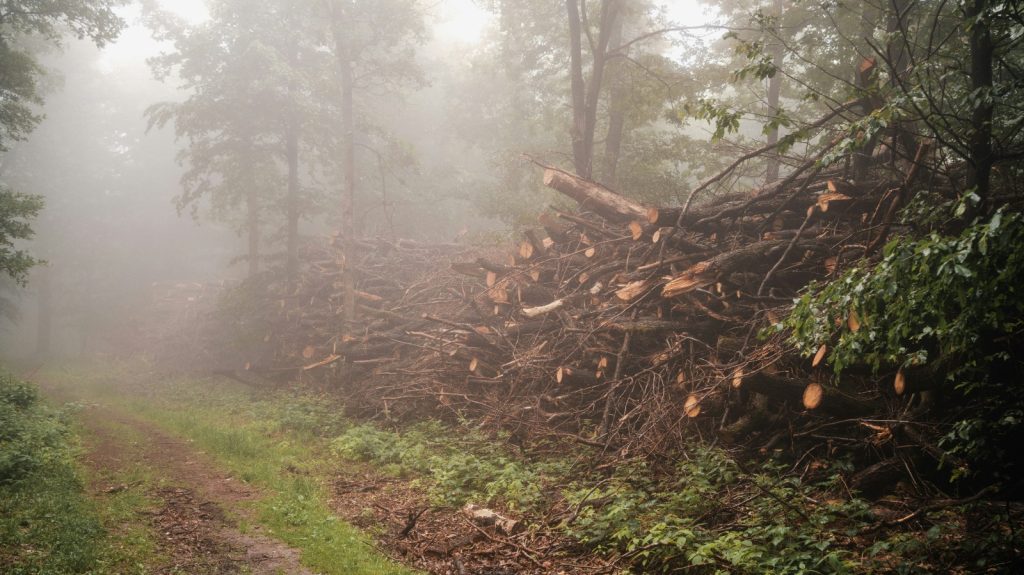
Deforestation is Happening Across Nigeria at An Alarming Rate
Deforestation is gutting Nigeria’s green cover at a staggering rate. Behind the satellite data lies a deeper crisis: governance failure, corporate impunity, and a sustainability framework that exists largely on paper.
Every year, Nigeria loses approximately 400,000 hectares of forest cover. That figure, reported by the Nigerian Conservation Foundation, is not merely a statistic. It represents vanishing biodiversity, accelerating climate vulnerability, and the systematic breakdown of the governance systems that were meant to prevent exactly this outcome. For contrast, Kenya, which we reported on last week, lost the same amount over 23 years, and its activists are raising alarms worldwide.
Between 2001 and 2024, Global Forest Watch satellite data confirm that Nigeria lost 1.4 million hectares of tree cover. In 2024 alone, roughly 250,000 hectares of natural forest disappeared. The scale of destruction is extraordinary. However, what makes Nigeria’s deforestation crisis particularly alarming for ESG analysts and accountability reporters is not the scale alone. It is who enables it.
Nigeria’s forests are not simply falling to smallholder farmers clearing land for subsistence crops. They are falling because powerful actors, including politically connected agribusinesses and timber interests, operate with near-total impunity. Enforcement agencies are chronically underfunded, politically compromised, or in direct collusion with the actors they are meant to police. Meanwhile, corporate sustainability commitments remain largely performative, and formal accountability frameworks continue to lag far behind the pace of destruction.
A Crisis Rooted in Institutional Failure
To understand Nigeria’s deforestation problem, one must first understand its governance architecture. You also need to understand where that architecture has catastrophically failed.
Forestry regulation in Nigeria is split across federal and state jurisdictions. This creates overlapping mandates, unclear lines of authority, and persistent enforcement gaps. The result, consequently, is a system where responsibility is diffuse and accountability is virtually nonexistent.
Cross River State illustrates this failure with painful clarity. Cross River holds some of Nigeria’s last remaining lowland tropical rainforest, yet illegal logging there persists at devastating scale. In June 2024, the state governor announced a fresh ban on logging. A move that came barely a year after he had lifted a previous ban and dissolved the Anti-Deforestation Task Force entirely.
When the task force was briefly reinstated, investigators found that it focused enforcement actions on subsistence families collecting firewood, while large agribusinesses openly felled forest trees and moved truckloads of timber without consequence. Community members reported that loggers had begun entering government-reserved areas and wildlife buffer zones. There was official toleration so long as informal payments were made.
This is not an isolated event. It reflects a pattern replicated across states from Edo to Ondo, Ekiti to Ogun, wherever timber value meets weak oversight.
Illegal Logging and the Economics of Impunity
Nigeria’s forest destruction is driven by several converging pressures. Agricultural expansion for crops including cocoa, cassava, and palm oil clears vast woodland areas. Urban sprawl in Lagos, Abuja, and secondary cities consumes peri-urban forests.
Fuelwood and charcoal remain the primary cooking fuels for most Nigerian households, sustaining year-round pressure on tree cover. An issue that might further escalate due to recent price increases and scarcity of other cooking fuels.
However, illegal logging, linked explicitly to domestic timber markets and export demand, represents the most commercially organised, and therefore the most corrosive, driver of deforestation.
The economics are straightforward. Timber extracted from government-reserved areas carries no production cost beyond the informal payment required to pass roadside checkpoints. Therefore, illegal operators can consistently undercut legal timber prices, crowding out compliant businesses and normalising lawlessness across the supply chain.
In the Akure-Ofosu Forest Reserve in Ondo State, wildfires driven partly by land-clearing activities destroyed 45 percent of primary forest cover between 2002 and 2021. For a country where climate science projections already show is among Africa’s most vulnerable nations to rising temperatures and desertification, that loss is deeply consequential.
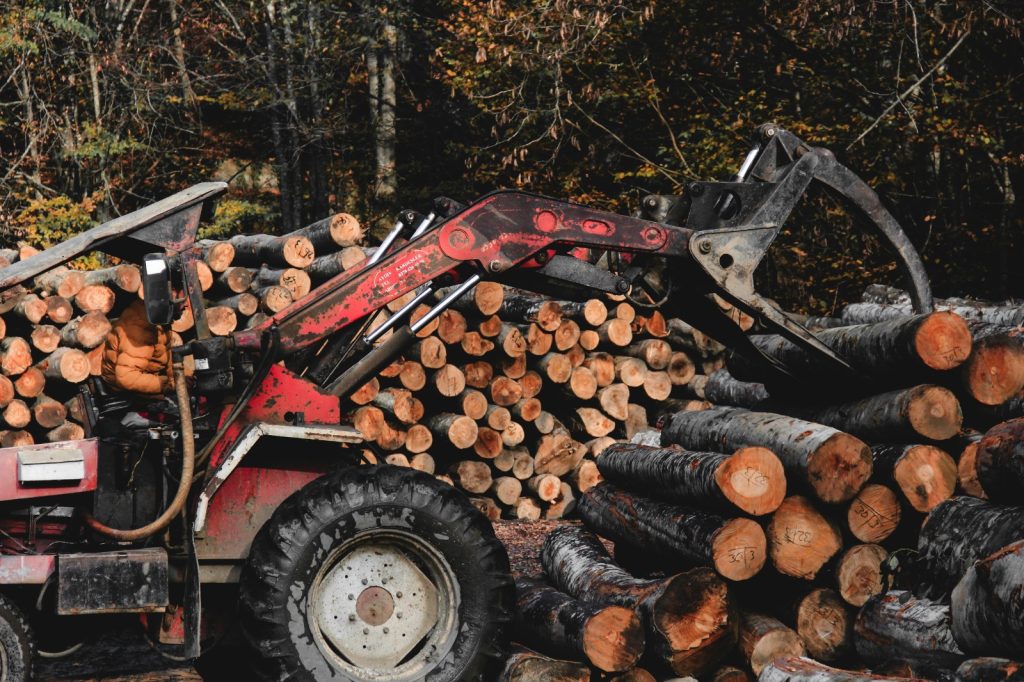
In addition, the corporate dimension of Nigeria’s illegal logging problem remains critically underexamined. Investigations by CSR Reporters show that large agribusinesses, not just small-scale operators, are among the most active participants in protected forest encroachment. Yet, in sharp contrast to the arrests of community members caught collecting vegetables from forest edges, corporate actors face minimal regulatory risk.
CSR Commitments Falling Short on Forest Accountability
For ESG and CSR analysts, Nigeria’s deforestation trajectory raises a sharp and uncomfortable question: where is the private sector in this crisis? The answer, regrettably, is that it is largely absent from meaningful accountability. CSR Reporters notes that Nigerian companies, particularly in manufacturing and services, frequently fail to provide comprehensive environmental data in their annual sustainability reports. Where disclosures do exist, they often omit land use, supply chain deforestation exposure, and biodiversity impact entirely. Consequently, investors and civil society organisations are left without the information necessary to hold corporate actors accountable for forest destruction embedded in their supply chains.
Furthermore, Nigeria’s formal CSR legislative environment remains weak. Regulatory instruments such as the NESREA Act exist on paper. However, implementation is inconsistent and penalties are rarely imposed with sufficient scale to deter commercially motivated violations.
The country adopted IFRS Sustainability Disclosure Standards in 2024, following President Tinubu’s endorsement of the ISSB framework. However, translating that endorsement into rigorous, forest-specific disclosure requirements will require sustained political commitment and institutional capacity that have historically been absent.
Policy Initiatives: Promising Steps, Persistent Gaps
The Nigerian federal government has not been entirely passive. In October 2025, President Tinubu signed a Presidential Executive Order. One prohibiting the export of wood and allied products, framed explicitly as a measure to combat illegal logging and halt deforestation.
Minister of Environment Balarabe Abbas Lawal described the order as timely. A recognition that Nigeria’s forests are central to environmental sustainability. They do this by providing clean air, water, and biodiversity, while also playing a critical role in reducing climate risk.
The Nigerian Forest Security Service, established in 2021 and expanded nationally in 2024, attempts to use local rangers and hunters to patrol forest areas and prevent illegal extraction. As of early June 2026, however, the enabling bill for the service still awaited presidential assent, leaving it to operate without full legal standing.
Separately, the Nigerian Conservation Foundation’s Green Recovery Nigeria Programme targets restoration of forest cover to 25 percent by 2047. The Ministry of Environment has issued sovereign green bonds worth 250 billion naira to fund climate and clean energy projects. These initiatives are meaningful in principle. Nevertheless, analysts and conservation groups are unanimous: targets and instruments without enforcement infrastructure will not reverse the trajectory.
The European Union Deforestation Regulation adds an emerging international accountability dimension. Nigerian cocoa, rubber, and agricultural value chains now face due diligence requirements from European importers. As a result, the private sector will increasingly need to demonstrate that their supply chains are deforestation-free. That external pressure may ultimately drive corporate behaviour more effectively than domestic regulation has managed to date.
However, till then, between 2001 and 2025, satellite data from Global Forest Watch recorded a loss of 1.6 million hectares of tree cover. That loss released an estimated 890 million metric tons of CO₂ equivalent into the atmosphere.
Security Pressure and the Forest Debate
There is a second, less visible front in Nigeria’s forest crisis, and it complicates the accountability picture considerably. Across the country’s northwest and north-central states, forests have become strategic terrain for armed bandits, kidnappers, and insurgent cells.
Zamfara, Kaduna, Niger, Kebbi, and Sokoto states have all seen documented cases of criminal groups using dense forest cover as operational bases for mass abductions, arms trafficking, and attacks on farming communities. The convergence of deforestation hotspots and insecurity corridors is no coincidence. However, the political response to that convergence has raised urgent questions of its own.
In May 2025, President Tinubu launched the Presidential Forest Guards Initiative. It approved the recruitment and deployment of over 7,000 armed forest guards across seven states. Graduation ceremonies held simultaneously in Borno, Yobe, Adamawa, Sokoto, Niger, Kwara, and Kebbi.
The stated objective was to deny armed groups access to forests increasingly used for kidnappings and banditry. Meanwhile, voices within security and political circles have gone further, calling for the deliberate clearing of forests identified as bandit hideouts. The argument, framed in the language of national security, positions deforestation not as a crisis to be reversed but as a tool to be deployed. That framing deserves serious scrutiny.
Deforestation Is Not the Answer
Security experts and environmental analysts have consistently warned that forest clearance does not dismantle the economic and political conditions that sustain armed groups; it relocates them. Bandits displaced from cleared forest zones historically move into new territories. Often they push deeper into remaining forest cover or into already fragile farming communities.
Consequently, clearing forests as a security strategy risks compounding Nigeria’s deforestation crisis while delivering only temporary tactical relief. Furthermore, the communities that depend on those forests for fuelwood, water catchment, and non-timber forest products bear the immediate livelihood cost of clearance, with no compensating security guarantee.
The environmental consequences of security-driven clearance are equally alarming. Nigeria’s remaining forest cover already sits at critically low levels after decades of loss. In addition, deforestation accelerates the very conditions of resource scarcity, herder-farmer tension, and youth unemployment that fuel recruitment into armed groups.
In other words, clearing forests to address insecurity may deepen the structural drivers of the insecurity itself. This produces a feedback loop in which destruction begets instability, and instability begets further destruction.
The security-forest nexus, therefore, raises a sharp accountability question that policymakers have avoided answering directly. Is Nigeria’s government responding to systems, or to symptoms?
Deploying 7,000 forest guards is a response to a symptom. Signing an executive order on timber exports is a response to a symptom. Announcing and then dissolving and then reinstating anti-logging task forces, as Cross River State has done repeatedly, is a response to a symptom.
The underlying systems driving both deforestation and insecurity, namely, poverty, institutional corruption, elite impunity, and the absence of credible rural livelihoods, remain structurally unaddressed. Until they are, the security debate risks becoming one more mechanism by which Nigeria’s forests are legitimised as expendable, while the governance failures responsible for their destruction go unreformed.
The Accountability Gap That Cannot Be Ignored
Nigeria’s deforestation crisis is, at its core, a governance failure. The forests are not disappearing because Nigeria lacks laws, agencies, or policy frameworks. Rather it’s a result of political interference, inadequate funding, and elite capture of enforcement mechanisms. The normalisation of impunity at every level of the forestry sector and frameworks that have simply never been allowed to function as designed fuel this.
For CSR and ESG stakeholders operating in or sourcing from Nigeria, the implications are direct. Supply chain deforestation exposure is real, underreported, and growing. The absence of credible disclosure from Nigerian companies makes independent verification essential. Moreover, any business or investor claiming alignment with global sustainability frameworks while maintaining opaque commodity sourcing from Nigeria’s forest zones is, in effect, underwriting the destruction.
The time for declarations, task forces, and postponed presidential assents has passed. Nigeria’s forests are losing ground at a rate that outpaces the pace of governance reform. Therefore, accountability must come from multiple directions simultaneously.
We must have rigorous domestic enforcement, credible corporate disclosure, international trade pressure, and meaningful community involvement in forest protection. Without all of these moving together, the satellite data will only grow worse, and the accountability deficit will deepen alongside it.
[give_form id="20698"]