When Inflation Falls but Poverty Persists: Who Is Really Benefiting from Nigeria’s Economic Recovery?
 ONYINYECHI NWAIGBA
Nigeria’s inflation rate is declining, but the cost of essential goods and services continues to put pressure on households and businesses. The real test of economic recovery is whether improved economic indicators can translate into better living standards, stronger purchasing power and more inclusive opportunities.
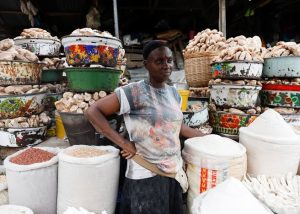
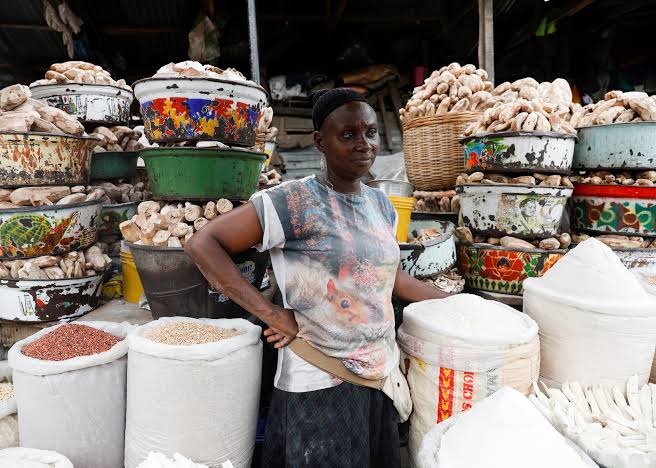
For millions of Nigerians, economic recovery is not something they measure through inflation reports or financial market indicators. They experience it at the market, at the fuel station, when paying rent, when buying medication and when trying to keep a small business running.
A family that spends more on food than it did a year ago may struggle to appreciate a decline in the inflation rate. A small business owner who still faces expensive electricity, transportation and raw materials may not feel that economic conditions have improved.
This is the gap between economic progress on paper and the everyday experiences of citizens.
Nigeria’s latest inflation figures offer some encouragement. According to the National Bureau of Statistics (NBS), headline inflation declined to 14.06 per cent in October 2026 from 14.63 per cent in September. A year earlier, it stood at 18.97 per cent.
However, the decline does not mean that the prices of goods and services have returned to previous levels. It means that the general rate at which prices are increasing has slowed.
Food inflation remained at 19.13 per cent year-on-year in October, while the month-on-month food inflation rate was negative 0.75 per cent. Although food prices declined on average during the month, the reduction was slower than the 1.55 per cent decline recorded in September.
These figures highlight an important reality: stabilizing inflation is necessary, but it does not automatically restore household purchasing power.
This is the concern raised by the Centre for the Promotion of Private Enterprise (CPPE), which has urged the Federal Government to align its inflation management strategy more closely with poverty reduction.
In a statement issued on November 17, 2026, the organization’s Chief Executive Officer, Dr Muda Yusuf, welcomed the moderation in headline and core inflation but warned that the benefits of price stabilization would remain limited if essential goods and services continued to be unaffordable.
The recommendation raises a bigger question about Nigeria’s economic direction: how can the country move beyond improving economic indicators to delivering meaningful improvements in people’s lives?
The difference between lower inflation and affordable living
Inflation is one of the most important indicators used to measure changes in the cost of living. However, its movement does not always reflect how affordable everyday life feels to individual households.
When inflation falls, prices are generally increasing at a slower rate. It does not necessarily mean that food, transportation, rent or healthcare have become cheaper.
For households that have already experienced several years of rising living expenses, this distinction matters.
A family that previously spent ₦50,000 on groceries may now need significantly more money to purchase the same items. Even if inflation begins to moderate, the family still has to contend with the higher price level.
The situation becomes more difficult for households whose incomes have not increased at the same pace as their expenses.
CPPE identified food, transportation, housing, education and healthcare as major areas requiring government attention. According to its analysis of the October inflation figures, these expenditure categories collectively accounted for approximately 71 per cent of headline inflation.
Food and non-alcoholic beverages contributed 5.63 percentage points, transportation contributed 1.50 percentage points, while housing and utilities accounted for 1.18 percentage points. Education and healthcare contributed another 1.72 percentage points.
The significance of these figures goes beyond economic statistics. They show how strongly inflationary pressures are connected to the basic needs of households.
When families spend a larger share of their income on food and transportation, they have less money available for education, healthcare, savings and other essential activities.
For low-income households, even relatively small increases in the cost of basic necessities can force difficult decisions.
Some families may reduce the quality or quantity of food they purchase. Others may postpone medical treatment, withdraw children from certain educational activities or reduce spending on other necessities.
This is why poverty reduction cannot be separated from the affordability of essential goods and services.
Why small businesses are also part of the conversation
The pressure on household welfare is closely connected to the conditions under which Nigerian businesses operate.
Small and medium-sized enterprises are important to employment, local production and economic activity. They provide goods and services, support supply chains and create income opportunities for millions of people.
However, businesses cannot operate independently of the economic conditions affecting their customers and suppliers.
High energy costs, expensive transportation, limited access to affordable credit and rising raw material prices can increase production costs. Businesses may respond by raising prices, reducing production, delaying expansion or cutting operating expenses.
For businesses serving low-income customers, increasing prices is not always a practical solution. Customers whose purchasing power has weakened may simply buy less.
This creates a difficult cycle. Businesses face higher operating expenses while consumers become less able to afford their products and services.
The consequences can extend to employment. When businesses struggle to maintain operations, they may reduce working hours, delay recruitment or cut jobs.
Consequently, an effective poverty reduction strategy must also consider the conditions that enable businesses to remain productive, expand and create decent employment.
CPPE has identified structural challenges such as expensive energy, inadequate transportation infrastructure, high logistics costs, insufficient storage facilities and insecurity in agricultural communities as factors contributing to inflationary pressures.
Addressing these constraints would not only support price stability but also improve the operating environment for businesses.
Why controlling inflation requires more than monetary policy
Monetary policy plays an important role in managing inflation. Decisions involving interest rates, liquidity and credit conditions can influence borrowing, spending, investment and price stability.
However, Nigeria’s inflation challenges cannot be addressed through monetary measures alone.
Some of the pressures affecting prices are rooted in the country’s production and distribution systems.
For example, insecurity in agricultural communities can disrupt farming activities, restrict access to farmland and reduce the movement of produce from rural areas to markets.
Poor transportation infrastructure and high logistics costs can make food more expensive before it reaches consumers.
Similarly, unreliable electricity increases the cost of operating factories, processing agricultural products and preserving perishable goods.
These challenges require coordinated responses involving monetary and fiscal authorities, federal and state governments, security agencies and private-sector institutions.
CPPE has therefore called for stronger agricultural productivity and security, improved transportation infrastructure, more affordable energy and targeted interventions in food security, public transportation, affordable housing, education and healthcare.
The organization also argued that the moderation in inflation provides room for cautious monetary easing, provided that liquidity conditions, inflation expectations and exchange-rate stability are carefully considered.
The broader lesson is that economic stability must be supported by improvements in the systems that determine how goods and services are produced, transported and made available to consumers.
Social protection must become part of economic recovery
Another important part of the poverty reduction conversation is social protection.
Economic reforms can create long-term opportunities for growth and investment, but the transition can place significant pressure on households, particularly those with limited savings and unstable incomes.
Targeted social protection programmes can help vulnerable families maintain access to basic necessities while broader economic improvements take effect.
This includes well-designed cash transfers, nutrition support, affordable healthcare, education assistance and programmes that strengthen household livelihoods.
However, the effectiveness of these interventions depends on proper implementation.
Government must ensure that support reaches the people who need it, that eligibility systems are transparent and that public resources are monitored.
Social protection should also complement initiatives that help people build sustainable sources of income.
For example, supporting smallholder farmers with improved inputs, storage facilities, agricultural extension services and access to markets can strengthen food production while improving rural livelihoods.
Similarly, skills development and access to affordable finance can help young people and small business owners participate more effectively in economic activities.
The objective should be to move beyond temporary relief towards interventions that improve people’s ability to earn, produce and support themselves.
The role of businesses in protecting household welfare
While government has a central responsibility for economic policy and public welfare, businesses also have a role in determining how economic pressures affect communities.
Companies operating in essential sectors such as food production, transportation, healthcare, housing and energy influence the affordability and accessibility of services that households depend on.
Responsible business practices should therefore consider the broader consequences of pricing decisions, employment practices, supply-chain relationships and investments in local production.
For manufacturers and food companies, improving operational efficiency, reducing waste and strengthening local sourcing can help manage costs and improve supply-chain resilience.
Financial institutions can contribute by expanding responsible access to credit for productive small businesses, farmers and entrepreneurs.
Companies can also support community development through initiatives that improve access to skills, healthcare, education and livelihood opportunities.
However, corporate social responsibility should not be treated as a substitute for government action or as a collection of isolated donations.
The greater opportunity lies in investments that address real economic and social challenges while creating sustainable value for businesses and communities.
When businesses become more productive, create decent jobs and strengthen local supply chains, the benefits can extend beyond individual companies.
Measuring recovery by what changes in people’s lives
The World Bank’s October 2026 Nigeria Development Update points to a similar challenge. While acknowledging the country’s progress in restoring macroeconomic stability, the report emphasizes the need for faster and more inclusive growth that creates jobs, reduces poverty and improves living standards.
This is an important distinction for policymakers.
Economic indicators are necessary for understanding the direction of the economy, but they should not be the only measures of progress.
Government should also pay attention to whether households can afford nutritious food, whether businesses are creating sustainable employment, whether children remain in school, whether people can access healthcare and whether low-income communities are benefiting from public investments.
The quality of public spending matters just as much as the amount allocated.
Investments in roads, electricity, agricultural infrastructure, education and healthcare should be assessed by their actual impact on communities.
Similarly, poverty reduction programmes should be evaluated based on verified beneficiaries, the quality of support delivered and whether households experience lasting improvements.
This requires transparent data, consistent monitoring and accountability across all levels of government.
Beyond lower inflation
Nigeria’s declining inflation rate is an encouraging development, but it should be viewed as one part of a much larger economic recovery process.
For households still struggling with food, housing, transportation and healthcare costs, the real value of economic progress lies in whether those necessities become more affordable.
For businesses, it lies in whether production becomes more predictable, financing becomes more accessible and the operating environment supports investment and employment.
For government, the challenge is to ensure that economic stabilization creates the conditions for inclusive growth rather than remaining an improvement reflected mainly in national statistics.
The call by CPPE to connect inflation management with poverty reduction highlights a fundamental principle of responsible economic governance: economic policies should ultimately improve people’s lives.
Nigeria does not only need lower inflation. It needs an economy in which households can meet their basic needs, businesses can operate sustainably and more citizens can participate in productive economic activities.
That is when economic recovery will begin to mean something beyond the numbers.
DON’T JUST ANNOUNCE YOUR IMPACT. PROVE IT.
CSR REPORTERS helps organisations verify, assess, document and communicate the real impact of their CSR and sustainability initiatives.
Project Verification | Beneficiary Feedback | Impact Assessment | Impact Storytelling | Stakeholder Engagement
Have an initiative worth documenting? Let us verify it. Document it. Tell the story.
Talk to CSR REPORTERS
enquiries@csrreporters.com
📞 Call/WhatsApp: 0803 401 2198 | 0903 329 6374 | 0905 024 4468 | 0803 209 8499
www.csrreporters.com