Who Regulates the Food Nigerians Buy Every Day? NAFDAC Clarifies Its Role in Open Markets
 ONYINYECHI NWAIGBA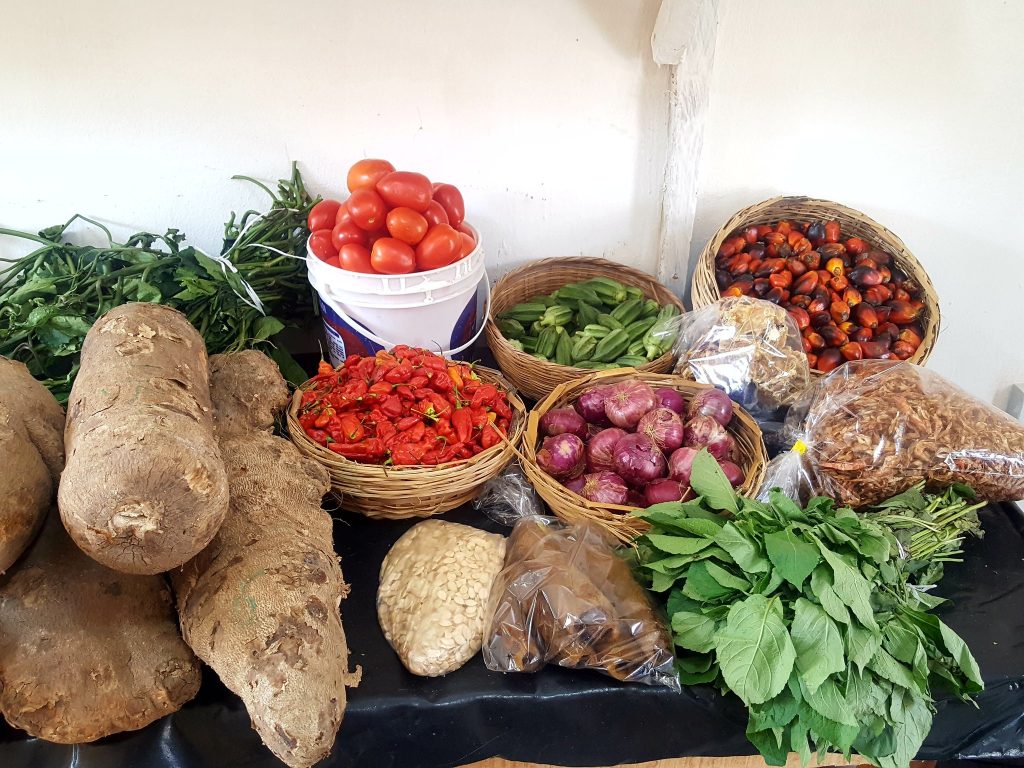
For millions of Nigerians, food safety begins long before a product reaches a supermarket shelf.
It happens in open markets, roadside stalls, neighborhood shops and traditional food businesses where people buy fufu, palm oil, garri, yam, vegetables and other staples that form part of everyday life.
That is why recent clarification from the National Agency for Food and Drug Administration and Control (NAFDAC) about its regulatory reach over unbranded palm oil, fufu and other traditionally packaged foods deserves more attention than the headline alone suggests.
Recent reports indicate that NAFDAC does not have “direct and absolute regulatory oversight” over unbranded palm oil, fufu and other traditionally packaged staple foods sold in open markets.
The clarification raises a bigger question for Nigeria: where exactly does food-safety regulation begin and end when a significant part of the population still buys food through informal and traditional markets?
This is bigger than fufu and palm oil
The immediate public reaction may center on familiar foods such as fufu and palm oil.
But the underlying issue is regulatory clarity.
NAFDAC is responsible for protecting public health through the regulation of food, drugs and other products within its mandate. Its legal framework gives the agency powers over regulated products and specifically provides for the regulation of processed food.
Its more recent Food and Related Products Registration Regulations 2025 establish a regulatory framework covering food products manufactured, imported, exported, advertised, sold, distributed or used in Nigeria.
At the same time, the agency’s latest clarification draws attention to the distinction between formally packaged and regulated products and traditionally prepared or unbranded foods sold through open-market channels.
That distinction matters because Nigeria’s food system is not made up of factories and supermarkets alone.
A large part of the food Nigerians consume moves through informal supply chains.
The informal food economy cannot be ignored
From the woman selling locally processed palm oil to the trader selling fermented cassava products, informal food businesses are deeply connected to the country’s economy and food system.
They also operate in environments where traceability, packaging, labeling, storage and hygiene standards may be difficult to monitor consistently.
This creates a difficult regulatory challenge.
A regulatory system designed around registered manufacturers and packaged products may be easier to enforce in formal production facilities than in thousands of dispersed markets and small food businesses.
But the public-health question remains the same: what happens when food becomes contaminated?
NAFDAC’s Food Hygiene Regulations 2025 provide a broader framework for food hygiene covering establishments involved in food preparation, processing, packaging, transportation, distribution, manufacturing, handling, storage and sale. The regulations also state that food businesses should not operate in unsanitary premises or locations where food may be exposed to contamination.
This suggests that the conversation cannot simply be reduced to whether a particular plate of fufu or bottle of palm oil carries a NAFDAC number.
The larger conversation is about how Nigeria ensures safe food across the entire chain.
Regulation must meet Nigerians where they actually buy food
One of the biggest challenges for public policy is the gap between how systems are designed and how people actually live.
If millions of consumers buy food from informal markets, then food-safety policy must be able to reach those spaces.
That does not necessarily mean attempting to treat every market trader like an industrial food manufacturer.
It means developing practical systems that recognize the realities of informal food businesses while still protecting consumers.
For example, food-safety interventions could involve stronger market-level hygiene monitoring, better handling practices, consumer education, improved storage facilities, clearer responsibilities among government agencies and greater support for small food processors moving into formal production.
The goal should not simply be more regulation.
It should be better regulation.
Regulatory clarity is important for businesses too
There is another side to this conversation that deserves attention: the businesses operating within Nigeria’s food ecosystem.
For formal food producers, regulatory requirements can be critical to building consumer confidence, accessing larger markets and creating products that can scale beyond their immediate communities.
NAFDAC’s current regulatory systems provide processes for food-product registration, verification, compliance and other regulatory services. Its online platforms allow businesses to submit applications and verify registered products.
The agency also maintains guidelines covering different categories of food businesses, including small-scale and micro-scale food manufacturing facilities.
That creates an important opportunity.
Rather than viewing food regulation only as enforcement, Nigeria can increasingly see it as part of the infrastructure required to help food businesses become safer, more trusted and more competitive.
For small producers, however, the pathway into formalization must also be understandable and realistic.
Consumers also have a role
Food safety is not solely a government responsibility.
Consumers need to know what to look for when buying food, how to identify properly registered packaged products and where to report suspected unsafe or adulterated products.
This becomes particularly important when purchasing products whose safety cannot be assessed simply by appearance.
A bottle of palm oil may look clean.
A bowl of fufu may look perfectly prepared.
But appearance alone cannot tell a consumer everything about the conditions under which food was produced, transported or stored.
That is why public education must accompany regulation.
The real question is not “Does NAFDAC regulate fufu?”
The more useful question is: how should Nigeria regulate food safety across a food system that combines formal manufacturers, small processors, informal traders and traditional food businesses?
That is a much bigger policy question.
NAFDAC’s clarification provides an opportunity to have that conversation without creating unnecessary panic or misunderstanding about the agency’s mandate.
It is important that Nigerians do not interpret the clarification to mean that food safety is unregulated or that NAFDAC has no responsibility for food.
The agency’s own legal and regulatory framework clearly establishes its role in regulating food and related products within its mandate.
The challenge is ensuring that regulatory responsibility is clearly understood across the different stages of Nigeria’s food system.
From regulatory confusion to a stronger food-safety system
Nigeria’s food economy is too large and too important for food safety to be treated as a conversation reserved for packaged products.
The country needs a system that recognizes the realities of traditional food markets while steadily improving hygiene, traceability, consumer protection and accountability.
That requires coordination.
It requires public education.
It requires practical support for food businesses.
And it requires regulatory agencies to communicate clearly about what they regulate, what they do not directly regulate, and where responsibility lies.
For consumers, the issue is simple: the food on their plates should be safe.
For businesses, the objective should be clear: compliance should help build trust rather than simply create another barrier to growth.
And for government, the bigger responsibility is to build a food-safety system that reflects the Nigeria that actually exists — not just the formal economy on paper.
The NAFDAC clarification should therefore not end the conversation.
It should start a more important one.
Because the question Nigerians should ultimately be asking is not only who regulates the food they buy.
It is whether the country’s food-safety system is reaching enough of the places where that food is produced, handled, sold and consumed.
[give_form id="20698"]