csrreporters
Why African Companies Need Independent Impact Credibility
There is a quiet crisis unfolding in boardrooms and sustainability reports across Africa. Companies are publishing glossy CSR disclosures, announcing bold ESG commitments, and staking their reputations on impact claims that, in many cases, no one has independently verified. The language is fluent. The intentions may even be genuine. But without independent impact credibility, none of it holds.
This is not a minor gap in reporting hygiene. It is a structural vulnerability — one that affects corporate reputation, investor confidence, stakeholder trust, and ultimately, the long-term licence to operate across the continent.
The Credibility Gap Is Real — and Growing
Africa’s sustainability landscape has matured significantly over the past decade. Regulatory frameworks are tightening. Institutional investors are demanding ESG disclosures with more rigour. Pan-African standards are gaining traction. And yet, a persistent credibility gap remains between what companies say they are doing and what communities, partners, and independent observers actually see on the ground.
This gap is not always the result of bad faith. In many cases, companies are genuinely investing in social programmes, environmental initiatives, and governance reforms. The problem is that self-reported impact — however well-intentioned — is inherently limited. It selects what to measure, frames what to highlight, and quietly omits what did not work. Without an independent lens, there is no way to know the difference between a company that is genuinely responsible and one that is simply a skilled narrator.
For corporates operating in Africa, where public trust is often fragile and stakeholder expectations are layered and complex, that distinction matters enormously.
Why Independent Verification Changes Everything
Independent impact credibility is not about finding fault. It is about establishing truth — and building the kind of trust that cannot be manufactured through communications alone.
When an independent body evaluates a company’s sustainability claims, several things happen simultaneously. The quality of internal data improves, because teams know their numbers will be scrutinised. The scope of what is measured broadens, because external reviewers ask different questions than internal ones. And the findings, whether positive or mixed, carry a weight that self-reported data simply cannot match.
For C-suite executives and boards, this matters for a straightforward reason: reputational risk. In an era where greenwashing is increasingly called out — and in some markets, legally actionable — the cost of unverified claims is rising. A single exposé, a credible NGO report, or a damaging investigative piece can undo years of carefully constructed sustainability narratives. Independent verification is, among other things, a form of risk management.
For ESG investors and partners navigating Africa’s markets, independent impact credibility is even more fundamental. Capital allocation decisions increasingly depend on reliable ESG data. Investors need to know whether a company’s impact claims are grounded in reality, whether governance structures are genuinely robust, and whether social commitments translate into measurable outcomes for communities. Without independent validation, they are essentially investing on faith — and in environments where information asymmetry is already high, that is an untenable position.
The African Context Demands More, Not Less
Some argue that the push for independent impact credibility applies primarily to global multinationals or companies listed on international exchanges. This is a flawed assumption.
The African context — with its diversity of regulatory environments, varying levels of civil society strength, and communities that often have limited formal recourse — actually demands a higher standard of accountability, not a lower one. Where institutional oversight is still developing, independent credibility mechanisms fill a critical gap. They serve as a check on power, a bridge between corporate claims and community experience, and a signal to the market that a company’s values are not merely rhetorical.
CSR accountability in Africa must evolve beyond box-ticking and brand management. The continent’s development trajectory is too important, and the stakes for communities too high, for companies to continue operating with unchecked narratives. What African markets need — and what is increasingly being demanded — is accountability infrastructure that is credible, context-aware, and genuinely independent.
What Independent Impact Credibility Actually Looks Like
It is worth being specific, because “independent verification” can mean many things.
At its most basic, it involves third-party assessment of a company’s impact claims — measuring stated outcomes against actual results, using methodologies that are transparent and replicable. But meaningful independent impact credibility goes further. It includes:
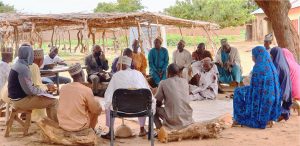
Stakeholder voice. Credible impact assessment doesn’t only measure what companies report — it actively captures the experience of communities, employees, and civil society partners who live with the consequences of corporate decisions.
Contextual intelligence. Africa is not a monolith. A credible assessment framework accounts for local conditions, power dynamics, and social realities that generic global ESG frameworks often miss.
Honest reporting. Independent credibility means reporting what is found, not only what flatters. Companies that commission independent assessments and publish the full findings — including gaps and failures — demonstrate a level of integrity that is instantly distinguishable from those that do not.
Consistency over time. A single verified report is a start. But trust is built through sustained accountability — companies that return to independent scrutiny year after year, and demonstrate improvement (or openly explain why progress has been slow), earn a fundamentally different kind of credibility.
The Competitive Case for Credibility
There is also a straightforward business case here, and African companies would do well to take it seriously.
ESG credibility in Africa is becoming a market differentiator. As global capital flows increasingly orient around sustainability criteria, African companies that can demonstrate independently verified impact will have a tangible competitive advantage — in access to finance, in attracting talent, in retaining community support, and in building the kind of long-term partnerships that drive sustainable growth.
Conversely, companies that continue to rely on self-reported narratives, or that resist independent scrutiny, will find themselves increasingly exposed. Investors are getting sharper. Civil society is getting louder. And the media — including platforms like CSR REPORTERS — are watching more closely.
The question for African business leaders is not whether independent impact credibility matters. It does. The question is whether they will build it proactively, on their own terms, or be forced to reckon with its absence under far less favourable circumstances.
A Call to Principled Leadership
Independent impact credibility is, at its core, a leadership question.
It requires executives who are willing to be held to their own stated values. Boards that understand accountability as a strength, not a threat. Companies that recognise their responsibility not just to shareholders, but to the communities and ecosystems their operations touch.
Africa needs companies that earn trust, not just companies that claim it. The tools exist. The frameworks are developing. The investors, partners, and communities are ready.
What is needed now is the leadership to step forward — and the integrity to stand behind the findings, whatever they show.
CSR REPORTERS is an independent platform focused on ethical leadership and sustainability accountability in Africa. We provide scrutiny, insight, and principled engagement at the intersection of responsibility, leadership, and public trust.
[give_form id="20698"]