5.2 Million Nomadic Children Are Out of School. What Will It Take to Bring Education to Them?
 ONYINYECHI NWAIGBA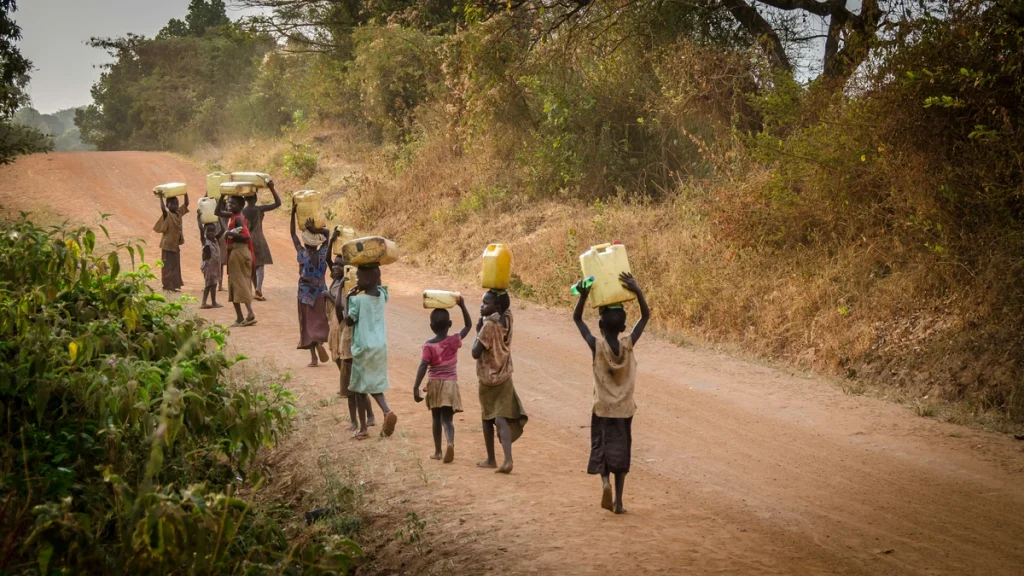
For most children, going to school means going to a place.
There is a classroom. A teacher. A timetable. A school gate that opens every morning and closes at the end of the day.
But what happens when a child’s life does not stay in one place?
For millions of children in Nigeria’s nomadic communities, that question is not theoretical.
It is the reality of growing up.
The National Commission for Nomadic Education says 5.2 million children from nomadic communities remain out of school across Nigeria, highlighting the scale of an education challenge that sits at the intersection of mobility, poverty, climate change, livelihoods and access to basic services.
The affected children include those of nomadic pastoralists, migrant fishermen and migrant farmers whose livelihoods can require families to move from one location to another.
According to the NCNE, occupational mobility, climate change and other challenges have contributed to the exclusion of these children from formal education.
The figure is staggering.
But perhaps the more important question is what it tells us about the way education is designed.
Because for a child whose family moves in search of pasture, farmland, fishing grounds or other livelihood opportunities, a conventional school built in one location can become difficult to access.
The school may still be there.
The teacher may still be there.
But the child has moved.
And when that happens repeatedly, education can become the thing that gets left behind.
When mobility becomes a barrier to education
Nigeria’s nomadic education programme was created because the conventional education system could not adequately serve mobile communities.
The National Commission for Nomadic Education was established to provide qualitative and functional basic education to educationally disadvantaged nomadic groups, including pastoralists, migrant fisher-folk and migrant farmers.
The problem is therefore not new.
NCNE materials have long identified constant migration, difficult terrain, the mismatch between conventional school curricula and nomadic livelihoods, and children’s involvement in family production systems among the factors that make regular school attendance difficult.
What has changed is the environment around the problem.
Climate pressures are affecting where communities can find water, pasture and farmland.
Insecurity has disrupted livelihoods and education in different parts of the country.
And when families are forced to move, children can lose continuity in their education.
A classroom may be available in one location but inaccessible in the next.
The result is an education challenge that cannot be solved simply by building more conventional schools.
A school building is not the same as access
This is where the conversation about inclusive education becomes more complicated.
Building a school is visible.
It can be photographed, commissioned and counted.
But a school building does not automatically mean every child in the surrounding community can use it.
For nomadic communities, access may require a different approach.
The NCNE has previously experimented with alternative approaches, including ICT-based learning initiatives designed to expand access to education in nomadic communities. Its documentation describes pilot e-learning centres in Kaduna and the Federal Capital Territory aimed at helping nomadic children develop literacy and numeracy skills while supporting teachers with digital tools.
The commission is also currently calling for alternative learning pathways suited to the realities of nomadic communities.
At a stakeholders’ engagement in Kaduna on Monday, NCNE Director of Extension Education and Skills Development Umar Ardo said approaches such as the Accelerated Basic Education Programme could help children complete basic education through a condensed pathway. He said the programme could complement the conventional six-year primary education structure with a shorter model that delivers equivalent learning outcomes and allows learners to progress to secondary education or vocational training.
The underlying idea is important.
Instead of asking the child to conform completely to the location and structure of the school, the education system has to become flexible enough to respond to the reality of the child.
Climate change is becoming an education issue
Climate change is often discussed through agriculture, food security, flooding and extreme weather.
But it is also an education issue.
When environmental changes affect livelihoods, they can influence where families live, how often they move and whether children can maintain consistent access to school.
For nomadic pastoralists, changes in rainfall and water availability can influence access to grazing areas.
For migrant farmers and fisher-folk, environmental changes can affect where livelihoods are viable.
When livelihoods move, families may move too.
And when families move, children may be pulled out of school.
This creates a chain reaction:
Climate pressure → livelihood disruption → movement → disrupted schooling → increased risk of exclusion.
That is why the 5.2 million figure should not be viewed only as an education statistic.
It is also a warning about how interconnected Nigeria’s social challenges have become.
The human cost of being left behind
Behind the number are children.
Children whose education may be interrupted when their families move.
Children who may spend their early years helping with family livelihoods while having limited access to formal learning.
Children who may eventually enter adulthood without the literacy, numeracy, technical and digital skills increasingly required to participate fully in the economy.
And the consequences do not stop with the individual.
When large numbers of children remain excluded from quality education, the country loses future workers, entrepreneurs, professionals and community leaders.
Education is not simply a social service.
It is human capital infrastructure.
That makes the issue of nomadic education relevant not only to government and education agencies, but also to companies, foundations and organizations interested in long-term social impact.
Where CSR can make a difference
This is where the private sector has an opportunity to think beyond the traditional education donation.
For years, education-focused CSR has often involved donating books, computers, school furniture, scholarships or renovating classrooms.
Those interventions can be valuable.
But the challenge facing nomadic children raises a more fundamental question:
What if the problem is not simply the condition of the classroom, but the ability of the child to consistently reach one?
That changes the intervention.
Companies and foundations could support mobile and flexible learning models.
They could invest in digital and offline learning technologies that allow children to continue lessons when their families move.
They could support teacher training for educators working in nomadic communities.
They could fund climate resilient learning centres.
They could partner with government agencies and development organisations to improve education data and identify communities being missed by conventional systems.
They could also support vocational and livelihood programs that complement formal education and reflect the realities of nomadic communities.
The objective should not be to impose a completely foreign model of education on these communities.
It should be to create an education system flexible enough to meet children where they are.
Data matters too
One of the less visible challenges in solving the problem is knowing exactly where the children are.
At the Kaduna engagement, the NCNE said recent research conducted across six states and the Federal Capital Territory identified more than 61,000 nomadic out-of-school children in Jigawa, Gombe, Niger, Enugu, Cross River, Oyo and the FCT. The commission said reliable data would help governments identify children’s educational needs and engage parents, communities and other stakeholders more effectively.
That point matters because social investment is only as effective as the understanding behind it.
If organizations do not know which communities are being missed, they cannot design interventions around their actual needs.
For CSR program, this means moving away from assumptions and toward community-level data.
It means asking:
Where are the children?
Why are they out of school?
How far are they from existing learning centers?
How often do their families move?
What prevents regular attendance?
What kind of learning model would work for them?
And what happens after the intervention ends?
These questions can determine whether a program creates lasting impact or simply produces another short-term success story.
Inclusion means designing for the people being served
There is a broader lesson here for CSR.
A programme can be well funded and still fail to reach the people it was designed for.
A company can build a beautiful school.
But if children cannot consistently access it, the intervention has only addressed part of the problem.
This is why understanding the community matters.
Effective social investment begins with listening.
What does the community actually need?
What prevents people from accessing existing services?
What cultural, geographic, economic or environmental factors shape their decisions?
And what would make the intervention sustainable?
For nomadic communities, the answers may be very different from those in a settled urban neighbourhood.
The solution, therefore, cannot simply be a copy-and-paste version of an urban education programme.
It has to respond to the reality of mobility.
Education and livelihoods cannot always be separated
The NCNE is also advocating an approach that connects education with vocational and livelihood skills.
According to the commission, children who cannot proceed to secondary education should be supported with vocational training relevant to their communities and interests, including skills connected to livestock rearing, fishing and farming.
This is an important part of the conversation.
Education does not have to mean disconnecting children from the communities and livelihoods they come from.
For some children, the most useful intervention may be one that combines foundational education with practical skills that can improve future earning capacity.
That does not mean accepting low expectations for nomadic children.
Quite the opposite.
It means recognizing that education can be both academically meaningful and economically relevant.
The objective should be to give children more choices, not fewer.
Government cannot do it alone, but CSR cannot replace government
The scale of the challenge also makes one thing clear: philanthropy cannot solve this alone.
A company may fund a learning center.
A foundation may provide digital devices.
A development organization may support teachers.
But sustainable access to education requires public systems capable of reaching children consistently and at scale.
The NCNE itself has identified inadequate funding, insecurity, teacher shortages and high dropout rates among the challenges affecting nomadic education. Its earlier ministerial brief estimated about four million nomadic children were out of school, illustrating that the scale of the problem has been recognised for years.
The latest 5.2 million figure therefore represents a serious warning, but it should also be understood within a longer-running education challenge.
The role of CSR should be partnership, innovation and support — not substitution.
Government has the responsibility to provide public education.
The private sector can bring resources, technology, expertise and innovative delivery models.
Civil society can help communities articulate their needs and hold institutions accountable.
Development partners can provide technical and financial support.
And communities themselves must be part of designing the solutions.
That is what a genuinely inclusive approach looks like.
The question is no longer whether these children need education
Nigeria has known for decades that nomadic communities face barriers to conventional education.
The establishment of the NCNE itself was an acknowledgement of that reality.
The latest figure of 5.2 million children, however, forces the country to confront the scale of the challenge again.
The question is no longer whether these children need access to education.
It is whether the country is willing to rethink what access actually looks like.
Because education cannot truly be considered inclusive if millions of children remain outside the system simply because the system was not designed around the realities of their lives.
And perhaps that is the bigger lesson in the 5.2 million figure.
Sometimes, exclusion is not created by a lack of desire to learn.
Sometimes, it is created by a system that expects everyone to stand still.
For Nigeria’s nomadic children, the classroom may need to become more flexible, more mobile, more resilient and more responsive to the communities it serves.
The goal should not be to make the child fit the classroom.
The goal should be to make sure the classroom can reach the child.
[give_form id="20698"]