

Nigeria’s Rice Industry Under Pressure: What 90 Closed Mills Mean for Farmers, Jobs and Food Security
 ONYINYECHI NWAIGBA
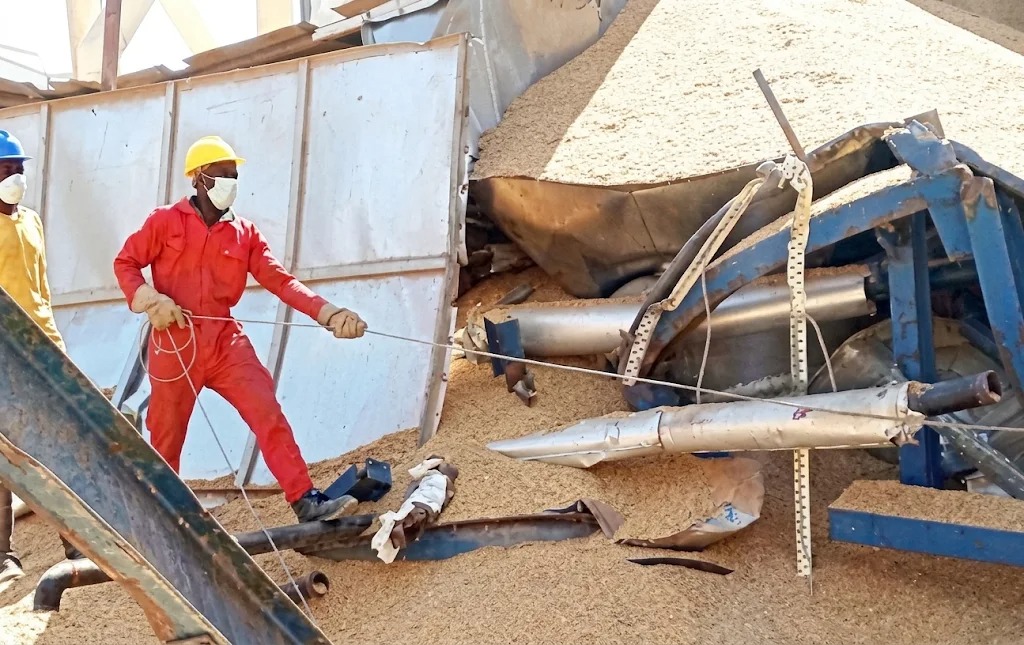
Rising production costs, inadequate agricultural financing and competition from cheaper imported rice are putting pressure on local rice production. As mills shut down and farmers reconsider what they grow, Nigeria faces a bigger challenge: protecting the livelihoods and investments built around its domestic rice industry.
Nigeria’s ambition to become self-sufficient in rice production was once presented as one of the country’s major agricultural success stories. Investments in local rice farming, processing facilities and government-backed financing programmes helped expand production and encouraged private companies to establish large-scale rice mills across the country.
The objective was straightforward: produce more rice locally, reduce dependence on imports, create jobs and keep more money within the Nigerian economy.
But that progress is now facing serious pressure.
More than 90 of Nigeria’s 260 integrated rice mills have reportedly shut down, according to industry operators cited in a November 23, 2026 report. The closures have been linked to shortages of locally produced paddy, rising operating costs and competition from cheaper imported rice.
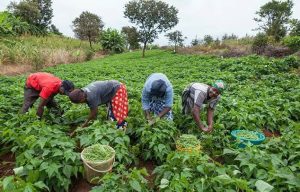
The development comes as farmers struggle with the cost of agricultural inputs, while some are reportedly abandoning rice cultivation for crops such as sesame and sorghum.
The implications extend beyond mill owners. Rice production supports a large network of farmers, agricultural suppliers, transporters, processors, distributors, retailers and workers. When one part of this value chain weakens, the effects can spread across the businesses and communities that depend on it.
For Nigeria, the challenge is no longer simply producing enough rice. It is building an agricultural system in which farmers can earn sustainable incomes, processors can operate profitably and consumers can access affordable food.
From Rice Self-Sufficiency to a Struggling Industry
Nigeria’s rice production drive gained momentum between 2015 and 2023, supported by government interventions, restrictions on rice imports and increased investment in local processing.
One of the major interventions was the Central Bank of Nigeria’s Anchor Borrowers’ Programme, which was introduced to connect smallholder farmers with larger agricultural processors and provide financing and inputs for production.
The programme helped support the expansion of domestic rice cultivation, although its long-term effectiveness and implementation faced challenges.
In February 2023, Nigeria announced that it had achieved approximately 75 per cent self-sufficiency in rice production. The country also projected that it could become a net exporter by 2026.
The rice pyramids unveiled in Abuja in January 2023, containing approximately one million bags of paddy, were presented as evidence of the progress made.
However, the industry is now facing a different reality.
According to the November report, paddy production, which reportedly reached 8.5 million tonnes in 2021, fell to approximately 4.8 million tonnes in 2025. Mill capacity utilisation also dropped below 30 per cent, leaving processors with facilities that cannot operate at their installed capacity.
Industry representatives have attributed the decline to inconsistent agricultural policies, limited access to financing, insecurity in farming communities, rising input costs and weaknesses in the supply chain.
The figures point to a problem that goes beyond the performance of individual mills. Nigeria has invested in processing capacity, but the supply of affordable local paddy needed to keep those facilities running has become increasingly uncertain.
Why Rice Farmers Are Struggling to Stay in Business
At the centre of the crisis is the rising cost of producing rice.
Farmers require quality seeds, fertiliser, agrochemicals, machinery, fuel, labour and access to water. When these costs increase significantly, cultivating rice becomes more expensive, particularly for smallholder farmers who have limited access to affordable financing.
Industry operators cited in the report said the price of a tonne of paddy had risen from approximately ₦180,000 in 2021 to between ₦600,000 and ₦650,000 in 2026.
They also reported that fertiliser prices had increased from around ₦8,000 to ₦45,000 over the same period.
These figures reflect the experiences reported by industry stakeholders, rather than a uniform price paid by every farmer. However, they illustrate the financial pressure facing producers.
The problem becomes more complicated when farmers cannot sell their harvests at prices that cover production expenses.
A farmer who spends heavily on land preparation, planting, fertiliser, harvesting and transportation needs a reliable market to recover those investments. If millers cannot afford to purchase paddy at the price farmers need, both sides are placed under pressure.
Some farmers are consequently considering alternative crops that require lower production costs or offer more attractive returns.
While changing crops may be a reasonable business decision for individual farmers, a widespread shift away from rice production could deepen the shortage of local paddy and make it even more difficult for domestic mills to operate.
It also raises questions about how Nigeria can encourage farmers to remain in a sector that requires substantial investment but does not always guarantee profitable returns.
The Problem of Mills Without Enough Rice to Process
The closure of more than 90 integrated rice mills exposes a major weakness in the country’s agricultural value chain: the gap between processing capacity and the availability of raw materials.
According to the National Chairman of the Rice Millers Association of Nigeria, Peter Dama, Nigeria has installed rice milling capacity of approximately 7.5 million tonnes annually, while the available paddy supply has fallen significantly short of what the industry needs.
The situation creates a difficult operating environment for mill owners.
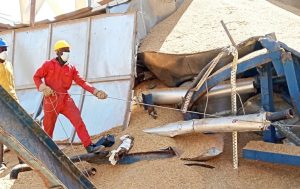
A rice mill requires a consistent supply of paddy to justify its investments in machinery, buildings, electricity, labour, packaging and distribution. When farmers cannot supply enough rice, processing facilities operate below capacity, reducing revenue and making it harder to cover fixed expenses.
Energy costs add another layer of pressure. Rice milling requires electricity to operate machinery, and some processors depend heavily on diesel generators because of unreliable public power supply.
The cost of running a mill therefore extends beyond purchasing the raw rice. Operators must also pay for fuel, maintenance, transportation, labour and packaging before the finished product reaches consumers.
In Ebonyi State, the report also highlights the decline of government-established rice mills in Izzi, Ikwo and Oso Edda. These facilities, which were intended to strengthen local processing and promote the EbonyRice brand, reportedly struggled with insufficient paddy supplies and gradually ceased operations.
A former worker cited in the report said workers eventually left in search of other employment as the facilities became less functional.
These examples demonstrate why building processing facilities alone cannot guarantee a successful agricultural industry. Without dependable supplies, affordable energy, skilled workers and sustainable markets, expensive infrastructure can become idle.
Cheaper Imported Rice and the Competitiveness Problem
Another challenge confronting local rice processors is competition from cheaper imported rice.
Industry operators argue that imported rice, including products entering through informal trade routes, is often sold at prices that locally processed rice cannot easily match.
The problem is particularly serious when domestic producers face high input and operating costs while competing with rice produced in countries where farmers and processors may benefit from different levels of government support.
The US Department of Agriculture’s Foreign Agricultural Service has also identified cheaper informal rice imports as a challenge for Nigeria’s domestic milling industry. Its 2026 grain and feed report estimated that approximately 60 per cent of rice mills were non-operational, based on information from industry contacts.
This is a separate industry estimate and should not be treated as an independently verified count of closed facilities. Nevertheless, it reinforces concerns about the pressure facing domestic processors.
Nigeria’s official restrictions on rice imports through land borders have also not eliminated informal cross-border trade. The USDA report explains that differences in import tariffs between Nigeria and neighbouring countries have historically encouraged rice to enter through informal trade networks.
For local millers, the concern is that they are competing against products that may avoid the full costs and duties associated with formal importation.
However, protecting domestic production cannot depend on import restrictions alone.
If locally produced rice remains significantly more expensive because farmers face high input costs and processors struggle with energy and financing expenses, restricting imports without addressing those underlying problems may simply shift the burden to consumers.
The longer-term solution requires making Nigerian rice production more competitive.
Women Farmers and the Agricultural Financing Gap
The challenges facing Nigeria’s rice industry also raise concerns about access to agricultural opportunities, particularly for women.
The report highlights the experience of women farmers in Kebbi State, where the Chairperson of the Kebbi State Female Farmers Associations, Hadiza Kola, identified inadequate financing as a major obstacle to expanding production.
She also described social barriers that can make it difficult for women to participate in commercial agriculture, including limited support for women who want to move beyond subsistence farming.
These challenges matter because women play important roles across agricultural production, processing and food distribution.
When they cannot access affordable loans, quality inputs, land and relevant training, their ability to contribute to food production and build sustainable businesses becomes limited.
Agricultural financing programmes must therefore consider more than the total amount of money made available. They must also examine who can access the funding, the conditions attached to it, how beneficiaries are selected and whether the support helps farmers generate sustainable returns.
The experience of women farmers also demonstrates why agricultural development should be measured by the opportunities it creates for different groups, rather than production figures alone.
What Happens to Jobs and Local Businesses When Mills Close?
The consequences of mill closures extend across the communities surrounding rice-producing and processing centres.
Rice farming supports demand for fertiliser suppliers, seed companies, equipment providers, tractor operators, harvesters and agricultural extension services.
After harvesting, transporters move paddy from farms to processing facilities. Mill workers clean, dry, mill and package the rice, while distributors and retailers take the finished product to consumers.
Every stage creates economic activity and employment opportunities.
When mills close or reduce operations, these businesses may lose customers and workers may lose their jobs or income. Farmers may also find it harder to secure buyers for their harvests.
The consequences can be particularly severe in rural communities where agricultural processing facilities provide important sources of employment beyond farming itself.
There is also a wider implication for local investment. Companies that have committed significant resources to building mills and developing distribution networks need a predictable operating environment to remain in business.
If investments in agricultural processing repeatedly become unviable because of unreliable raw material supply, high operating costs and inconsistent policies, investors may become less willing to commit additional capital to the sector.
This would make it harder for Nigeria to develop the kind of agricultural value chains needed to support industrialisation and create jobs.
What Nigeria Must Do to Protect Its Rice Industry
The current situation calls for a more coordinated approach to agricultural development.
First, farmers need access to affordable and reliable production inputs. Fertiliser, improved seeds, agrochemicals and mechanisation services must be available at prices that allow farmers to produce competitively.
Second, agricultural financing must become more dependable. Government-backed credit programmes should be designed around realistic repayment conditions, transparent beneficiary selection and effective monitoring. Women farmers and smallholder producers must also be able to access these opportunities.
Third, investment in irrigation and water management is essential. Rice production cannot depend entirely on seasonal rainfall, particularly when climate variability makes farming conditions increasingly unpredictable. Expanding irrigation infrastructure can support more consistent production and reduce some of the risks farmers face.
Fourth, Nigeria must address the cost of processing. Reliable electricity, better rural roads, improved storage facilities and efficient transportation can reduce the expenses that make local rice more expensive.
Fifth, the government must strengthen border monitoring and address informal rice imports that undermine legitimate domestic businesses. However, enforcement must go alongside measures that improve local competitiveness. Consumers should not be forced to pay significantly more simply because local producers cannot operate efficiently.
Finally, agricultural policies must be consistent enough to give farmers and investors confidence to plan beyond a single planting season or government administration.
The National Rice Development Strategy II, launched in 2021, is due to expire in December 2026. Its conclusion presents an opportunity for government and industry stakeholders to assess what worked, identify implementation failures and establish a more sustainable direction for the sector.
The next strategy should have measurable targets for production, farmer incomes, processing capacity, job creation, women’s participation and the affordability of locally produced rice.
It should also make clear which institutions are responsible for delivering these outcomes and how progress will be monitored.
Nigeria’s Rice Industry Needs More Than Another Production Target
The reported closure of more than 90 integrated rice mills is a warning about the fragility of Nigeria’s agricultural value chain.
The country has demonstrated that it can attract investment into rice processing and encourage farmers to expand production. But maintaining that progress requires more than announcing self-sufficiency targets or establishing new processing facilities.
Farmers must be able to afford production. Millers must have access to enough paddy at prices that allow them to operate profitably. Workers need stable employment, and consumers need access to affordable food.
These objectives are connected. A rice industry that cannot support its farmers will eventually struggle to supply its processors. A processing industry that cannot compete will struggle to sustain jobs and investment. And a country that cannot produce enough food locally will remain exposed to external market pressures.
Nigeria’s rice ambition should therefore be measured not only by how much rice it produces, but by how well the industry supports the people who make that production possible.
The real test of agricultural success is whether farmers can earn a living, businesses can remain operational and households can afford the food they depend on.
[give_form id="20698"]