csrreporters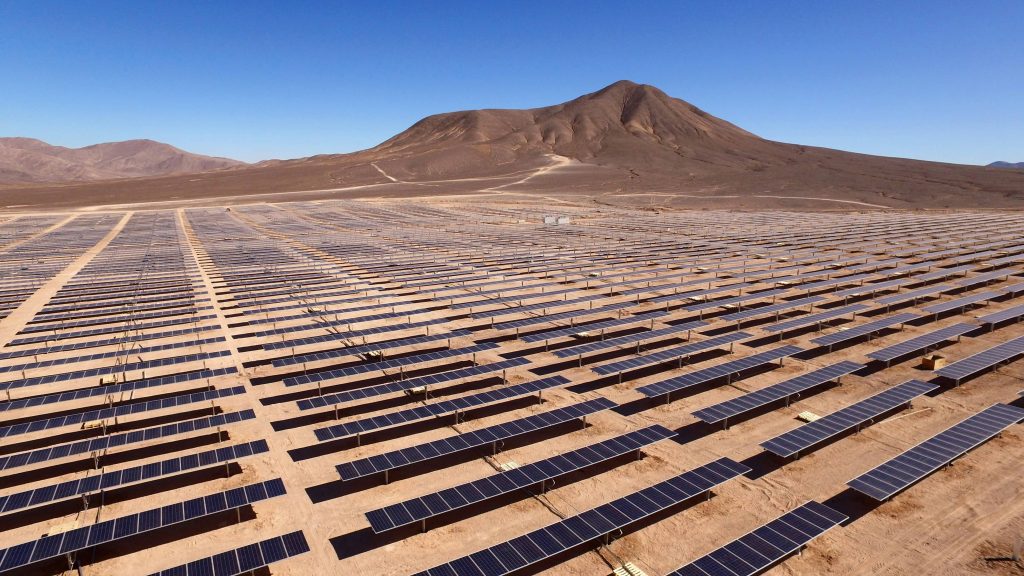
For two centuries, the path to industrial prosperity ran through smokestacks. Britain burned coal. America burned oil. China did both, only faster. Now, India is rewriting that script entirely, and the world’s sustainability community is watching very closely indeed.
Analysts at Ember, a UK-based energy think tank, put it plainly. India is “enabling development without the long fossil-fuel detour taken by the West and China,” according to energy strategist Kingsmill Bond. “China built on coal,” Bond observed. “India is building on sun.” That distinction, seemingly simple, carries enormous consequences for ESG investors, corporate sustainability strategists, and policymakers across every emerging economy, particularly in Africa.
India’s New Industrial Playbook
The physical centrepiece of India’s solar ambition sits in the Rann of Kutch, a vast salt desert in Gujarat. By 2029, nearly 60 million panels will cover 280 square miles of that landscape, forming the Khavda Solar Park, which is set to become the world’s largest solar power facility. It’ll have a generating capacity of 30 gigawatts, enough electricity to power an entire country the size of Austria. Khavda is not merely an engineering feat. It is a statement of industrial intent.
In 2025, India added 37.5 gigawatts of new solar capacity, a 50 percent increase from the previous year. The 2026 budget targets deployment of 45 to 50 gigawatts, positioning India to become the world’s second largest solar market. Furthermore, in 2025, India achieved its Nationally Determined Contribution target of sourcing 50 percent of installed power generation capacity from non-fossil fuel sources, five years ahead of schedule, supported by a sharp increase in solar investment that reached $20 billion.
The policy machinery driving this transformation deserves attention from every African finance ministry. India’s Production Linked Incentive (PLI) scheme directly rewards manufacturers for actual output, not just announced capacity. The results are striking.
Solar module manufacturing capacity reached approximately 144 GW per year by end-2025 due to investment in advanced TOPCon and HJT cell technology driven by PLI incentives. Meanwhile, battery storage tariffs collapsed from around $14,700 per MW per month in 2023 to below $3,000 per MW per month in 2025 as project scales expanded. Cost curves, in other words, are moving in India’s favour with remarkable speed.
Why Investors Are Paying Attention
India’s total energy investment is set to reach a record $170 billion in 2026, growing at an average of 11 percent annually over the past five years. That figure is drawing serious attention from ESG-focused capital allocators globally, and for good reason. Clean energy now commands the majority of new capacity investment. Investment in solar PV projects has grown at an annual rate of 25 percent since 2020.
Governance risks, however, remain a legitimate concern. India’s largest renewable developer, the Adani Group, faces scrutiny that global investors cannot overlook. In 2024, the U.S. Department of Justice accused Adani executives of paying substantial bribes to government officials to secure solar supply contracts and concealing that information from investors.
The case was subsequently dropped after Adani pledged investment in the United States, though American officials denied any formal connection between the two developments. For institutional investors applying rigorous ESG screens, that episode underscores why governance evaluation must accompany environmental enthusiasm in any emerging market clean-energy portfolio.
Despite that controversy, the structural investment thesis remains intact. India’s solar manufacturing ecosystem is diversifying well beyond assembly lines. Domestic cell and wafer production, previously almost nonexistent, now supports meaningful supply-chain resilience. Projections suggest India’s module manufacturing capacity could exceed 165 GW by 2027, placing it alongside China and the United States as a true global production hub.
ESG Lessons for Nigeria and Africa
Africa was the world’s fastest-growing solar market in 2025, defying a global slowdown. Nigeria, specifically, contributed significantly to that momentum. It overtook Egypt as Africa’s second-largest solar importer.
Battery storage costs across Africa fell to $112 per kilowatt-hour in 2025 too. This was down from $144 per kilowatt-hour in 2023. Additionally, Nigeria launched a $500 million distributed renewable energy fund targeting mini-grids, solar home systems, commercial power solutions, and innovative storage technologies.
Yet importation is not industrialization. Between June 2024 and June 2025, Nigeria imported approximately 1,721 MW of solar panels from China. This made it the second-largest solar importer in Africa after South Africa. India’s lesson here is clear and direct: consuming clean energy technology without producing it leaves a country economically exposed and strategically dependent.
Nigeria’s Vice-President Kashim Shettima disclosed in October 2025 that the country’s energy transition is unlocking an investment opportunity exceeding $410 billion through 2060. With over $23 billion needed to expand energy access for citizens still living in energy poverty. That vision is credible. Translating it into a manufacturing-led strategy, however, demands the kind of output-linked policy architecture that India built through the PLI scheme. Announcements alone will not attract the patient capital that serious industrial transformation requires.
Across Africa more broadly, solar PV has become the most cost-effective power source in many countries. Additionally, the rise of climate finance and ESG mandates is creating a meaningful new driver for clean energy investment on the continent. The window is open. The question is whether African governments can move with sufficient clarity and consistency to hold it open.
The Corporate Sustainability Opportunity
For Nigerian businesses and multinationals operating across Africa, India’s trajectory offers a practical corporate sustainability roadmap. Companies need not wait for national grids to transform. India’s commercial and industrial solar segment expanded substantially because private enterprises recognized that on-site renewable generation reduces operating costs, insulates against fuel price volatility, and satisfies increasingly mandatory ESG reporting requirements.
Nigeria’s banking sector is already leading this corporate transformation, with institutions like Access Bank and Zenith Bank integrating climate risk assessments into lending decisions. That trend, if deepened, begins to mirror the financial-sector climate alignment that preceded India’s private solar investment surge. Sustainability officers at Nigerian conglomerates, consumer goods companies, and manufacturers should treat India’s corporate solar adoption not as inspiration but as operational precedent.
Solar costs in India have hit historic lows in 2026, with households and small businesses now facing payback periods of just three to five years. Similar economics are beginning to emerge across West Africa as panel prices and battery costs continue falling. Corporate finance teams that model this economics seriously will find renewable energy transitions that are accretive to shareholder value, not merely reputationally beneficial.
Can Emerging Economies Skip the Fossil Fuel Era?
India’s experience suggests the answer is yes, under certain conditions. The country benefits from exceptional solar irradiation, a large domestic market that justifies manufacturing scale, a services-led growth model that is inherently less energy-intensive than heavy industry, and a government willing to deploy output-linked incentive architecture rather than relying purely on price signals.
Nigeria shares several of those advantages. Solar irradiation levels in Nigeria’s northern states exceed global averages. Investment patterns in Nigeria already show growing preference for solar and wind projects in those high-irradiation northern regions.
Read: ESG Mapping of the Top 5 Renewable Energy Sources in Nigeria
The domestic market in Nigeria is also the largest in Africa. Additionally, the gradual removal of diesel subsidies in Nigeria over the past two years has accelerated solar adoption by making diesel increasingly expensive and nudging businesses and households toward cleaner alternatives.
What remains unresolved is the manufacturing ambition. In September 2025, Nigeria announced plans for a 1 GW solar panel factory, the largest planned facility in West Africa. Similar facilities are under construction in Egypt, South Africa, and Ethiopia.
That announcement echoes the early stages of India’s manufacturing pivot. Following through with output-linked incentives, stable regulatory frameworks, and access to concessional finance will determine whether Nigeria becomes a producer in the clean energy transition or remains a consumer of it.
The stakes extend beyond national energy policy. ESG capital flows are increasingly discriminating between markets that offer governance clarity and those that deliver uncertainty. India’s ability to attract sustained foreign investment into its solar sector reflects, in part, a regulatory environment that, despite documented governance risks, provides sufficient policy predictability for institutional investors to commit capital at scale.
Africa’s clean energy transition will accelerate when its policymakers apply that lesson with the same seriousness that India did a decade ago. The technology costs are already favourable. The financing frameworks are increasingly available. The model, as India has demonstrated, is proven. What remains is the political will to build on sun rather than wait for oil.
[give_form id="20698"]