CSR Personality of the Week: Dr. Oluwasoromidayo George Is Nigeria’s Most Inspiring Sustainability Voice
 csrreporters
Dr. Oluwasoromidayo George, Corporate Affairs and Sustainability Director at Coca-Cola HBC
Some professionals manage sustainability portfolios. Others reshape what sustainability itself means within a corporate context. Dr. Oluwasoromidayo George, Corporate Affairs and Sustainability Director at Coca-Cola HBC, belongs firmly to the second group.
Her career spans more than three decades. During that time, she has moved from banking halls to boardrooms, from policy drafting tables to community clean-up drives in Apapa. In doing so, she has built one of the most consequential sustainability careers in West Africa.
To understand why Dr. George matters, you first need to understand the terrain she works in. Nigeria’s corporate responsibility space has long been fragmented, well-intentioned but under-coordinated, often driven by optics rather than outcomes.
Furthermore, ESG frameworks that work in European headquarters frequently arrive in Lagos stripped of the local nuance required for lasting impact. Against this backdrop, George has consistently offered something rarer: a grounded, systems-thinking approach that serves both the business bottom line and the surrounding communities.
A Career Built on Firsts
Before she arrived at Coca-Cola HBC in April 2023, Dr. George had already accumulated a remarkable record of pioneering achievements. She was the first female Corporate Affairs and Sustainable Business Director at Unilever West and Central Africa. That region encompasses some of the continent’s most complex operating environments.
Additionally, she was the first female Executive Director of the British American Tobacco Nigeria Foundation and the first female Chairman of the Manufacturers Association of Nigeria Export Group (MANEG). These were not ceremonial appointments.
As Head of Corporate Affairs at BAT West Africa from 2006 to 2015, she led the full repositioning of the BATN Foundation. The work involved building an enterprise and impact-led approach to poverty reduction in rural agriculture development. Under her watch, the media management strategy was redesigned so effectively that positive media mentions reached approximately 85% by 2014. Therefore, when she moved to Unilever in 2015, she arrived not as a newcomer to complexity but as someone already tested by it.
At Unilever, her remit expanded considerably. She designed and drove the execution of sustainable business, corporate communications, and external relations agendas across West and Central Africa. Crucially, she linked policy advocacy directly to operational cost savings. That move demonstrated to sceptical executives that sustainability and profitability are not adversaries. As a result, her approach meaningfully changed how social missions were integrated within the organisation.
Arriving at Coca-Cola HBC With a Clear Agenda
When Dr. George joined the Coca-Cola HBC group her position immediately placed her at the centre of Nigeria’s most consequential corporate sustainability conversations. Rather than coast on existing credentials, she moved quickly to deepen Coca-Cola HBC’s engagement with communities. Her focus covered water, packaging waste, and inclusive economic growth.
In January 2025, she was a central figure in the commissioning of a Packaging Collection Hub in Apapa, Lagos. The facility has the capacity to process up to 13,000 metric tonnes of plastic bottles annually. Moreover, the hub aims to serve as a comprehensive solution for plastic waste management. It supports the Coca-Cola System’s sustainability initiatives while creating jobs and uplifting local communities.
The significance of that hub extended well beyond its technical specifications. It signalled a shift in how Coca-Cola HBC was choosing to show up in the communities where it operates.
On World Clean-Up Day in September 2025, Dr. George led a recycling awareness walk in Apapa. She framed the exercise as part of a wider Waste-to-Wealth drive. “What we are doing here goes beyond picking plastics; it is about creating awareness and changing mindsets,” she said. “Recycling is not just good for the environment; it provides economic opportunities.”

Water Stewardship as a National Imperative
If packaging is one pillar of George’s sustainability agenda at Coca-Cola HBC, water stewardship is equally central. In March 2025, she led World Water Day initiatives across several Nigerian states. Her team engaged communities, environmental advocates, and stakeholders to promote water conservation. These were not token gestures. Instead, they reflected a coherent philosophy: water security is inseparable from Nigeria’s broader economic future.
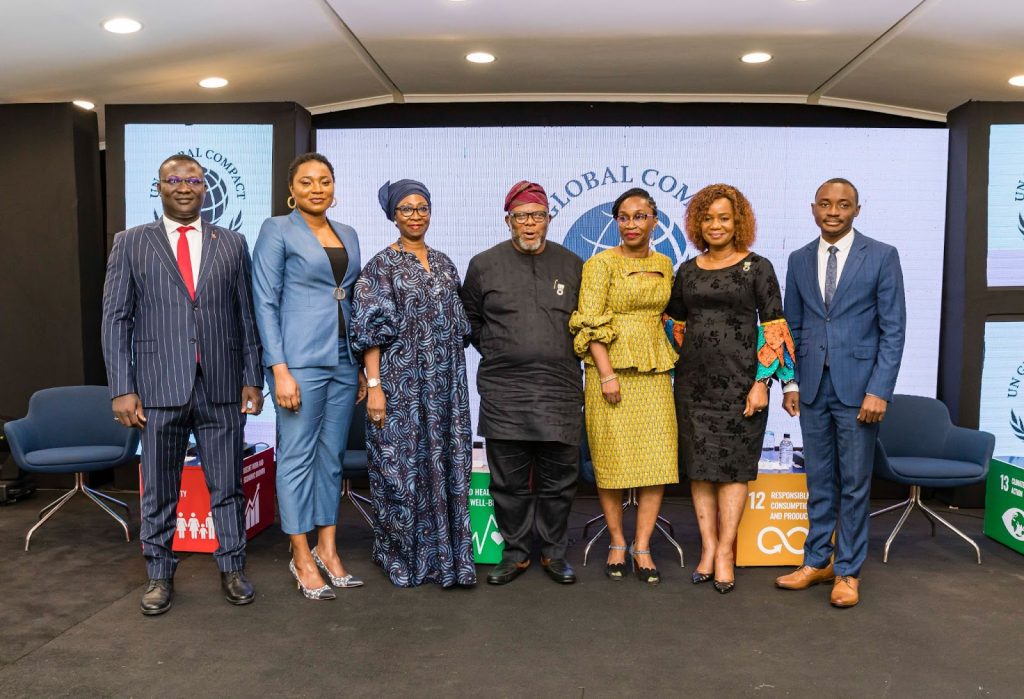
This conviction predates her time at Coca-Cola HBC. She chaired the UN Global Compact Network Nigeria during the CEO Water Mandate inaugural meeting. That forum brought together leading private sector stakeholders and development organisations to address Nigeria’s water challenges. The approach was risk-based, anchored in sustainable water stewardship. Consequently, by the time she transitioned to Coca-Cola HBC, she was not merely adopting a water strategy. She was building on a national initiative she had helped architect.
As Chairperson of the UN Global Compact Network Nigeria, she has been unambiguous about the direction corporate Nigeria must take. At the 2024 launch of the Transformational Governance Corporate Toolkit, she declared that ESG principles are no longer a trend but an imperative. “ESG is not a buzzword; it is our compass for sustainable growth,” she told an audience of chief legal officers and governance executives. Those words carried the authority of someone who had lived them across multiple industries.

Building Institutions That Outlast Roles
What distinguishes truly transformative leaders from competent administrators is their instinct to build structures that outlast their tenure. Dr. Oluwasoromidayo George has demonstrated this instinct repeatedly throughout her career.
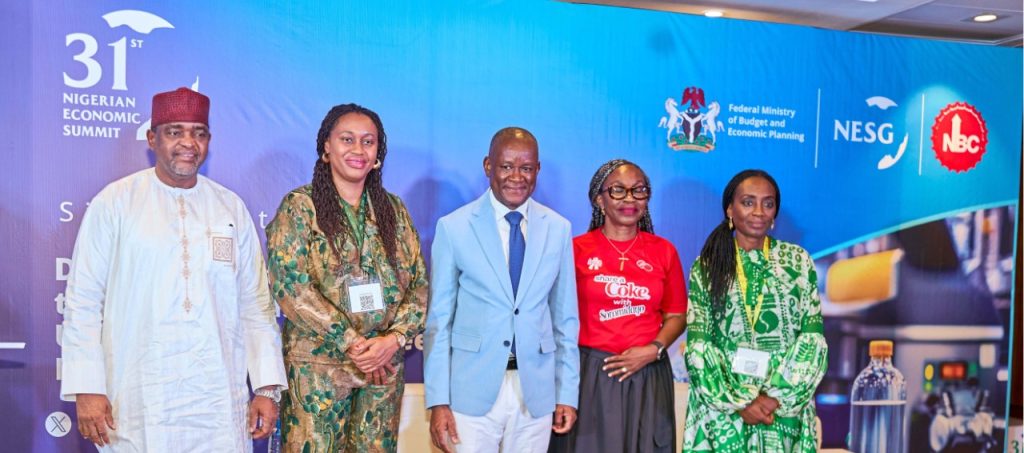
She co-founded the Corporate Social Responsibility and Governance Institute, a body designed to professionalise CSR practice in Nigeria. Furthermore, she serves as Co-Chair of the CEO Water Mandate Council, representing the Nigerian Economic Summit Group (NESG). That role places her at the intersection of private sector ambition and public policy design.
Beyond professional institution-building, she founded the Heart of Ruth Fund in 2016, now operating as the Heart of Ruth Foundation. The foundation focuses on rehabilitating women and children who are abused or economically disadvantaged.
This was not a corporate-mandated initiative. It was a personal conviction, funded and structured independently of her employer. Therefore, it reveals something essential about the depth of George’s commitment: sustainability, for her, is not a job description. It is a life orientation.
Her academic journey reinforces this point. She holds a doctoral degree from Walden University. Her research has focused on Bottom of the Pyramid strategies in emerging markets. This field sits precisely at the intersection of her professional experience and her humanitarian instincts. It asks how businesses can create genuine value for the most economically marginalised communities, a question George has spent her entire career answering.
The Architecture of Influence
Even in her day-to-day operational role, George has shaped how Coca-Cola HBC engages with Nigeria’s regulatory environment. She led Coca-Cola HBC’s participation in a strategic regulatory forum alongside the Coca-Cola Company. The forum was designed to deliver value to Nigerian consumers while stimulating economic growth.
These engagements matter enormously. They demonstrate that sustainability leadership is not confined to community projects. Instead, it extends to the structural conversations that govern how businesses operate within policy frameworks.
A recent economic impact study by Steward Redqueen found that for every job created by the Coca-Cola System, an additional 53 jobs are supported across Nigeria. As the person responsible for communicating and stewarding that impact, George occupies a position of genuine national significance. She does so with the intellectual rigour that comes from spending decades at the junction of corporate strategy and community development.
Her membership on the AIESEC Nigeria Board of Advisors, her Fellowship of the WIMBOARD Institute, and her participation in the WIMBIZ Executive Council all point to one conclusion. George understands that influence is compounded through networks. She invests deliberately in ecosystems that produce the next generation of sustainability leaders, especially women. She does this because she has experienced firsthand what it costs to be first.
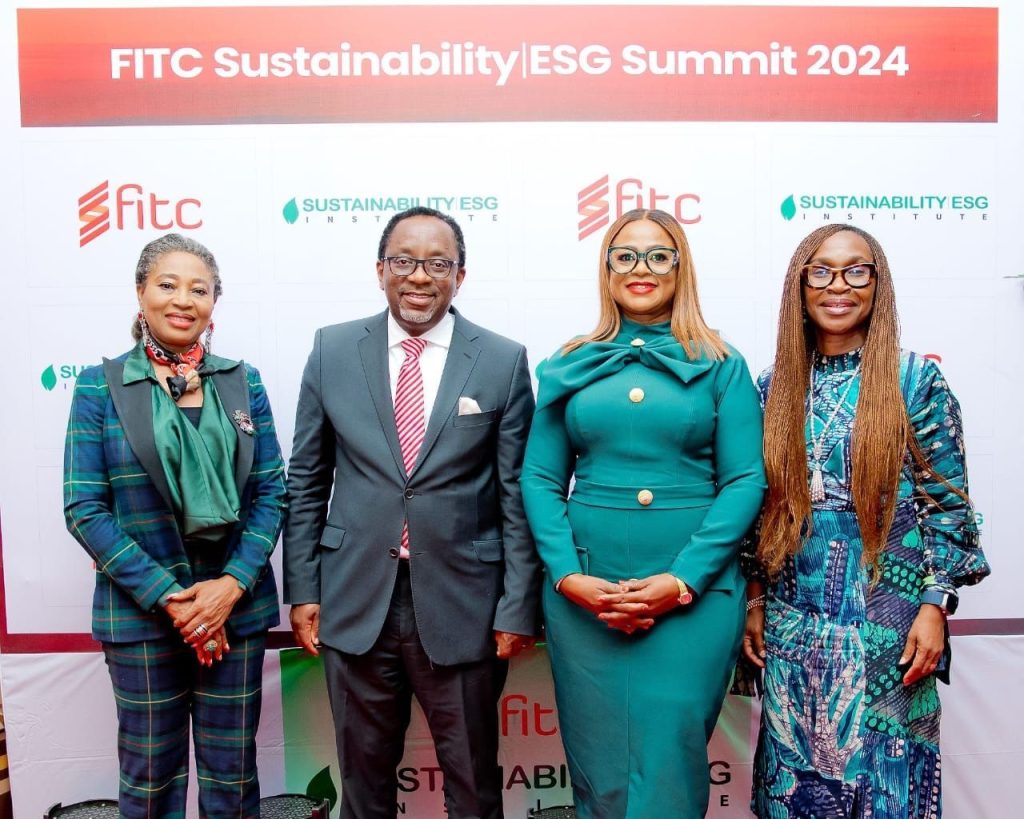
Why She Matters Right Now
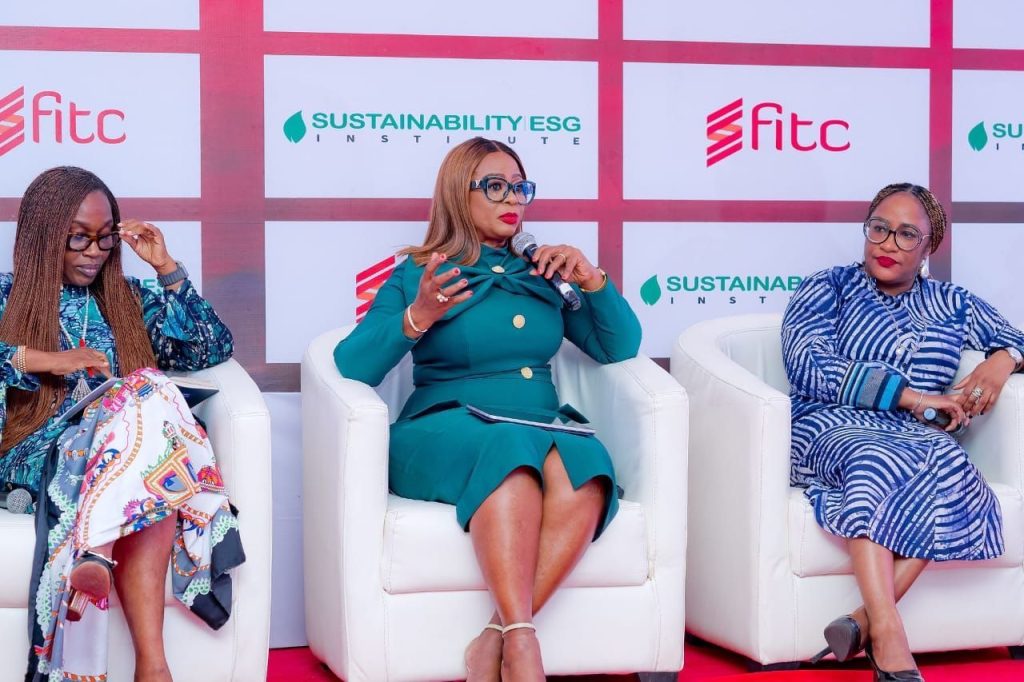
Nigeria is at an inflection point. The pressure on corporations to demonstrate genuine ESG commitment is intensifying from investors, regulators, and consumers alike. At the same time, the country faces interconnected crises in plastic waste, water access, and youth unemployment. No single organisation can address those challenges alone. Consequently, the kind of leadership George represents is precisely what this moment demands. It is rooted in deep institutional knowledge, cross-sector relationships, and a genuine moral commitment to community outcomes.
She is not a sustainability evangelist who arrived from a consulting background with a framework to sell. Rather, she is a practitioner forged by experience. Her career began in 1990 as an Officer Trainee in the Foreign Operations Department of a Nigerian bank. Since then, she has spent more than three decades building, failing, learning, and building again. That trajectory matters because it means her approach to ESG is not theoretical. It is earned.
When she stands in Apapa with Coca Cola HBC employees during a community clean-up, she is not performing corporate social responsibility. She is embodying a philosophy that sustainability champions must be present in the work, not merely present in the boardroom. For Nigeria’s growing community of CSR professionals, that distinction is the most instructive lesson she offers.
Dr. Oluwasoromidayo George is, without question, one of the most consequential sustainability architects operating in West Africa today. Her record of firsts is impressive. However, what ultimately defines her is not the glass ceilings she has shattered. It is the quality of the frameworks she has built beneath them, frameworks strong enough for others to stand on.
[give_form id="20698"]