ROSEMARY IMOBHIO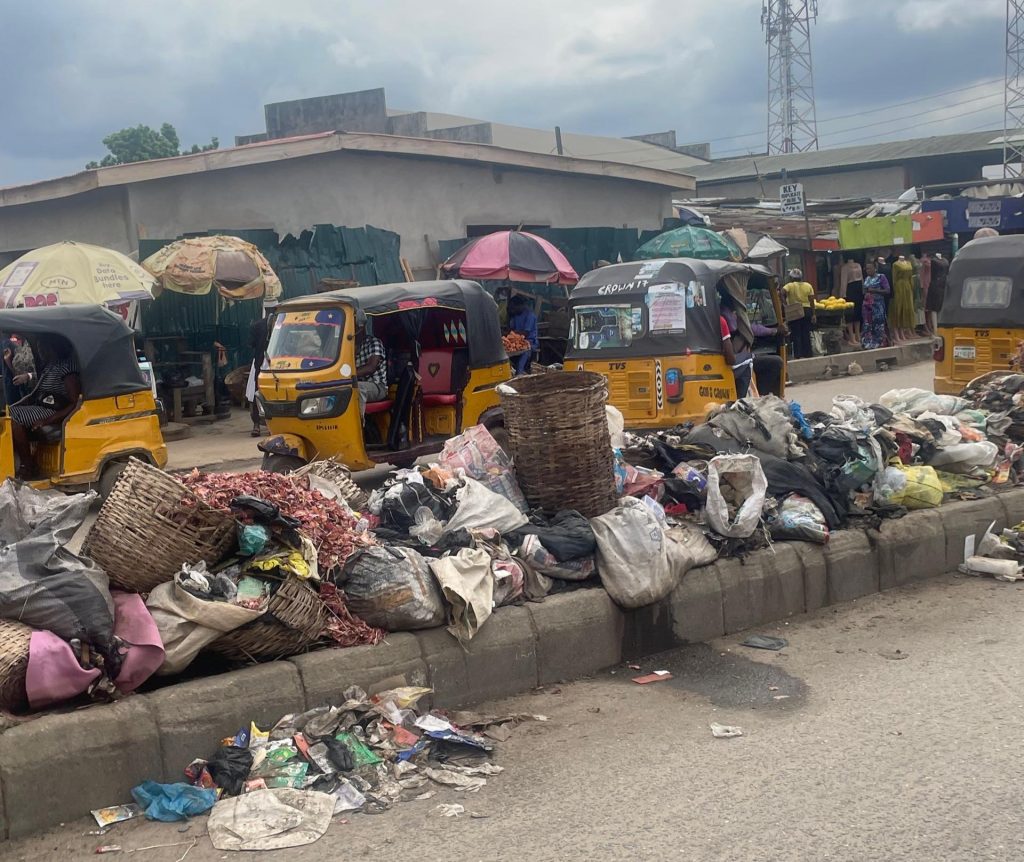
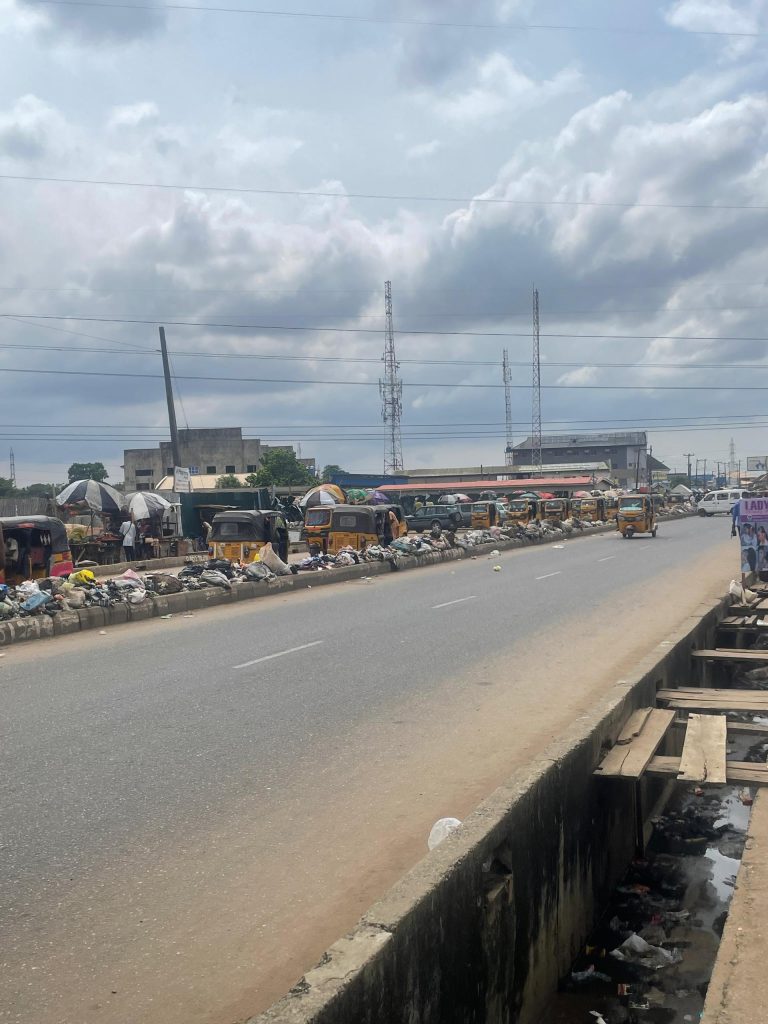
Heaps Of Dirt Piled Up Around Lagos Environs
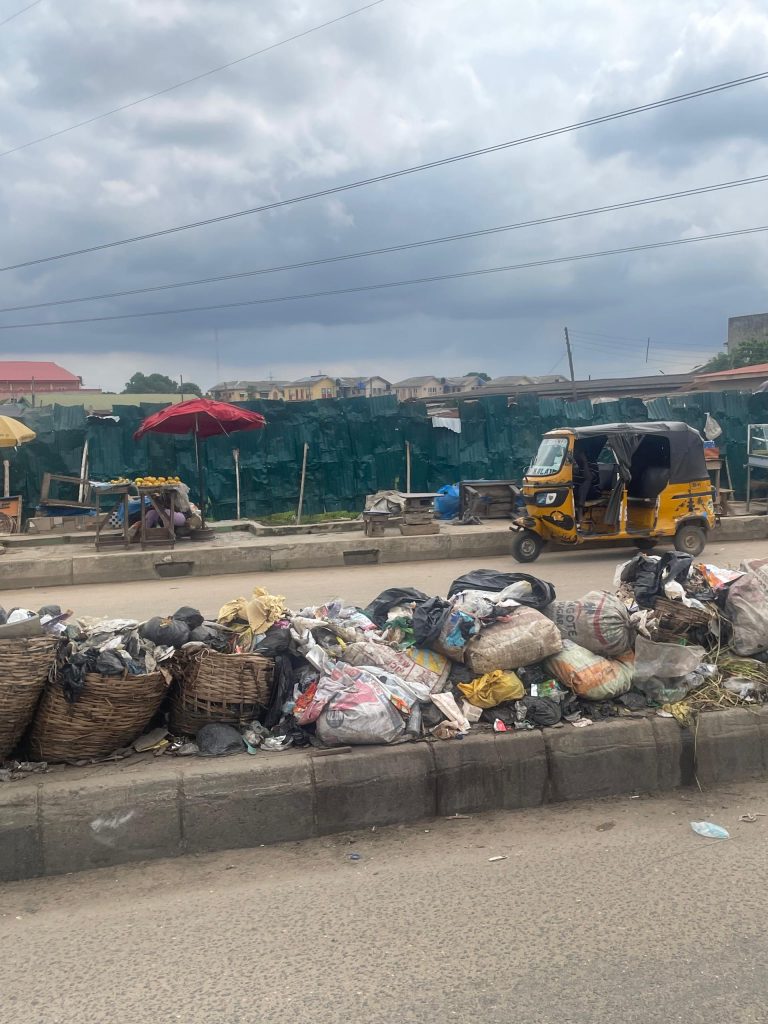
Heaps of uncollected refuse are once again growing in a Lagos residential community after a Private Sector Participation (PSP) waste operator announced it could not complete its scheduled evacuation for the second time in May. The operator cited severe congestion at disposal facilities as the primary reason, warning that the situation has now reached a critical point.
In a message shared directly with residents, the operator said trucks have spent up to five to six days attempting to offload refuse at a dumpsite, leaving vehicles stranded and services at a standstill. Furthermore, the operator confirmed that some trucks have reportedly fallen at the site because of deteriorating ground conditions, adding a safety dimension to what is already a growing environmental and public health crisis.
The announcement has intensified concerns about the reliability of Lagos’ waste management infrastructure, particularly as disposal site challenges appear to be affecting multiple operators across the state.
PSP Operator Raises Alarm Over Dumpsite Crisis
In a community notice shared in late May 2026, the affected PSP operator issued a frank and detailed account of the operational disruptions it has been experiencing. The message, addressed to residents, read in part:
“UPDATE! UPDATE! Good afternoon all, This is to inform the residents that we can’t make it for the second time for the Month of May. The reason is that on a normal basis we do 4 to 5 trips in a week which means 8 to 10 times in 2 weeks, but in the last 2 weeks we have been able to do only 3 trips. The dump site is so bad now that trucks spend 5 to 6 days to dump once. Trucks are on standstill. Dump site in a terrible state as trucks can’t dump for days and we have few instances of trucks falling due to the bad state of the site. This has affected all PSP Operators in Lagos State and it’s not peculiar to us. It’s really bad at the dumpsite presently.”
The notice reveals a stark operational gap. Under normal conditions, the operator should be completing eight to ten collection runs every two weeks. However, over the most recent two-week period, it managed only three trips. That represents a drop of more than 60 percent in service capacity. Consequently, residents in the community are now facing a mounting refuse backlog with no immediate resolution in sight.
The operator also stressed that the challenges are not isolated. According to the statement, the dumpsite congestion has broadly affected PSP operators across Lagos State, suggesting that the disruption extends well beyond a single zone or service provider.
Growing Questions About Waste Infrastructure in Lagos
The operator’s alarm is consistent with a broader pattern of reported waste collection disruptions that has been building across Lagos for several months. Recent media reports have documented increasing concerns about irregular refuse evacuation in various parts of the state, with communities in areas including Oshodi, Isolo, Ajao Estate, Mushin, and parts of the Alimosho Local Government Area among those said to be affected by service delays.
According to reporting by Punch Metro, PSP operators have previously noted that dumpsite access issues, including damaged access roads and overcrowding at offloading points, have been making it difficult to complete the multiple daily trips that efficient residential waste collection requires. One operator, as reported by the publication, described trucks getting stuck in mud and warned that vehicles could fall over under such conditions. The operator also said that truck drivers had sometimes spent up to four days at a dumpsite before they could offload.
The Association of Waste Managers of Nigeria (AWAMN) has also publicly acknowledged that unrestricted dumpsite access is critical for PSP operators to maintain their usual two to three trips per day. Without that access, turnaround times collapse, collection frequency drops, and waste accumulates at the community level. Moreover, Lagos authorities have recently been reported to have acknowledged complaints about irregular refuse collection in parts of the state, and LAWMA has been directed to engage PSP operators over service delivery challenges.
It is important to note that the specific dumpsite or dumpsites currently experiencing congestion have not been independently confirmed by CSR Reporters. The operator’s statement does not identify a particular facility by name, and not all dumpsites serving Lagos are necessarily affected in the same way.
Environmental and Public Health Risks Cannot Be Ignored
When refuse collection is delayed or interrupted, the consequences extend far beyond inconvenience. In dense urban environments like Lagos, uncollected waste creates a cascade of environmental and health risks that affect communities quickly and disproportionately.
First, organic waste begins to decompose rapidly in Lagos’ tropical climate, releasing methane and other greenhouse gases. In addition to that, rotting refuse attracts rodents, insects, and disease vectors including mosquitoes, which are the primary carriers of malaria and dengue fever. As waste accumulates near drainage channels or roads, it clogs waterways and increases the risk of flooding during the rainy season. Because many Lagos communities depend on shared outdoor spaces and roadside infrastructure, uncollected waste also degrades air quality and creates physical hazards for residents, especially children and the elderly.
The public health implications are therefore significant. Prolonged disruptions to collection schedules can contribute to outbreaks of waterborne and vector-borne diseases. They also generate secondary pollution as informal and illegal dumping tends to increase when formal collection services fail. These outcomes are well-documented in cities across sub-Saharan Africa where waste infrastructure has struggled to keep pace with rapid urbanisation.
Beyond health, the environmental cost is also measurable. Decomposing organic waste in open environments contributes to soil contamination and groundwater pollution, particularly in communities without well-lined drainage systems. For a state that has been investing in environmental governance and regulatory enforcement, including LAWMA’s reported crackdowns on illegal dumping and cart pusher activity, service disruptions of this nature risk undoing progress made in formalising the waste sector.
Why This Matters for Sustainability and ESG Goals
Lagos is not simply a large city. It is one of Africa’s most significant urban economies, home to an estimated 20 million people and increasingly positioning itself as a hub for sustainable development, responsible investment, and climate resilience. However, the ability to manage waste efficiently is not a peripheral concern for a city with those ambitions. It is foundational.
From an ESG perspective, a functional waste management system is a key indicator of environmental governance and operational resilience. Investors, development finance institutions, and global partners increasingly assess cities and states on their ability to manage urban services sustainably. Repeated disruptions to residential waste collection, particularly when linked to infrastructure bottlenecks at disposal sites, signal systemic vulnerabilities that go beyond a single operator or zone.
In terms of the United Nations Sustainable Development Goals, the current situation touches directly on SDG 3 (Good Health and Well-Being), SDG 11 (Sustainable Cities and Communities), SDG 12 (Responsible Consumption and Production), and SDG 13 (Climate Action). Specifically, Lagos’ stated ambition to transition toward a circular economy model, where waste is treated as a resource rather than a burden, requires a disposal and processing infrastructure that can handle the city’s daily output of an estimated 13,000 tonnes. Bottlenecks at the disposal stage undermine not only collection but also any downstream recycling, composting, or energy recovery activity.
Furthermore, the Lagos State Government recently signed a Waste Management and Processing Concession Agreement with Zoomlion Nigeria Limited, signalling an intent to modernise and expand the state’s waste processing capacity. That investment, however, depends on the smooth functioning of the entire collection and transfer chain. If PSP operators are unable to deliver waste to facilities because of access and congestion issues, the value of downstream infrastructure investments is significantly reduced. Therefore, addressing dumpsite operational challenges is not just a logistical matter. It is a strategic sustainability imperative.
What Needs to Happen Next
The operator’s statement is a clear signal that the waste management system is under strain at the disposal end, and that this strain is rippling back to affect frontline collection services. Addressing it will require coordinated action between disposal site managers, the Lagos Waste Management Authority (LAWMA), and PSP operators.
Short-term solutions could include deploying additional equipment to improve site access and offloading capacity at congested facilities, as well as scheduling trucks from different zones at staggered intervals to reduce simultaneous queuing. In addition, accelerating the rollout of Transfer Loading Stations (TLS), which LAWMA has indicated are in development, could reduce turnaround times for operators and improve overall throughput across the system.
Over the longer term, however, the issue underscores the need for sustained investment in waste disposal infrastructure that can match the pace of Lagos’ growth. As the city’s population and daily waste volumes continue to rise, single-point bottlenecks at disposal facilities will remain a recurring risk unless capacity is systematically expanded and maintained.
CSR Reporters has reached out to LAWMA for an official response to the operator’s statement and for information on any steps being taken to address the reported dumpsite conditions. We will update this story as responses are received.
For residents experiencing service disruptions, LAWMA’s public reporting channels include its toll-free line at 08000052962, the short code 617, and the official email address info@lawma.gov.ng. Residents are encouraged to report service gaps directly so that authorities can respond to affected communities on a priority basis.
[give_form id="20698"]