admin
admin 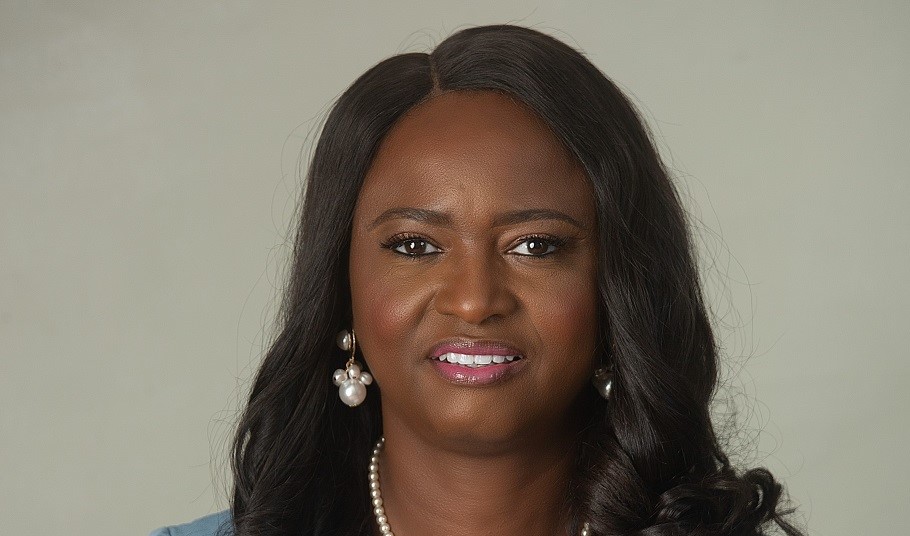
A CSR REPORTERS Open Letter on the Appointment of Elohor Aiboni as Executive Vice President and Country Chair, Nigeria
A CSR REPORTERS Open Letter on the Appointment of Elohor Aiboni as Executive Vice President and Country Chair, Nigeria
There are appointments that are merely administrative. And then there are appointments that carry the weight of history.
The appointment of Elohor Aiboni as Executive Vice President and Country Chair of Shell Companies in Nigeria belongs firmly in the second category.
She is the first Nigerian to hold the combined leadership role in Shell’s history in Nigeria — a country where the company has operated for more than six decades. She is also the first woman to occupy the position, bringing over 24 years of experience across offshore, shallow water, and onshore operations in Nigeria, alongside international assignments in Kazakhstan and Brunei.
As Managing Director of SNEPCo from 2021, she led the deepwater Bonga asset to the landmark production of its one billionth barrel of oil in 2023 — a milestone that reinforced her standing as one of Nigeria’s most accomplished energy executives.
CSR REPORTERS acknowledges the significance of this appointment. It is important not only for Aiboni personally, but for the broader principle that Nigerian leadership belongs at the highest levels of industries that extract wealth from Nigerian soil and waters.
But recognition must also come with candour. And candour requires acknowledging the full weight of what this appointment inherits.
The Inheritance
Shell’s history in Nigeria is not only a story of production milestones and energy infrastructure.
It is also — undeniably — a story tied to one of the most documented environmental and human rights crises in the history of the global oil industry.
Since commercial oil production began in the Niger Delta in 1956, communities across the region have endured decades of environmental degradation linked to oil spills and gas flaring. The consequences have included declining fish stocks, poor agricultural yields, contaminated water sources, deteriorating public health conditions, and deepening economic hardship.
In Ogoniland, contamination of drinking water reportedly included benzene concentrations measured at levels more than 900 times above World Health Organisation guidelines.
The courts of multiple jurisdictions have also weighed in. In June 2025, a UK High Court ruled in preliminary findings that Shell plc could be held liable for legacy oil pollution in the Niger Delta, with a full trial scheduled for March 2027.
Despite earlier admissions of responsibility regarding pollution in the Bodo community, affected residents continue to argue that remediation efforts remain inadequate and that contamination still poses serious health risks to thousands of people.
UN Special Rapporteurs have similarly concluded that repeated oil spills in the Niger Delta amount to violations of fundamental human rights — including the rights to life, health, safe drinking water, food, and a clean and healthy environment.
This is the weight that accompanies the office of Country Chair.
A Nigerian Leader — and the Expectations That Come With It
The significance of Aiboni’s nationality and trajectory cannot be overstated.
She is not a foreign executive arriving to manage extraction from a distance. She is a Nigerian woman who comes from the same national reality in which host communities have carried the social, environmental, and economic costs of oil production for generations.
That proximity is more than symbolic.
It is a moral resource.
CSR REPORTERS therefore calls on Elohor Aiboni to use this historic platform to pursue a legacy equal to the moment before her.
Specifically, we urge her to:
Champion Full Accountability on Environmental Remediation
Nearly a decade after the UNEP recommendations on Ogoniland, progress has remained painfully slow, with significant portions of affected areas still heavily contaminated.
This is not a historical footnote.
It is an ongoing injustice.
The incoming Country Chair possesses both the authority and institutional influence to push for faster, more transparent, and community-centred remediation efforts.
Ensure Divestment Does Not Become a Mechanism for Evasion
Shell’s divestment from parts of its onshore operations has already generated warnings from organisations including Amnesty International, which cautioned that the process risks leaving behind unresolved pollution, abandoned infrastructure, and long-standing community grievances.
Shell’s continuing deepwater presence in Nigeria means its influence — and responsibility — remains substantial.
That responsibility cannot simply be transferred or outsourced.
Treat Community Engagement as a Strategic Obligation, Not a Compliance Exercise
Communities in the Niger Delta are not merely stakeholders to be managed through corporate communications frameworks.
They are rights-holders.
Their interests must be structurally embedded into operational decision-making, accountability systems, grievance mechanisms, and long-term environmental planning.
Speak Honestly About What Shell Owes
Nigeria does not need another executive communications campaign from Shell.
What the country needs is leadership willing to speak plainly about historical failures, current obligations, and the rebuilding of public trust.
Credibility begins with honesty.
The Standard CSR REPORTERS Applies
CSR REPORTERS does not evaluate companies or executives on symbolism alone.
We measure responsibility through actions that are documented, verifiable, measurable, and sustained over time.
The appointment of Elohor Aiboni as the first Nigerian and first woman to lead Shell’s operations in Nigeria is undeniably significant, and we acknowledge that significance fully.
But symbolic milestones are not substitutes for structural change.
History-making appointments must ultimately produce history-changing decisions.
The communities of the Niger Delta — many of whom have waited decades for clean water, restored livelihoods, remediated land, and meaningful accountability — deserve more than a milestone announcement.
They deserve leadership that changes outcomes.
Elohor Aiboni possesses the credentials, institutional knowledge, and lived proximity to understand the depth of that responsibility.
The question now is whether her tenure will merely mark a historic first — or become the beginning of a historic shift.
CSR Reporters is Africa’s leading independent accountability and sustainability intelligence platform. We exist to close the gap between corporate responsibility rhetoric and ground-level reality across Nigeria and Africa. We work with organisations committed to moving from random CSR activities to structured, measurable, and accountable impact.
Our services include:
- Community Needs Assessments
- CSR Impact Tracking and Measurement
- Social Investment Documentation and Reporting
- Transparent and Independent CSR Communication
- Responsible Business Strategy from Day One