Dangote Refinery Hosts FUTO Students, Strengthens Industry-Academia Partnership for Future Engineers
 ONYINYECHI NWAIGBA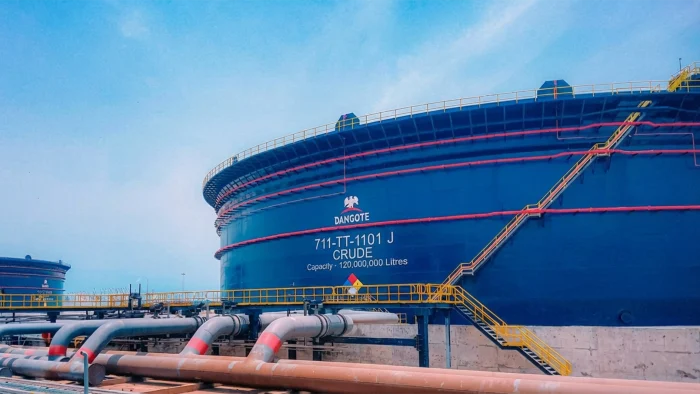
The future of Nigeria’s industrial development is closely tied to the quality of its human capital. While infrastructure projects and technological investments remain important, sustainable growth ultimately depends on a skilled workforce capable of designing, operating, and maintaining complex systems.
It is within this context that the Dangote Petroleum Refinery recently hosted students from the Federal University of Technology, Owerri (FUTO), on an educational tour designed to expose them to real-world industrial operations. The engagement reflects a growing recognition within the private sector that capacity building, particularly among young engineers, is a critical component of corporate social responsibility (CSR).
For the students, the visit provided a rare opportunity to step outside the classroom and experience firsthand the scale, discipline, and precision required in large-scale industrial operations.
Exposure to Africa’s Largest Refining Complex
The Dangote Refinery, widely regarded as one of Africa’s most ambitious industrial projects, served as the focal point of the learning experience. Built to process hundreds of thousands of barrels of crude oil per day, the facility represents a major step toward Nigeria’s goal of achieving energy independence and reducing reliance on imported petroleum products.
During the visit, the FUTO students were introduced to various aspects of the refinery’s operations, including engineering systems, operational processes, safety frameworks, and technological infrastructure. The exposure helped them better understand how integrated systems work together to ensure efficiency, safety, and productivity at scale.
For many of the students, it was their first time witnessing such a complex industrial environment. The experience brought theoretical concepts learned in lectures into clearer perspective, demonstrating how engineering principles are applied in real-world settings.
Bridging the Gap Between Theory and Practice
One of the most persistent challenges in technical education is the gap between academic knowledge and industry expectations. Universities often focus on foundational theories, while industries demand practical competence, adaptability, and problem-solving skills.
Educational visits such as the one to the Dangote Refinery help bridge this gap by giving students exposure to real operational environments. Seeing engineering systems in action helps reinforce classroom learning and deepens understanding of concepts that may otherwise remain abstract.
Beyond observation, such experiences also allow students to engage with professionals working within the sector. These interactions provide insight into career pathways, workplace expectations, and the technical competencies required to succeed in competitive industrial environments.
Inspiring the Next Generation of Engineers
Beyond technical exposure, the visit served a motivational purpose. For many young Nigerians pursuing careers in engineering and technology, opportunities to engage directly with large-scale industrial projects can be transformative.
Seeing a world-class facility operating within the country challenges common perceptions that major engineering feats only exist abroad. It reinforces the idea that innovation, infrastructure development, and technical excellence are achievable locally.
This form of exposure plays an important role in shaping ambition. It encourages students to envision themselves as future engineers, project managers, innovators, and problem-solvers contributing to national development.
Dangote Refinery’s Commitment to Human Capital Development
The engagement with FUTO students reflects a broader commitment by the Dangote Refinery to human capital development and local capacity building. Beyond its industrial operations, the company has consistently invested in initiatives aimed at strengthening Nigeria’s technical workforce.
These include graduate trainee programmes, internships, technical training initiatives, and partnerships with academic institutions. Such efforts are designed to equip young professionals with practical skills that align with industry needs.
In many ways, this approach reflects a modern interpretation of corporate social responsibility—one that goes beyond philanthropy to focus on sustainable impact through education, skills transfer, and workforce development.
Human capital development remains one of the most impactful CSR strategies because its benefits extend across generations. By investing in young talent, companies contribute not only to immediate employment opportunities but also to long-term economic transformation.
The Role of Industry-Academia Collaboration
Globally, strong collaboration between educational institutions and the private sector has proven essential for workforce development. Countries with advanced industrial economies often maintain close ties between universities and industries to ensure that graduates are adequately prepared for the labour market.
In Nigeria, such partnerships are becoming increasingly important as industries evolve and demand more specialized skills. Initiatives like refinery tours, internships, mentorship programmes, and research collaborations help align academic training with industry realities.
The Dangote Refinery’s engagement with FUTO students demonstrates how such partnerships can be implemented effectively. By opening its doors to students, the facility not only supports education but also contributes to building a more competent and industry-ready workforce.
Emphasising Safety, Standards, and Professionalism
Another important dimension of the visit was the emphasis on safety and operational discipline. Industrial environments, particularly in the energy sector, require strict adherence to safety protocols and global best practices.
For students, exposure to these standards provides an important lesson in professional responsibility. It highlights the importance of precision, attention to detail, and adherence to procedures in engineering practice.
Understanding these expectations early in their academic journey prepares students for the realities of working in high-risk, high-responsibility environments such as refineries, power plants, and manufacturing facilities.
Promoting STEM Education and National Development
The visit also aligns with broader efforts to promote science, technology, engineering, and mathematics (STEM) education in Nigeria. As the country seeks to diversify its economy and strengthen industrial capacity, STEM disciplines will play a central role in driving innovation and competitiveness.
Encouraging students to pursue careers in these fields is essential for long-term national development. Exposure to functioning industrial systems helps demystify engineering careers and makes STEM pathways more tangible and attractive.
For many students, seeing engineering in action reinforces their academic choices and strengthens their commitment to pursuing careers in technical fields.
Looking Beyond the Classroom: A Pathway to Future Opportunities
Beyond the immediate educational benefits, the visit also represents a potential pathway to future opportunities. Engagements between students and industry players often serve as entry points for internships, research collaborations, and eventual employment.
For students of FUTO, interacting with professionals at the Dangote Refinery may influence their career trajectories, helping them identify areas of specialization and professional interest.
Such experiences are critical in shaping confident, well-informed graduates who are better prepared to contribute meaningfully to the workforce upon graduation.
See: Dangote Commits ₦1 Trillion to Transform Education Through National Scholarship Scheme.
Conclusion: Investing in People as a Catalyst for Development
The Dangote Refinery’s decision to host students from the Federal University of Technology, Owerri underscores a broader truth about sustainable development: infrastructure alone is not enough.
While industrial facilities drive economic growth, it is people skilled, trained, and inspired who sustain it. By investing in the development of young engineers, the refinery is contributing to a stronger talent pipeline that will support Nigeria’s industrial future.
As Nigeria continues its journey toward industrialisation and economic diversification, initiatives that connect education with industry will remain essential. The FUTO student visit stands as a clear example of how corporate organisations can play a meaningful role in shaping the next generation of engineers, innovators, and national builders.
[give_form id="20698"]