Lagos Government Directs LAWMA and LASEPA to Clear Waste Heaps After CSR Reporters Story
 ROSEMARY IMOBHIO
The Lagos State Government has ordered an immediate scale-up of waste evacuation efforts across the state following growing public concern over mounting refuse heaps and service disruptions recently highlighted by CSR Reporters.
Governor Babajide Sanwo-Olu announced the directive in a public statement, confirming that the Lagos Waste Management Authority (LAWMA), the Lagos State Environmental Protection Agency (LASEPA), and the Ministry of Environment have been mobilised to tackle the waste backlog affecting several communities.
The governor said additional trucks and personnel have already been deployed to accelerate refuse collection and restore cleanliness across affected neighbourhoods.
“Dear Lagosians, I have directed an immediate scale-up of waste evacuation across Lagos following the recent build-up of refuse in some parts of our state,” Sanwo-Olu stated.
He added that the agencies are working around the clock and that residents should begin seeing visible improvements on the streets.
The intervention comes shortly after CSR Reporters published an in-depth report. It was examining the worsening waste collection challenges facing some communities in Lagos. The report raised concerns about disposal site congestion, stranded trucks, and growing refuse piles in residential areas.
From Community Complaints to Government Action
In its earlier investigation titled “Waste Trucks Stranded? Why Is Lagos Garbage Piling Up Again?“, CSR Reporters highlighted alarming claims from a Private Sector Participation (PSP) waste operator that was unable to maintain its regular evacuation schedule.
According to the operator, trucks that normally complete multiple disposal trips each week were spending up to five or six days waiting to offload waste at disposal facilities. Consequently, refuse collection services slowed significantly, leaving communities with growing heaps of uncollected waste.
The operator also reported that deteriorating conditions at some disposal sites had created operational and safety concerns. In some cases, trucks allegedly became stuck or toppled due to poor ground conditions.
Furthermore, the company stressed that the challenges were not unique to a single operator. Instead, it claimed that several PSP operators across Lagos were experiencing similar difficulties.
As a result, questions emerged about whether existing waste infrastructure could keep pace with the demands of one of Africa’s fastest-growing cities.
Lagos Faces a Massive Daily Waste Challenge
The governor acknowledged the scale of the challenge in his statement. According to Sanwo-Olu, Lagos generates more than 13,000 tonnes of waste every day. Therefore, maintaining efficient collection, transportation, and disposal systems requires continuous coordination among multiple stakeholders.
This figure underscores the complexity of urban waste management. However, it also highlights why disruptions at any stage of the chain can quickly affect communities. If trucks cannot access disposal facilities efficiently, collection schedules suffer. Subsequently, refuse begins to accumulate in residential areas, markets, roadsides, and drainage channels.
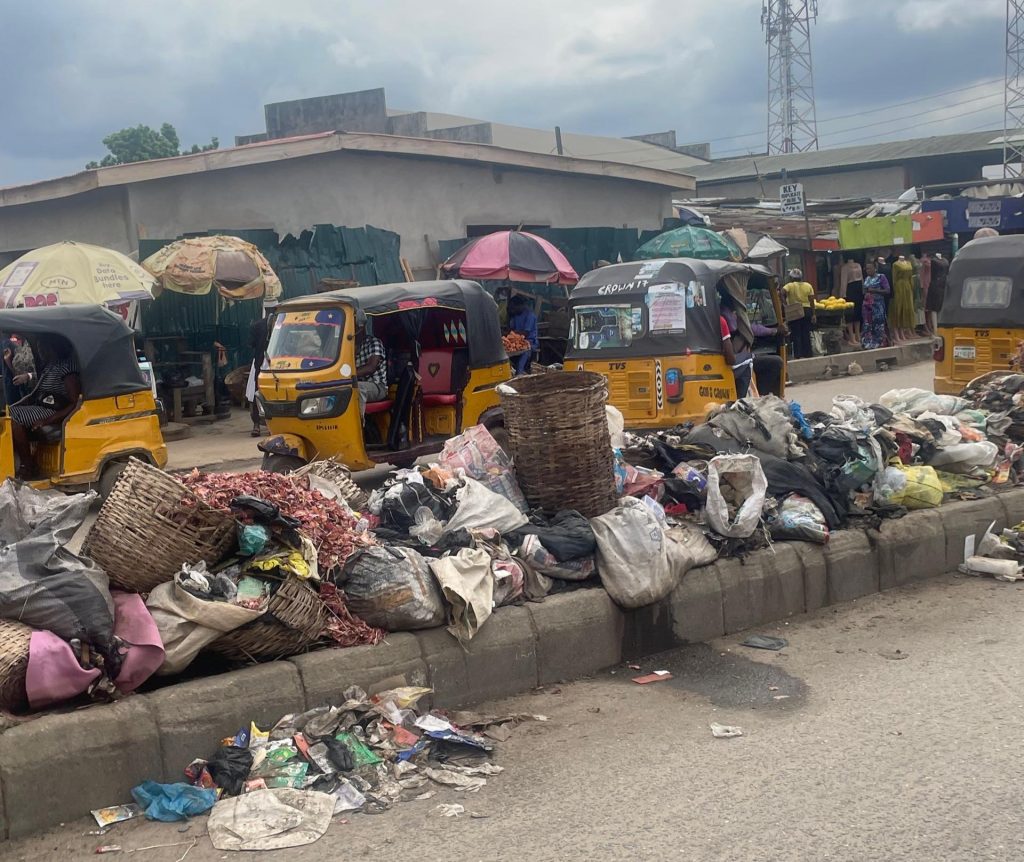
That reality has become increasingly visible in parts of Lagos over recent weeks. Thus prompting complaints from residents and renewed public debate about waste management capacity.
Why Waste Accumulation Matters
Overflowing bins may appear to be a routine urban inconvenience. However, environmental experts warn that the consequences can be much more serious.
First, decomposing waste releases methane, a greenhouse gas linked to climate change. In addition, accumulated refuse attracts rodents, flies, and mosquitoes that can contribute to the spread of disease. Moreover, waste dumped near drainage channels can obstruct water flow and worsen flooding during the rainy season.
Lagos, a coastal city, already faces climate-related risks. Blocked drainage systems can increase vulnerability during periods of heavy rainfall. Beyond health and environmental concerns, unmanaged waste also affects the appearance and economic attractiveness of urban communities. Businesses, investors, and visitors often view sanitation standards as an indicator of broader governance and infrastructure quality.
Therefore, efficient waste management remains closely connected to sustainability, public health, and economic resilience.
Implications for ESG and Sustainable Development
As Lagos continues to position itself as a major investment destination, reliable urban services play an important role in attracting businesses and development partners.
Investors increasingly evaluate cities based on environmental governance, infrastructure resilience, and service delivery performance. Consequently, recurring waste management disruptions can raise concerns about long-term sustainability planning.
The issue also intersects with several global development priorities. These include United Nations Sustainable Development Goals related to health, sustainable cities, responsible consumption, and climate action. Furthermore, Lagos has been pursuing initiatives aimed at modernising its waste sector through improved processing facilities and expanded infrastructure.
However, those investments can only deliver maximum value when collection, transportation, and disposal systems function efficiently together. Therefore, addressing bottlenecks within the waste chain remains essential for achieving broader environmental and sustainability ambitions.
Government Calls for Public Cooperation
While announcing the intensified cleanup effort, Governor Sanwo-Olu also appealed to residents for support. He urged Lagosians to properly bag household waste and avoid dumping refuse on roads or inside drainage channels. According to the governor, maintaining a clean city requires cooperation between government agencies, waste operators, and residents.
His administration has expressed confidence that the current backlog can be cleared through the combined efforts of LAWMA, LASEPA, and environmental officials. Meanwhile, residents across affected communities will be watching closely to see whether the expanded evacuation exercise delivers lasting improvements.
The situation also serves as a reminder that waste management is not merely a sanitation issue. Rather, it sits at the intersection of public health, environmental protection, climate resilience, and sustainable urban development.
For now, the government’s directive signals recognition of the problem and a commitment to restoring normal service levels. The effectiveness of the response, however, will likely depend on whether underlying disposal and infrastructure challenges receive long-term attention alongside immediate cleanup efforts.
Follow CSR Reporters for more updates, investigations, and sustainability-focused stories shaping the future of communities, businesses, and environmental governance across Africa.
[give_form id="20698"]