ONYINYECHI NWAIGBA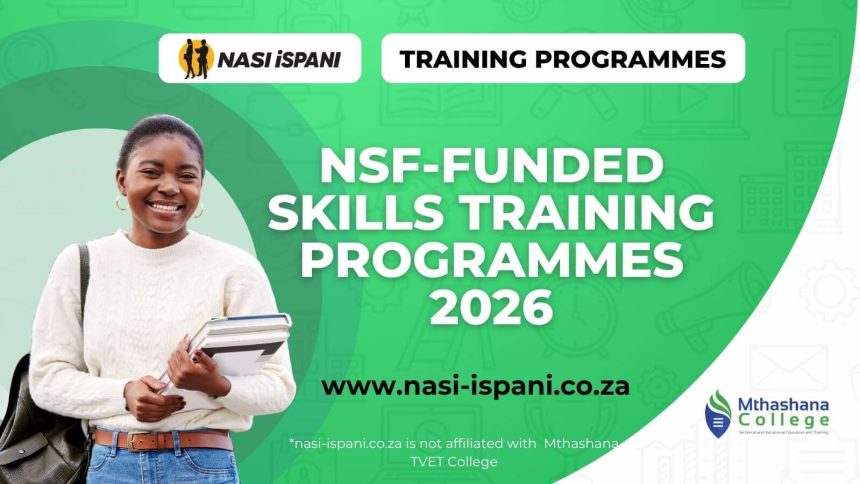
Young Africans seeking practical skills, career advancement opportunities, and financial support can now apply for the National Skills Fund (NSF)-funded Skills Training Programmes for 2026.
The initiative is designed to equip participants with industry-relevant skills while providing monthly stipends throughout the training period. The fully funded programme removes financial barriers by covering tuition, training materials, and other associated costs, enabling beneficiaries to focus entirely on learning and professional development.
Expanding Access to Skills Development
As unemployment and skills gaps continue to challenge many African economies, vocational and technical training programmes are increasingly being recognised as effective pathways to employment and entrepreneurship.
The NSF-funded training programmes aim to bridge this gap by providing participants with practical, hands-on training in areas that align with current labour market needs. By combining technical instruction with real-world applications, the initiative seeks to improve employability and support long-term economic participation among young people.
The programme reflects a growing emphasis on workforce development across the continent, where governments, development agencies, and training institutions are investing in skills acquisition as a strategy for economic growth and youth empowerment.
What Participants Will Receive
Successful applicants will benefit from a comprehensive support package designed to ensure they can complete their training successfully.
Benefits include:
- Fully funded professional skills training
- Monthly stipends throughout the programme
- Practical and workplace-relevant learning experiences
- Access to industry-standard training resources
- No tuition or registration fees
- Opportunities to enhance employability and entrepreneurship prospects
- Certification upon successful completion of training requirements
The inclusion of monthly stipends is particularly significant, as it helps reduce financial pressures that often prevent talented young people from participating in training programmes.
Focus on Practical Skills
Unlike traditional academic programmes, the NSF-funded initiative prioritises practical skills that can be applied directly in the workplace or used to establish small businesses and entrepreneurial ventures.
Participants will gain exposure to industry practices, technical competencies, and problem-solving approaches that are increasingly demanded by employers across multiple sectors.
This approach aligns with broader efforts across Africa to strengthen vocational education and create a workforce capable of meeting evolving industry needs.
Experts have consistently highlighted the importance of technical and vocational training in addressing youth unemployment and supporting sustainable economic development. Skills-based programmes not only increase employability but also provide pathways for self-employment and enterprise creation.
Who Should Apply?
The programme is targeted at individuals who are eager to gain new skills, improve their employment prospects, or explore entrepreneurial opportunities.
Applicants are expected to demonstrate a commitment to completing the training programme and applying the knowledge gained to advance their careers or businesses.
Young people seeking alternative pathways to employment, recent graduates looking to enhance their practical competencies, and aspiring entrepreneurs can all benefit from the opportunities offered through the initiative.
The programme also encourages participation from individuals who may have limited access to formal training opportunities but possess the motivation to learn and contribute to their communities.
Why Skills Training Matters
Across Africa, employers continue to report shortages of job-ready candidates with practical and technical expertise. While many young people possess academic qualifications, there remains a growing demand for specialised vocational and technical skills.
Training programmes such as this help address that challenge by focusing on competency-based learning and industry relevance.
Participants gain practical experience that can improve their competitiveness in the labour market while also enhancing their confidence and professional capabilities.
In addition, the entrepreneurial components of many skills programmes help beneficiaries develop the knowledge needed to establish and manage their own businesses, contributing to local economic development and job creation.
Supporting Youth Employment and Economic Growth
Investments in skills development have become a central component of efforts to tackle unemployment and improve economic productivity across the continent.
Research consistently shows that individuals with vocational and technical training often experience improved employment outcomes and higher earning potential compared to those without specialised skills.
By providing fully funded access to training and financial support through stipends, the NSF-funded programme aims to ensure that talented young people are not excluded because of economic circumstances.
The initiative also contributes to broader goals of workforce development, poverty reduction, and inclusive growth by creating opportunities for participants to acquire skills that are directly relevant to labour market demands.
Application Process
Interested applicants are encouraged to review the programme requirements carefully and submit their applications before the stated deadline.
Applicants may be required to provide supporting documents and meet specific eligibility criteria outlined by programme organisers.
Given the expected level of interest, prospective participants are advised to complete their applications as early as possible.
The 2026 NSF-funded Skills Training Programmes represent a valuable opportunity for young Africans to gain practical skills, receive financial support during training, and improve their prospects for employment or entrepreneurship in an increasingly competitive economy.
[give_form id="20698"]