ONYINYECHI NWAIGBA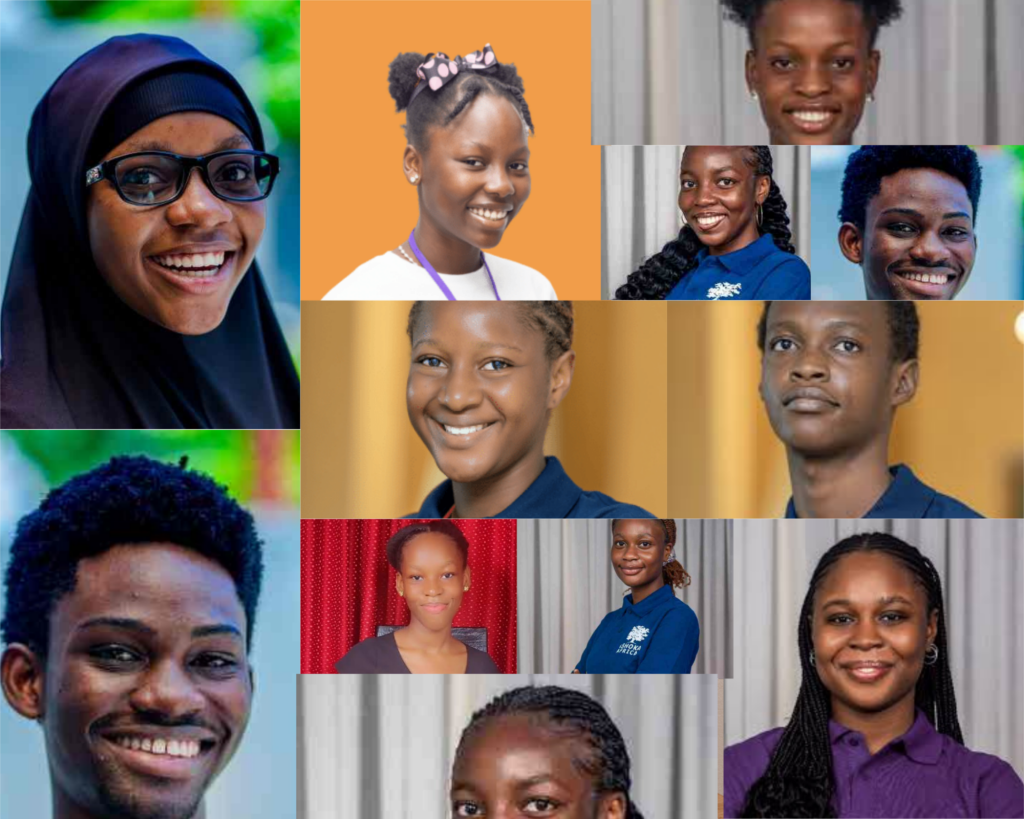
From climate education and recycling to girls’ empowerment, digital inclusion and youth leadership, these Nigerians are creating change beyond the spotlight.
When conversations about people making a difference in Nigeria come up, the names that usually dominate the conversation are celebrities, billionaires, politicians and other familiar public figures.
But impact does not always come with a large following.
Across Nigeria, young people are building initiatives, teaching children, supporting vulnerable communities, creating opportunities and tackling environmental problems, often without the kind of visibility that comes with celebrity status.
Some are working with schools. Others are addressing climate change, gender inequality, digital exclusion and youth development.
They may not be household names yet, but their work offers another way of looking at what social impact can mean.
Here are 10 Nigerians whose work is worth knowing.
1. Ayomide Akran: Connecting Gender Equality With Sustainability
Ayomide Akran is working at the intersection of gender equality and environmental sustainability.
As the founder of Pink Diva Organization, Akran has focused on improving recycling systems while also supporting girls, including those in underserved communities, with reusable menstrual products.
Her work also includes self-esteem coaching and counseling for young girls, particularly around helping them navigate circumstances that could limit their confidence and opportunities. Ashoka selected her as a Young Change maker in 2022.
Her story shows how environmental and social challenges can overlap. For many girls, access to menstrual products, confidence, education and a safe environment are connected issues rather than separate ones.
2. Abeedah Alabi: Making Climate Education Easier to Understand
For Abeedah Alabi, climate action began with experience.
After severe flooding affected her community and disrupted access to school, she became more interested in the environmental problems contributing to what she had experienced.
That eventually led to Project Climeset, an initiative focused on improving climate change literacy among young Nigerians.
Her work includes engaging primary and secondary school students, establishing eco-clubs and using storytelling to make environmental education easier for young people to understand.
It is an important reminder that climate action is not only about large infrastructure projects or international conferences. Sometimes, it begins with helping a child understand why the environment around them is changing.
3. Magnus Imam: Connecting Young People to Opportunities
Magnus Essien Imam is focused on another challenge facing young Nigerians: access to information and opportunities.
Through the Zero Up Initiative, he works on leadership development, training and access to opportunities for young people, particularly those from disadvantaged backgrounds.
His programmes include training sessions, seminars, workshops and online courses designed to help young people build practical skills and find pathways to opportunities.
For young people who may not have access to influential networks or resources, information itself can become a form of opportunity.
4. Favour Effiom: Supporting Girls and Survivors
Favour Effiom’s work centres on issues including gender-based violence, teenage pregnancy, sexual abuse, child marriage and trafficking.
Through We Are Reality Foundation, she focuses on supporting women, girls and children affected by these issues while also working around education, rehabilitation and skills development.
Her work is particularly personal. Ashoka identifies Effiom as a survivor of sexual abuse who has channelled that experience into advocacy and support for others.
The broader lesson is that social impact can also mean creating spaces where people who have experienced difficult circumstances can rebuild confidence, acquire skills and regain a sense of independence.
5. Peter Adebowale: Tackling the Digital Divide
Technology is often described as an opportunity, but that opportunity means little when people do not have access to the skills required to use it.
Peter Adebowale works around digital literacy and transformational leadership, particularly among young people in low-income communities.
Through ESD For Communities, he works with public schools, community centres, innovation hubs and trainers to provide young people with leadership programmes and digital skills training.
His work points to a growing part of social impact in Nigeria: helping young people participate meaningfully in a digital economy rather than simply giving them access to devices or internet connections.
6. Oluwapelumi Oyetade: Helping More Girls Find Their Place in STEM
For Oluwapelumi Oyetade, the gender gap in science and technology is a problem that needs to be addressed early.
She founded Bloom in STEM to create opportunities for girls, particularly those from low-income and underrepresented backgrounds, to explore science, technology, engineering and mathematics.
Her work includes mentorship, hands-on training, accelerator programmes and hackathons designed to help girls develop confidence and skills in STEM.
The importance goes beyond getting more girls into classrooms.
It is also about helping young women see themselves as people who can build, innovate and lead in industries where they have historically been underrepresented.
7. Precious Omelu: Investing in Boys and Young Men
Social impact conversations often focus heavily on girls and women, but Precious Omelu is addressing another part of the equation: the development of boys.
Through the For My Boys Initiative, she works around mentorship, values, purpose and leadership for boys.
Her programmes include school workshops, community campaigns and Project Discovery. Ashoka reports that her work has reached more than 700 boys.
Her approach is based on the idea that boys also need spaces where they can discuss identity, responsibility, values and their future.
That makes youth development more than simply preparing young people for employment. It also means helping them develop the character and confidence needed to participate positively in their communities.
8. Comfort Alabi: Turning Waste Into Lessons
Comfort Alabi is showing young people that environmental education does not have to remain theoretical.
As founder of Eco City Vision, she uses practical activities to teach students about sustainability, including projects where waste materials such as plastic bottles and scrap are transformed into reusable items.
Ashoka selected her as a Young Change maker in 2025. Her work combines environmental education with creativity, leadership and youth empowerment.
There is something powerful about allowing students to physically transform waste rather than simply telling them that waste is a problem.
It turns sustainability from a concept into something they can see and participate in.
9. Feolami Awe-Joseph: Connecting Education to Employability
One of the challenges young Nigerians face is the gap between what they learn and what the workplace requires.
Feolami Awe-Joseph works around youth employability and skills development through the Educational Guidance Development Initiative, also known as College Guide Africa.
Her work focuses on helping young Africans develop skills and access opportunities that can better connect education with the demands of the modern workplace.
That connection matters because education is only one part of the journey. Young people also need guidance, relevant skills, networks and pathways into opportunities.
10. Varnessa Kayen Varlyngton: Making Climate Education Creative
Varnessa Kayen Varlyngton is taking a creative approach to climate education.
Through Egalitarianism for Earth, she has worked on climate education and youth engagement, including school outreaches, tree-planting campaigns and educational activities.
She has also written an eco-fiction book and produced more than 100 animated videos designed to make climate education more engaging for children.
That approach matters because environmental education does not always have to sound technical or intimidating.
For children especially, stories, animation and creative activities can make complicated ideas about climate change easier to understand and remember.
Impact Does Not Always Have a Spotlight
What connects these 10 Nigerians is not celebrity status.
It is the decision to see a problem and do something about it.
Their work covers very different areas: climate change, recycling, education, digital literacy, gender equality, youth leadership, STEM and community development.
And that may be one of the most important things to remember about social impact in Nigeria.
Change does not always begin with a major foundation, a large donation or a high-profile campaign.
Sometimes it starts with one person teaching children how to recycle.
Sometimes it is a young woman helping girls understand their worth.
Sometimes it is a digital skills workshop in a community that has been left behind.
Sometimes it is simply creating a space where a young person can learn, ask questions and imagine a different future.
Nigeria has no shortage of people working to solve its problems. Many of them are simply not the people we hear about every day.
And perhaps that is exactly why their stories are worth telling.
[give_form id="20698"]