ROSEMARY IMOBHIO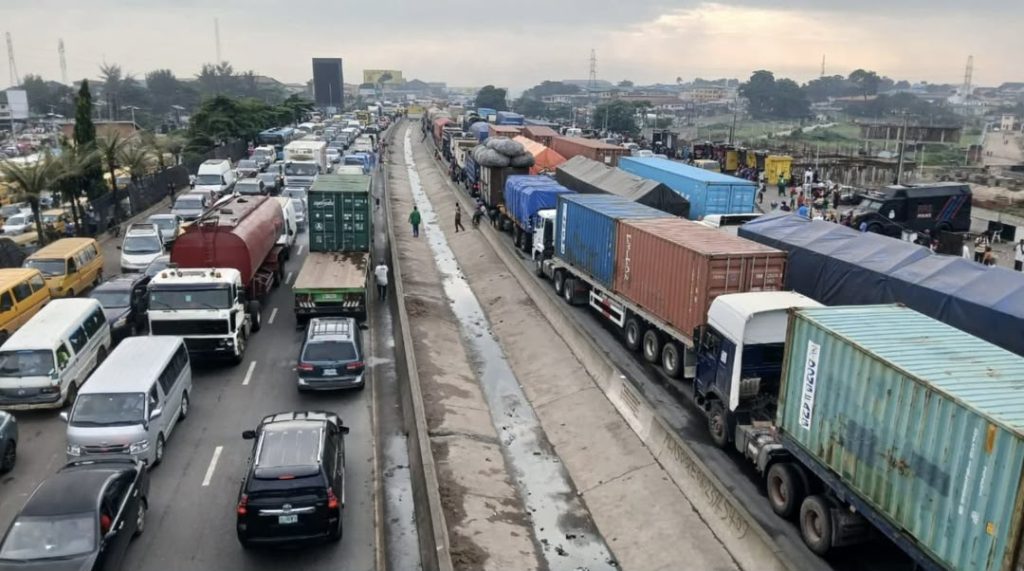
Motorists and commuters along the Lagos-Ibadan Expressway endured hours of gridlock on Tuesday, with the crisis extending into Wednesday morning. The severe congestion affected the Berger area, Kara Bridge and adjoining routes connecting Lagos and Ogun states. Some commuters reportedly spent between eight and 14 hours trapped in traffic.
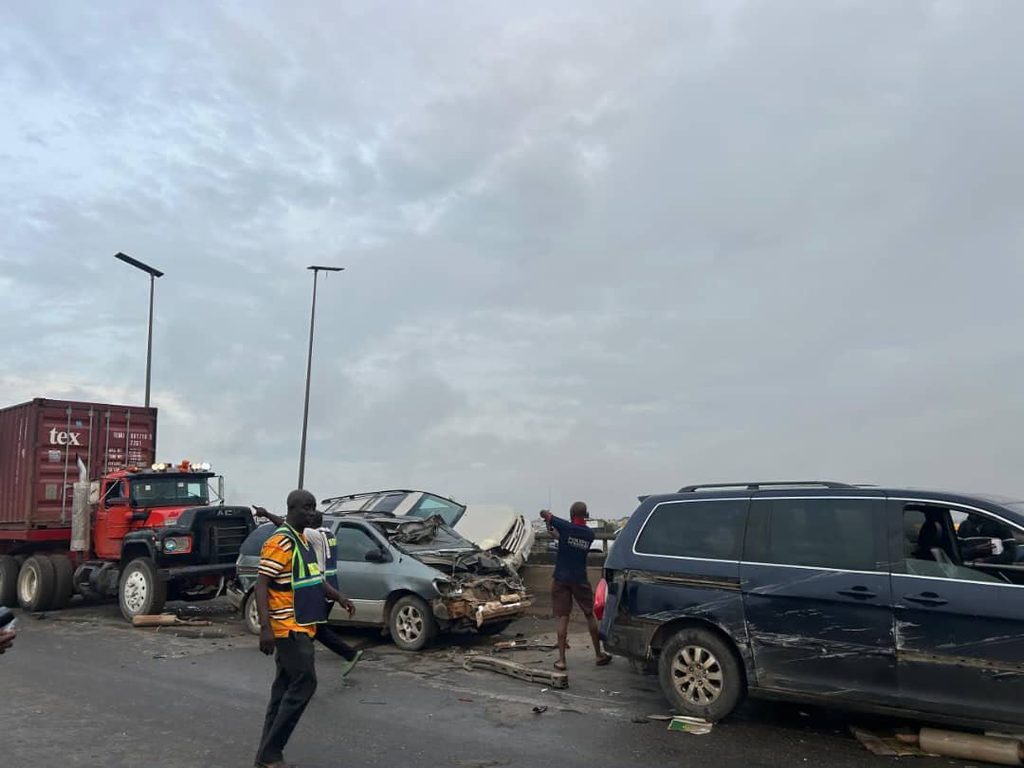
The immediate crisis followed a multiple-vehicle crash around Kara Bridge. Seven vehicles were reportedly involved in the collision, including a 40-foot container truck. The crash compounded existing restrictions caused by ongoing rehabilitation work on the bridge.
The Federal Government began repairs on the Kara Bridge on September 8. The two-week intervention involves replacing deteriorating expansion joints on the busy corridor and is expected to continue until September 22.
However, Tuesday’s crash turned an already difficult commute into a major transportation crisis. The Lagos-bound section was brought to a standstill after the container-laden trailer fell on the bridge. Traffic management officials subsequently worked to create alternative passage for motorists.
The consequences quickly spread beyond the expressway. Traffic affected surrounding areas around Berger and other connecting roads, leaving workers, passengers and businesses dealing with prolonged delays. Some commuters reportedly could not reach home until the following morning.
When Necessary Repairs Create Wider Disruption
The Kara Bridge repairs are necessary because deteriorating expansion joints can create safety risks for motorists. The intervention is intended to improve road safety, structural integrity and the long-term condition of the bridge.
However, the disruption has exposed a difficult infrastructure challenge. Maintaining critical roads is essential, yet carrying out repairs on a heavily used corridor can create significant social and economic costs.
The Lagos-Ibadan Expressway carries large volumes of passenger and commercial traffic. It connects Lagos with Ogun State and provides an important route to other parts of Nigeria. Consequently, when movement is restricted at a critical point such as Kara, pressure can quickly spread to surrounding roads.
Authorities had previously warned motorists about the repairs and advised travellers to plan their journeys. Alternative routes were also suggested for some categories of road users.
Even so, Tuesday’s incident demonstrated how quickly a planned infrastructure disruption can become a wider transportation crisis when an accident occurs within an already constrained corridor.
That raises an important question for infrastructure planning: How can essential repairs be carried out while reducing the disruption faced by the communities and businesses that depend on the road?
The Human Cost of an Eight-Hour Commute
For commuters, the crisis is more than spending several hours inside a vehicle. A journey that should take a fraction of a working day can consume an entire day and extend deep into the night. That lost time affects sleep, family responsibilities, work schedules and personal wellbeing.
Workers who eventually reach home late may still have to wake early for the next working day. Parents may arrive home after their children have gone to bed, while passengers travelling for important appointments can miss them entirely.
The burden is particularly significant for people living along the Lagos-Ogun corridor who already spend considerable time commuting under normal conditions. Extraordinary disruptions therefore add another layer of pressure to an existing daily challenge.
This is where transportation becomes a social sustainability issue. Reliable infrastructure affects people’s ability to work, rest, care for their families and participate meaningfully in economic life.
Businesses Also Pay the Price
The economic consequences of prolonged gridlock can be just as significant. Thousands of workers losing several hours to traffic represents a considerable loss of productive time. Businesses can also experience delays when employees, customers, suppliers and service providers cannot move efficiently.
For small businesses operating around affected communities, prolonged congestion can create another layer of uncertainty. Deliveries may arrive late, employees may struggle to report for work and customers may avoid locations affected by severe traffic.
Commercial drivers and transport operators also face higher operating costs when vehicles spend hours covering relatively short distances. Fuel consumption rises, delivery schedules become less predictable and vehicles experience additional wear.
Therefore, transportation infrastructure is not simply about moving people from one location to another. It supports the functioning of local economies and the wider supply chains that keep businesses operating.
The Environmental Cost of Gridlock
There is also an environmental dimension to the crisis.
Vehicles trapped in slow-moving or stationary traffic continue consuming fuel while producing little transportation value. When thousands of vehicles experience similar delays, unnecessary fuel consumption and associated emissions can accumulate.
This makes congestion a sustainability issue rather than merely a mobility problem. Efficient transportation can reduce wasted fuel, support productivity and limit unnecessary emissions from vehicles.
The relationship becomes even more important in densely populated urban areas such as Lagos, where large numbers of people and businesses depend on road transportation every day.
However, the solution is not simply to build more roads. Sustainable mobility also requires better traffic management, reliable public transportation, resilient infrastructure and careful planning around major construction projects.
Building More Resilient Infrastructure
The Kara incident also highlights the importance of resilience in infrastructure planning. A major road corridor should ideally have enough capacity and contingency measures to absorb disruptions when accidents, construction or other emergencies occur. That can include better diversion planning, faster incident response, clearer communication with motorists and stronger coordination between agencies responsible for roads and traffic management.
For future rehabilitation projects, authorities may also need to consider how construction schedules, traffic volumes and alternative routes interact. Real-time information can help commuters make decisions before entering severely affected areas, while businesses can adjust deliveries and work arrangements where possible.
Ultimately, infrastructure sustainability is not only about how long a bridge lasts. It is also about how effectively the infrastructure continues serving people while it is being maintained, repaired or upgraded.
The Kara gridlock offers a reminder that roads sit at the intersection of several sustainability concerns. A damaged bridge can become a safety issue. A repair can become a mobility issue. Congestion can become a productivity issue. And hours of idling traffic can become an environmental issue.
The challenge for policymakers and infrastructure managers is therefore to look beyond the physical road and consider the people, businesses and communities connected to it.
For Lagos and other rapidly growing African cities, that broader approach will become increasingly important as urban populations expand and pressure on transport infrastructure grows.
Sustainable infrastructure should not only connect places. It should help people reach work, return home, run businesses and live their lives with as little unnecessary disruption as possible.
Stay with CSR Reporters for more stories examining how infrastructure, business and sustainability shape everyday life across Africa.
[give_form id="20698"]