ROSEMARY IMOBHIO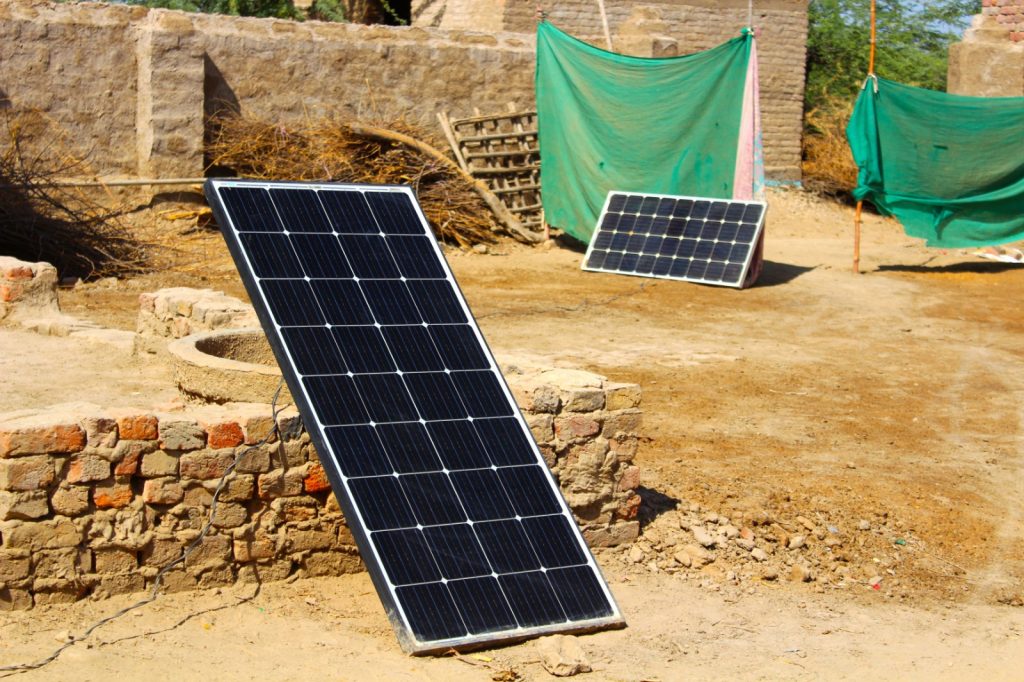
The Ethiopian government has opened international bidding for the development of three solar photovoltaic mini-grid projects as it intensifies efforts to bring electricity to remote communities that remain outside the national grid.
The Ministry of Water and Energy announced the tender under the Africa Mini Grids Program, an initiative designed to support renewable energy projects across the continent. In Ethiopia, the programme is being implemented through the National Child Mini Grid Project, which seeks to expand access to reliable and affordable electricity in underserved rural areas.
The ministry said the selected contractor will be responsible for the complete delivery of the projects. This includes engineering design, equipment supply, installation, construction, testing, commissioning, staff training, and one year of operation and maintenance after completion.
The move comes at a time when several African countries are increasing investments in off-grid renewable energy solutions to address persistent energy poverty. According to the latest data from the International Energy Agency, hundreds of millions of people in sub-Saharan Africa still lack access to electricity, with rural communities accounting for the largest share of the deficit.
Mini-grids have increasingly been viewed as a practical solution because they can provide reliable power to isolated settlements where extending national transmission lines remains expensive and difficult.
Three Regions Selected for Solar Mini-Grids
The Ethiopian government has divided the procurement into three separate lots spread across different regions of the country.
The first project will be developed in Fudus, located in the Tigray Region. The second project is planned for Harey in the Somali Region, while the third mini-grid will be constructed in Serba in the Oromia Region.
Interested companies may submit bids for one, two, or all three projects. However, each lot will undergo a separate evaluation process. As a result, companies have the opportunity to compete independently for each contract.
The procurement reference number for the tender is MoWE-Gov-work-AMP-001/2018.
Furthermore, the ministry stated that the winning firms will have 300 calendar days to complete the projects from the official commencement date. They will also be required to provide a performance guarantee within 15 days of receiving the contract award.
The bids must be submitted to the ministry’s headquarters in Addis Ababa by July 31, 2026. The bid opening is scheduled for the same day.
Strict Technical and Financial Conditions
Ethiopia has also outlined detailed requirements for companies hoping to participate in the tender.
Bidders must possess at least five years of experience as engineering, procurement and construction companies or contractors involved in renewable energy, electrical infrastructure, power distribution, or related sectors.
In addition, participating firms are expected to demonstrate successful completion of similar projects within the past five years. The ministry said eligible companies should have delivered at least one project worth $450,000, two projects valued at $225,000 each, or three projects worth $150,000 each.
Financial capacity is another important requirement. Companies must prove they have access to a minimum of $50,000 in working capital or equivalent financial resources in a freely convertible currency.
Meanwhile, technical proposals will be assessed using a 100-point scoring system. The methodology, technical approach and work plan account for 40 points. Previous project experience carries 30 points, while the qualifications of key personnel contribute 15 points.
Financial capacity represents another 10 points. The participation of Ethiopian nationals among key staff members accounts for the remaining five points. Companies must secure at least 70 points before progressing to the financial evaluation stage.
To encourage domestic participation, the government has introduced a 7.5 percent margin of preference for eligible Ethiopian contractors that meet specific local ownership and staffing conditions.
The ministry also fixed bid security at 500,000 Ethiopian birr for each lot. Foreign bidders may submit the equivalent amount in a freely convertible currency.
Growing Importance of Mini-Grids Across Africa
The latest tender reflects a broader shift across Africa toward renewable energy solutions that can rapidly expand electricity access.
According to the World Bank, mini-grids are increasingly becoming a vital tool for rural electrification because they can deliver electricity faster and at lower costs than traditional grid extensions in many remote areas. These systems also create opportunities for small businesses, improve healthcare delivery and support education in underserved communities.
Across the continent, governments and development institutions have accelerated investments in renewable energy infrastructure to address growing demand for electricity and strengthen energy security. The Africa Mini Grids Program itself supports several countries in deploying renewable energy-based mini-grids as part of wider efforts to achieve universal electricity access.
For Ethiopia, the initiative represents another step toward reducing the country’s energy gap while attracting international expertise and private investment into the renewable energy sector.
Although Ethiopia has made considerable progress in expanding electricity access during the past decade, millions of people in rural communities still depend on traditional energy sources for lighting and cooking. Consequently, the deployment of solar mini-grids could provide cleaner and more reliable energy to communities that have long remained underserved.
Industry experts say the success of such projects could also stimulate local economic growth by powering schools, healthcare centres, agricultural activities and small businesses.
As governments across Africa continue searching for practical solutions to energy poverty, Ethiopia’s latest solar mini-grid tender highlights the growing role that renewable energy will play in bringing electricity to communities that the conventional grid has yet to reach.
[give_form id="20698"]