ROSEMARY IMOBHIO
Ports across Nigeria may be stepping into a new era of sustainability. Industry players say the shift toward cleaner, smarter operations has already begun. At the 10th Nigeria-EU Business Forum in Lagos, APM Terminals Nigeria used the platform to lay out its vision.
The plan centres on a transport sector built for efficiency, digitisation, and lower emissions. Meanwhile, government agencies and private operators alike agreed that the country stands at a turning point for its trade infrastructure.
A Commitment That Starts At The Terminal Gate
Speaking during a thematic session on sustainable transport, APM Terminals Nigeria’s Chief Commercial Officer, Westtar Kapito, said the transition to cleaner transport should not wait for policy alone. Instead, it begins right at the ports themselves. According to Kapito, every crane upgrade and digital tool matters. Each one brings the company closer to a smarter, more connected, and increasingly electrified network of terminals.
Consequently, APM Terminals Nigeria has directed resources toward several fronts at once. These include the ongoing modernisation of APM Terminals Apapa and the development of the West Africa Container Terminal Onne. Onne is billed to become Nigeria’s first green port.
In addition, continued investment has gone into digitalisation. The firm has also expanded its waterway transport partnerships, most notably with Barging Marine Solutions. This move was made in order to ease pressure on Lagos roads and cut emissions tied to truck haulage.
Beyond Emissions: An Economic Opportunity
Although sustainability is often framed narrowly around emissions cuts, Kapito argued that the opportunity facing Nigeria is far broader. Sustainable transport, he explained, can unlock fresh investment. It can also strengthen supply chains and create skilled jobs, all while positioning Nigeria as Africa’s leading maritime gateway. As a result, the real question is no longer whether the shift will happen. Instead, it is whether Nigeria will lead it.
This ambition was echoed by other stakeholders at the forum. For instance, the Nigerian Railway Corporation disclosed plans to decarbonise its locomotive fleet. A diesel-to-LNG conversion has already been tested, and operating costs were cut by 70 percent.
Similarly, the Lagos State Waterways Authority outlined the Omi Eko Project. Once a fleet of electric vessels is deployed across Lagos waterways, 540,000 tonnes of CO2 are expected to be removed from the atmosphere every year. Therefore, the sustainability push at the forum was not confined to seaports alone. It spanned rail, road, and waterways too.
A Pattern Across The APM Terminals Network
Nigeria’s green ambitions mirror a broader shift happening across APM Terminals’ global network. Just a day before the Lagos forum, the Suez Canal Container Terminal in Egypt signed a power purchase agreement. Under the deal, all of the terminal’s electricity will be sourced from renewables, a first for any container terminal in that country.
Once implemented, roughly 30,000 tonnes of CO2 emissions are expected to be avoided every year. This mirrors APM Terminals’ broader ambition. Globally, the company already sources about 62 percent of its electricity from renewables, and full renewable sourcing is targeted by 2030.
Nigeria’s path looks somewhat different, given the scale of infrastructure gaps still being closed. Nevertheless, the direction is consistent. Newer equipment, cleaner power, and digital systems are steadily reducing waste at every stage of cargo movement.
Positioning Nigeria As A Trade Hub
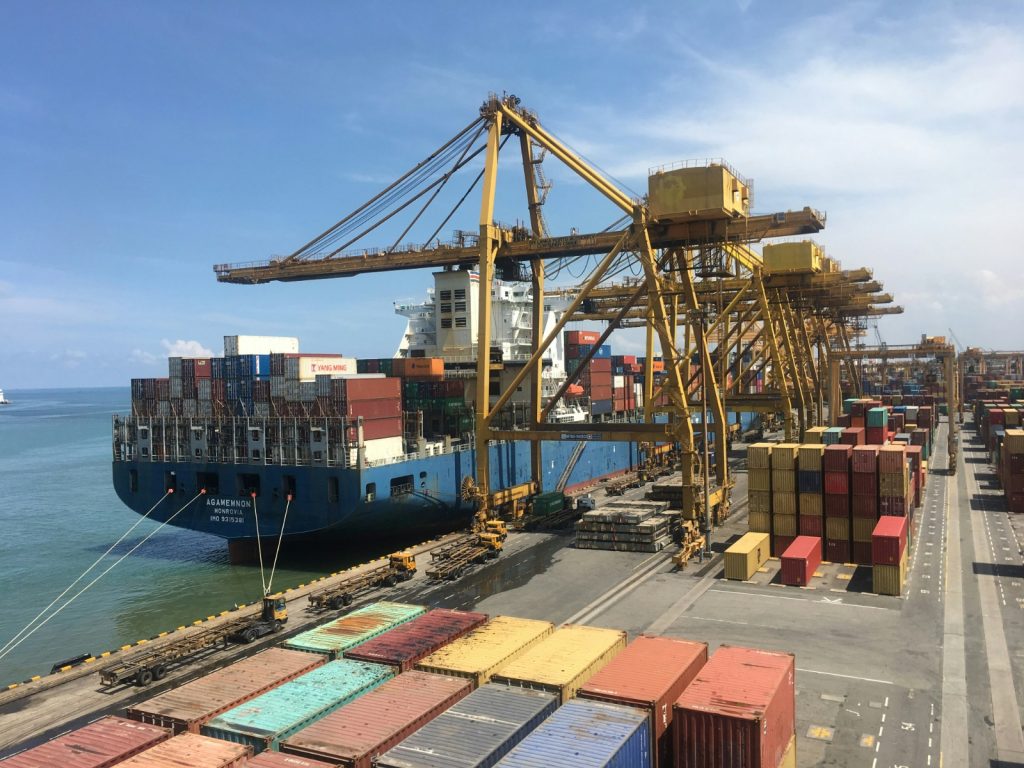
Beyond the terminals themselves, operators are increasingly framing sustainability as central to Nigeria’s competitiveness on the global stage. A greener, better-connected port system would make Nigeria more attractive to shippers and financiers. It would also appeal to manufacturers who are under growing pressure to green their own supply chains.
Notably, three facilities, Apapa, Onne, and the Kano Inland Dry Port, together handle more than half of the country’s containerised trade. Given that scale, decisions made at these sites carry weight far beyond the docks.
Other voices in the sector have made a similar case in recent weeks. Shipping industry associations have called for a realistic equipment upgrade roadmap. Such a plan would be developed alongside the Nigerian Ports Authority and NIMASA, since cranes, forklifts, and terminal tractors still contribute heavily to emissions.
Meanwhile, maritime experts CSR Reporters spoke to, warn that unreliable power supply and ageing infrastructure remain genuine obstacles. Neighbouring hubs in Morocco and South Africa, after all, are already pouring money into green upgrades of their own. Given this backdrop, the investments coming from operators like APM Terminals carry added significance, since private capital is being moved even before every policy gap is closed.
Jobs, Skills, And The Human Side Of Green Ports
Of course, technology alone cannot deliver a sustainable port sector. Industry groups have also stressed that dockworkers must not be left behind as automation spreads across Nigeria’s terminals.
Consequently, calls have grown for structured training programmes. Such programmes would prepare port labour for new equipment and greener workflows, rather than leaving workers to catch up after the fact. This human dimension is less visible than cranes and solar panels. Even so, it may ultimately determine how smoothly the transition unfolds.
Ultimately, the message from Lagos was one of urgency paired with optimism. Nigeria has the raw ingredients needed for this shift, including a strategic coastline and growing trade volumes. Willing investment partners are also present. What remains is follow-through. Pledges made in conference rooms must be turned into cranes, cables, and vessels that actually run clean.
As the Omi Eko Project moves forward, the Lagos-Kano rail line is also being gradually revived. Together, these efforts show that Nigeria’s transport sector may no longer simply be talking about sustainability. It is being built, one terminal, one train, and one electric vessel at a time. CSR Reporters is watching to see how far this goes.
[give_form id="20698"]