


Dangote Cuts Cooking Gas Price: Will Nigerian Households Finally Feel the Relief?
 ONYINYECHI NWAIGBA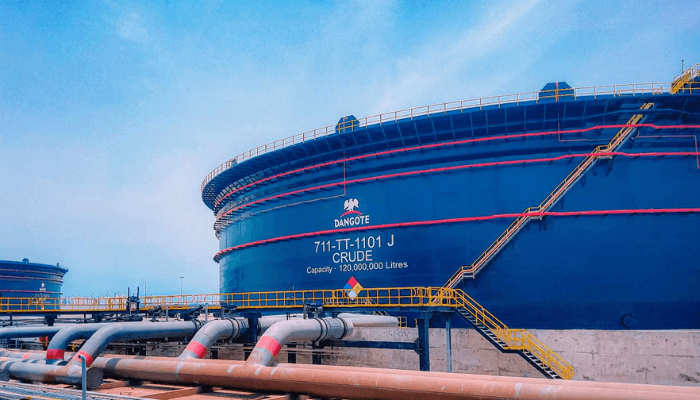
The price of cooking gas has become more than a market story in Nigeria. For millions of households, it is a question of what kind of meal they can afford to prepare, how often they can cook and whether cleaner cooking remains within reach.
Against this backdrop, the Dangote Petroleum Refinery has reduced its ex-depot price of Liquefied Petroleum Gas (LPG), commonly known as cooking gas, from ₦1,100 to ₦970 per kilogram.
The ₦130 reduction is expected to put pressure on marketers and distributors to review their own prices, potentially offering some relief to consumers who have faced significant increases in the cost of cooking gas.
But there is an important question beyond the headline:
Will Nigerian households actually feel the reduction?
That is where the significance of this development lies.
A welcome move in a difficult market
Cooking gas prices have experienced considerable volatility this year.
In June, industry stakeholders warned that retail LPG prices had risen sharply in parts of Nigeria, with some consumers paying between ₦2,000 and ₦2,500 per kilogramme in parts of Lagos. The Nigerian Association of Liquefied Petroleum Gas Marketers (NALPGAM) subsequently projected that prices could fall to between ₦900 and ₦1,100 per kilogramme by the end of 2026 if supply and cost-related challenges were addressed.
That context makes the latest reduction significant.
A lower ex-depot price gives marketers a cheaper starting point and could encourage competition across the LPG market. Earlier price reductions in the sector have already demonstrated how changes at the depot level can influence the wider market, as competing suppliers respond to maintain their position.
For households already struggling with food, transportation and energy costs, even a modest reduction can matter.
But the reduction at the refinery is not automatically the price consumers will pay.
The journey from refinery to kitchen
Between the refinery and a household gas cylinder is an entire distribution chain.
Transportation, storage, handling, distribution and retail costs all contribute to the final price of LPG. The impact of Dangote’s ₦130 reduction will therefore depend on how much of the savings marketers are willing and able to pass on to consumers.
This is an important distinction.
A reduction in the wholesale or ex-depot price is encouraging, but the real measure of impact is what happens at the retail level.
If the reduction is fully transmitted through the value chain, households could see meaningful savings. If only a portion is passed on, the benefit could be considerably smaller.
And this is where transparency becomes important.
Consumers need to be able to understand why prices change, while regulators and industry stakeholders need to ensure that legitimate operational costs do not become a reason for excessive margins.
Why this matters for clean cooking
The conversation around LPG is also bigger than price.
Nigeria has long faced the challenge of moving households away from traditional cooking fuels such as firewood and charcoal. Expanding access to cleaner cooking solutions is an important part of the country’s broader energy transition.
But access cannot be separated from affordability.
It is difficult to encourage households to adopt cleaner cooking technologies when the cost of the fuel required to use them remains out of reach.
This means that developments such as the latest Dangote price reduction should be viewed not only through the lens of the downstream petroleum market, but also through the lens of energy access and social impact.
A cleaner cooking transition that only reaches households that can comfortably afford LPG will leave many vulnerable families behind.
For the transition to be truly inclusive, cleaner cooking options must become increasingly available, reliable and affordable.
The business impact
The development also has implications for businesses operating across the LPG value chain.
Smaller gas retailers, distributors and other players may need to reassess their procurement and pricing strategies as the new depot price takes effect.
Increased competition could ultimately benefit consumers.
When suppliers compete on price and service, businesses have greater incentive to improve efficiency, maintain reliable supply and find ways to reduce unnecessary costs.
However, the sustainability of such price reductions will depend on the wider economics of the LPG market.
Nigeria still faces challenges around supply, logistics and distribution. Earlier this year, industry players pointed to supply constraints and distribution costs as factors contributing to high LPG prices, while some marketers turned to imports when domestic supply was insufficient.
This means that a lasting reduction in cooking gas prices will require more than individual price adjustments.
It will require a value chain that works efficiently from production to the final consumer.
Local refining and the bigger energy picture
There is also a broader significance to the growing role of domestic refining.
The Dangote Refinery has increasingly become an important supplier of refined petroleum products to Nigeria, supporting efforts to reduce dependence on imported petroleum products.
For LPG in particular, stronger domestic supply can potentially reduce some of the vulnerabilities associated with importing energy products, including exposure to international prices, foreign exchange pressures and shipping costs.
Recent discussions around improving domestic crude supply to local refineries further highlight the importance of building a more efficient domestic petroleum value chain. The Nigerian Upstream Petroleum Regulatory Commission is currently consulting on a proposed crude and gas swap arrangement designed, among other things, to reduce supply and logistics costs for domestic refineries.
These developments point to a larger opportunity: building an energy system in which local production translates into tangible benefits for businesses and households.
But the real test is at the retail level
For consumers, the announcement will ultimately be judged by what happens after the headlines disappear.
If the new depot price results in lower retail prices across different locations, the impact could extend beyond household budgets.
Lower LPG prices could make clean cooking more attractive to families, support small food businesses that rely on gas and increase demand across the LPG distribution chain.
But if retail prices remain largely unchanged, consumers may reasonably question how much of the refinery’s reduction has actually reached them.
This is why the coming weeks will be important.
Marketers will have to respond to the new pricing environment, while consumers will be watching to see whether the expected adjustment appears in the price they pay for a kilogramme of gas.
More than a price cut
Dangote’s latest LPG price reduction is a welcome development, but it should be seen as one part of a much larger conversation.
Nigeria does not simply need cheaper cooking gas for a few weeks. It needs a cooking-energy system that is affordable, reliable, accessible and sustainable.
That requires stronger domestic production, efficient distribution networks, responsible pricing, healthy competition and policies that keep vulnerable households in the conversation.
It also requires looking beyond the refinery gate.
Because the success of an energy intervention is not measured by how much the producer reduces its price. It is measured by whether the benefit travels through the value chain and reaches the people who need it most.
For Dangote’s latest reduction, that is the real test.
Will the ₦130 reduction become ₦130 worth of relief for Nigerian households?
The answer will depend on what happens next and, most importantly, what consumers see when they refill their cylinders.
[give_form id="20698"]


2 thoughts on “Dangote Cuts Cooking Gas Price: Will Nigerian Households Finally Feel the Relief?”