


 GLORYANN OSANG
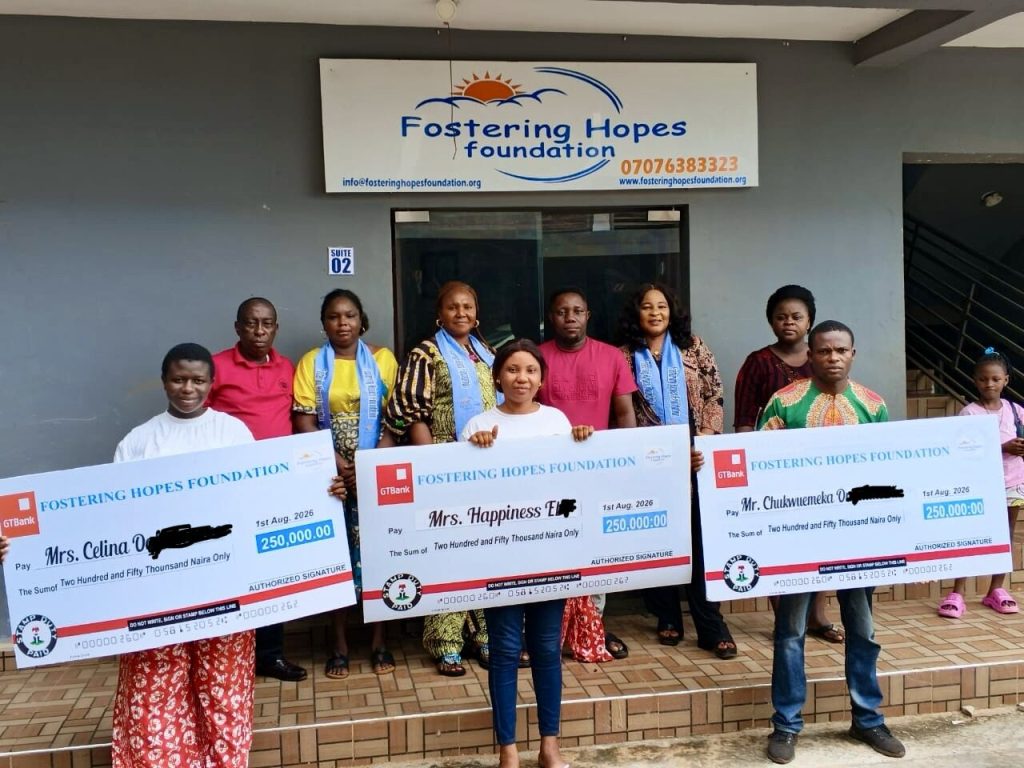
Three vulnerable families in Asaba, Delta State, have received ₦250,000 business grants each, while nine children from the households have been enrolled in a scholarship programme. The intervention took place on August 1, 2026, as part of an effort to address the link between household income and children’s access to education. The families were supported through a programme run by Fostering Hopes Foundation.
According to the organisation, the latest intervention represents its fifth cohort since 2024. It brings the reported cumulative reach of its business grant and scholarship initiatives to 15 families and 51 children.
The approach combines economic empowerment for parents with educational support for their children. As a result, the intervention seeks to address both immediate needs and some of the financial pressures that can place children at risk of dropping out of school.
Supporting Families Beyond Immediate Relief
For households living with limited income, education costs can become difficult to sustain. School fees are only one part of the financial burden. Families may also have to cover uniforms, books, transport, meals and other daily expenses. Meanwhile, food, healthcare and housing compete for the same limited income. Consequently, a sudden loss of earnings can affect a child’s education very quickly.
Nigeria continues to face a significant education challenge. UNICEF estimates that about 10.5 million children between five and 14 years are out of school in the country. Poverty remains one of the factors linked to unequal access to education. Children from poorer households generally face greater barriers to staying in school.
That makes interventions that strengthen household income particularly relevant. Rather than providing educational assistance alone, the latest programme seeks to improve the economic circumstances of the families responsible for the children’s care. The Foundation’s model therefore combines business support, scholarships and child-focused interventions.
₦250,000 Grants Target Household Livelihoods
Each of the three beneficiary families received ₦250,000 to support an income-generating activity. The grants are intended to provide working capital that beneficiaries can use to establish or strengthen small businesses. However, the intervention does not stop at disbursement.
The beneficiaries received financial literacy guidance before the grants were released. During the session, the Foundation’s Programme Director for Education Opportunities and Early Childhood Development, Pastor Mrs Ethel Uto, stressed the importance of responsible financial management. Beneficiaries were encouraged to treat the money as business capital rather than as disposable income.
That distinction is important for programmes built around economic empowerment. A cash transfer can provide temporary relief. Business capital, when properly managed, can potentially create income beyond the initial intervention.
The beneficiaries are also expected to provide updates on their businesses. This creates a basic accountability structure around the grants. Furthermore, monitoring can help determine whether the intervention is producing the intended economic outcomes. The success of the programme will therefore depend partly on whether beneficiaries can turn the initial capital into sustainable income.
Nine Children Receive Education Support
At the same time, nine children from the three families were enrolled in a scholarship programme. The educational support is designed to reduce some of the financial pressure on their parents. For vulnerable families, that can be significant.
When household income is stretched, education expenses can compete with essential needs. Supporting children’s education alongside family income can therefore reduce pressure on both sides.
The approach also reflects a wider understanding of child poverty. A child may be unable to attend school because of fees. However, the underlying problem may involve unemployment, unstable income or a lack of reliable livelihood opportunities within the household. Addressing only the school expense may not remove those wider pressures.
By supporting parents and children at the same time, the intervention attempts to create a stronger foundation for educational continuity. The Foundation’s Head of Communications, Comrade Patrick Ochei, also urged beneficiaries to follow the programme’s guidelines. He encouraged them to remain committed to developing their businesses while supporting their children’s academic progress.
A Growing Programme in Delta State
The latest intervention builds on previous cohorts supported by the organisation. The Foundation has reported that its family support programme has reached vulnerable households through a combination of business grants and scholarships. In previous interventions, beneficiaries received financial support while their children gained assistance with education.
The organisation has also used skills development as part of its broader empowerment approach. For example, its programmes have included vocational training and starter support designed to help participants develop income-generating skills.
Such initiatives reflect a growing emphasis on livelihood support within social impact programmes. Rather than focusing exclusively on charitable donations, organisations are increasingly exploring ways to help beneficiaries build their own earning capacity. That shift is particularly important in communities where households face persistent economic pressure.
Beneficiaries Were Screened Before Selection
The three families were selected through a screening process that involved professional oversight from the Delta State Directorate of the National Orientation Agency, according to the Foundation. The process included applications, shortlisting and further engagements before the final beneficiaries were selected.
Such processes can help social programmes direct limited resources towards households facing significant vulnerability. They can also strengthen accountability when organisations work with external institutions during beneficiary selection.
For the families involved, the support represents more than the immediate value of the grants. The business capital provides an opportunity to strengthen household income. Meanwhile, the scholarships can help protect the children’s access to education.
From Grants to Long-Term Resilience
The bigger question now is whether the intervention can translate into lasting improvements. A ₦250,000 grant can provide a useful starting point. However, sustainable economic empowerment depends on how effectively beneficiaries deploy the money.
Business conditions, market access and household needs will also influence the outcome. Similarly, placing children on scholarships can reduce education costs, but long-term educational progress requires continued support and regular school attendance.
That is why follow-up will remain important. Tracking business performance can show whether beneficiaries are generating sustainable income. Monitoring children’s educational progress can also demonstrate whether the scholarships are helping them remain connected to school.
This approach aligns with the broader understanding of child poverty as a multidimensional issue. UNICEF has repeatedly highlighted that poverty affects children across several areas, including education, health, nutrition, housing, sanitation and access to essential services. Therefore, improving a family’s economic resilience can have benefits that extend beyond income.
Why the Intervention Matters
The latest support for the three Delta families illustrates how economic empowerment and education can be connected within a single social intervention. For the parents, the grants provide an opportunity to start or strengthen businesses. For the nine children, the scholarships provide additional protection for their educational journeys.
More broadly, the programme demonstrates the potential value of addressing household vulnerability rather than focusing on individual symptoms. This matters because children often experience the consequences of economic hardship even when they are not the household’s income earners. When parents struggle financially, children can face disrupted schooling, inadequate basic needs and increased exposure to other forms of vulnerability.
Consequently, helping families build more stable livelihoods can also contribute to better outcomes for children. For the three families supported in Asaba, the immediate intervention may be measured in naira and scholarships. Its longer-term value, however, will depend on whether the businesses grow, household incomes improve and the nine children remain on a stable educational path.
Ultimately, the programme points to a simple but important principle: protecting children’s futures can sometimes require investing in the families raising them.
Stay informed on the people, organisations and initiatives shaping social impact across Nigeria and Africa. Follow CSR Reporters for more stories on community development, education, sustainability and responsible business.
[give_form id="20698"]


1 thought on “Three Delta Families Receive ₦250,000 Grants, Nine Children Get Scholarships”