UBA Confirms Leadership Transition, Appoints Emmanuel Nnorom as New Group Chairman
 ONYINYECHI NWAIGBA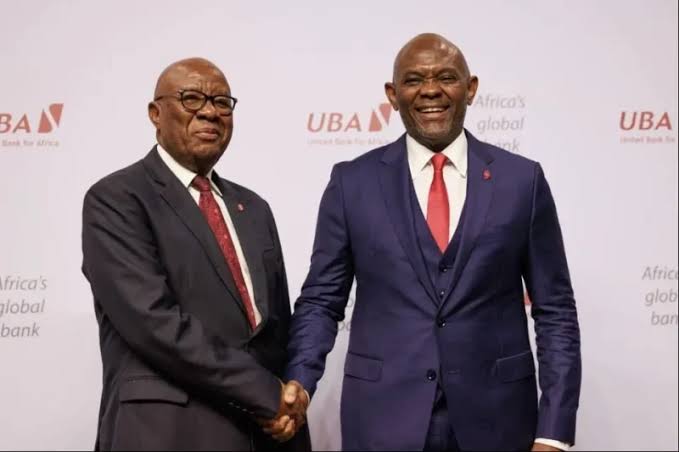
The Board of Directors of United Bank for Africa (UBA) Plc has announced a major leadership transition with the retirement of its Group Chairman, Tony Elumelu, CON, following the completion of his tenure in line with the Central Bank of Nigeria’s corporate governance guidelines for commercial banks.
The Board has approved the appointment of Emmanuel Nnorom as the incoming Group Chairman, effective August 1, 2026, subject to regulatory approval. The transition marks the end of a significant chapter in UBA’s corporate journey while reinforcing the growing importance of governance, succession planning, and institutional continuity in Nigeria’s banking sector.
The announcement reflects more than a routine change in leadership. It underscores the role of structured succession planning in strengthening corporate institutions, maintaining investor confidence, and ensuring long-term sustainability.
A Planned Leadership Transition
Tony Elumelu’s retirement follows the implementation of the Central Bank of Nigeria’s Corporate Governance Guidelines, which prescribe a maximum tenure for non executive directors and chairpersons of commercial banks.
Rather than waiting until the end of the tenure to begin succession discussions, UBA has demonstrated a proactive approach by identifying and appointing a successor through its established governance processes. Such transitions are increasingly viewed as indicators of institutional maturity, ensuring that leadership changes do not disrupt strategic direction or operational stability.
Corporate governance experts have consistently noted that organisations with clearly defined succession frameworks are better positioned to navigate leadership changes while preserving stakeholder confidence.
Tony Elumelu’s Legacy at UBA
Tony Elumelu has played a defining role in UBA’s transformation into one of Africa’s leading financial institutions.
During his tenure as Group Chairman, the bank expanded its presence across Africa and strengthened its international footprint, serving millions of customers through operations in more than twenty African countries as well as key global financial centres.
Under the Board’s oversight, UBA continued to invest in digital banking innovation, financial inclusion initiatives, customer experience, and sustainable business practices that positioned the institution among Africa’s most recognised banking brands.
Elumelu is also globally known for championing entrepreneurship through the Tony Elumelu Foundation, which has empowered thousands of young African entrepreneurs with funding, training, mentoring, and business support. Although these initiatives operate independently from UBA, they have contributed to broader conversations around inclusive economic development and private sector driven impact across the continent.
Within UBA, his leadership has been associated with strategic expansion, stronger governance structures, prudent oversight, and sustained growth.
Governance Beyond Compliance
Leadership transitions often attract public attention because of the personalities involved. However, governance professionals argue that the real measure of a strong institution is its ability to function effectively regardless of changes at the top.
Good corporate governance is not simply about complying with regulatory requirements. It also involves building systems that outlast individual leaders.
Succession planning has become a critical governance issue across industries because organisations increasingly recognise that uncertainty surrounding executive transitions can affect investor confidence, employee morale, customer trust, and business continuity.
By announcing a clear succession pathway, UBA has demonstrated a governance practice that many organisations continue to strengthen.
The transition also reflects broader global expectations around board independence, accountability, transparency, and leadership renewal, all of which form key pillars of Environmental, Social and Governance (ESG) performance.
Emmanuel Nnorom Takes the Helm
Emmanuel Nnorom brings decades of corporate leadership and governance experience to his new role as Chairman.
He has served on the UBA Board for several years and possesses an extensive understanding of the institution’s strategic priorities, governance framework, and operational direction.
His professional experience spans banking, insurance, investment management, and corporate leadership, making him well positioned to guide the Board through the bank’s next phase of growth.
His appointment also reflects an important governance principle of promoting leadership continuity through experienced board members who possess institutional knowledge while bringing fresh perspectives to strategic oversight.
With increasing expectations around sustainability, digital transformation, cybersecurity, climate related financial risks, and responsible banking, board leadership continues to evolve beyond traditional financial oversight.
The incoming chairman is expected to oversee governance priorities that support resilience, innovation, and sustainable value creation.
Why Board Succession Matters
Across the corporate world, successful leadership transitions are increasingly recognised as indicators of strong governance.
Boards are responsible not only for selecting capable leaders but also for ensuring continuity of strategy, preserving institutional knowledge, and protecting shareholder interests.
Poorly managed transitions can create uncertainty among investors, regulators, employees, and business partners.
Conversely, planned transitions signal organisational preparedness and demonstrate that governance structures are functioning effectively.
International governance frameworks consistently encourage organisations to maintain succession plans for both executive and board leadership positions to minimise operational risks.
For financial institutions, these expectations are even higher because stability within the banking system directly influences economic confidence.
Strengthening Stakeholder Confidence
Financial institutions operate on trust.
Customers trust banks with their savings.
Investors trust boards with their capital.
Employees trust leadership with the future of the organisation.
Regulators trust financial institutions to uphold sound governance standards.
Because of this, leadership transitions must be handled transparently and responsibly.
By communicating the transition early and identifying a successor before the effective date, UBA provides clarity to stakeholders while reducing uncertainty.
This level of transparency supports market confidence and demonstrates accountability to shareholders and regulators alike.
Governance as an ESG Priority
While environmental sustainability and social impact often dominate ESG discussions, governance remains the foundation upon which responsible business is built.
Governance determines how decisions are made, how risks are managed, how accountability is maintained, and how organisations respond to stakeholder expectations.
Strong governance supports ethical leadership, transparent reporting, effective risk management, and regulatory compliance.
It also strengthens investor confidence and contributes to long term organisational resilience.
As businesses across Africa continue to embrace ESG principles, governance practices such as board diversity, succession planning, independent oversight, and transparent leadership transitions are receiving greater attention from investors and regulators.
UBA’s leadership transition therefore represents more than a change in board leadership. It illustrates the practical application of governance principles that contribute to institutional sustainability.
The Future of UBA
As Emmanuel Nnorom prepares to assume the position of Group Chairman, expectations will remain high regarding the bank’s continued growth, innovation, and governance performance.
UBA operates in an increasingly dynamic financial environment shaped by technological disruption, changing customer expectations, evolving regulatory requirements, and global economic uncertainty.
The Board’s role in guiding long term strategy will remain central to ensuring that the institution continues delivering value to shareholders while supporting customers, communities, and economic development across Africa.
Leadership transitions inevitably mark the end of one era and the beginning of another. Yet when managed through strong governance frameworks, they become opportunities to reinforce institutional stability rather than moments of uncertainty.
For UBA, the appointment of Emmanuel Nnorom represents continuity built on experience, while Tony Elumelu’s retirement closes a significant chapter defined by expansion, strategic oversight, and institutional growth.
As corporate governance continues to gain prominence across Africa’s business landscape, UBA’s transition offers a reminder that sustainable organisations are built not only through visionary leadership but also through systems that ensure continuity, accountability, and resilience beyond any one individual.
[give_form id="20698"]