A Governance Giant Arrives: What Tony Elumelu’s Seplat Chairmanship Should Mean for People, Planet, and Accountability
 csrreporters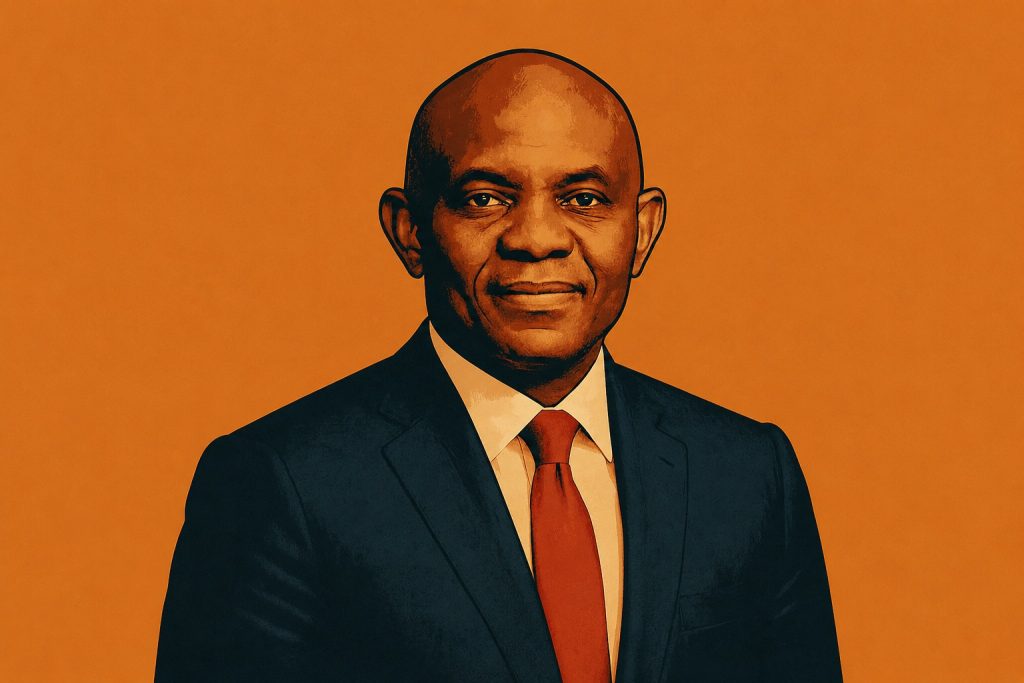
Tony Elumelu to become Chairman of Seplat Energy from January 2027
CSR Reporters commends the appointment of one of Africa’s most purposeful business leaders — and issues a clear expectation for what principled governance must now deliver at Seplat Energy.
When Seplat Energy announced on June 9, 2026 that Tony Elumelu would assume the chairmanship of its board effective January 1, 2027, the news carried weight that went beyond a routine boardroom succession. It signalled the arrival of a business leader whose career has been built not merely on profitability, but on a deliberate and documented commitment to impact, governance integrity, and the belief that African enterprises must do well and do good — simultaneously.
CSR Reporters welcomes this appointment unreservedly. It represents the kind of leadership transition that Nigeria’s corporate sector needs more of: one where a successor is not just commercially credible, but ethically legible. Tony Elumelu’s record speaks in full sentences, not press release fragments.
“African resources must drive African prosperity — and that prosperity must reach communities, not just balance sheets.”
The Governance Track Record That Earned This Moment
Tony Elumelu’s trajectory from rescuing the near-bankrupt Standard Trust Bank to building a pan-African banking institution — and then founding an investment holding company with a presence across energy, power, healthcare, technology, and hospitality — is well documented. But what is often under-appreciated in business commentary is the governance architecture he has built and maintained across these enterprises.
As Chairman of UBA Group, which today operates across 20 African countries and serves more than 21 million customers globally, Elumelu has overseen a banking institution that has consistently invested in community, workforce, and environmental commitments. UBA’s ESG initiatives have included pledges to plant one million trees, the launch of Braille account opening packages for visually impaired customers, and structured programmes supporting education and entrepreneurship across Africa — earning international recognition including the World’s Best Frontier Markets Bank designation from Global Finance Magazine.
At Transcorp Group — Nigeria’s largest listed conglomerate, whose subsidiaries include Transcorp Power and Transcorp Hotels — Elumelu has championed a business model that integrates strategic investment with national infrastructure development. Transcorp Power has contributed materially to Nigeria’s electricity supply, and the group’s operations across hospitality, energy, and agriculture reflect a diversified model rooted in long-term value creation rather than short-term extraction.
Heirs Holdings Group companies, under his leadership, now employ over 35,000 people, operate across multiple sectors and geographies, and have been recognised for best-in-class practices including the Best in Technology for Development award at the SERAS Africa Sustainability/CSR Awards, as well as ISO 27001 certification for digital insurance leadership.
“Governance is not a report you publish once a year. It is the daily discipline of deciding who benefits from how business is done.”
Africapitalism: A Philosophy That Must Now Power an Energy Company
Central to Tony Elumelu’s leadership identity is Africapitalism — his economic philosophy that positions Africa’s private sector, and specifically its entrepreneurs, as the primary engine of the continent’s social and economic transformation. Rooted in this belief is the insistence that business profit and community impact are not in tension; they are, in the most purposeful enterprises, inseparable.
Since 2010, Elumelu has backed this philosophy with concrete institutional commitment. The Tony Elumelu Foundation has empowered tens of thousands of entrepreneurs across all 54 African countries, providing seed capital, mentorship, training, and access to global networks. The 2026 cohort alone comprised 3,200 entrepreneurs, with 51% women, 75% aged between 18 and 35, and 30% drawn from rural communities — a distribution that deliberately targets the margins, not just the centres, of economic life.
This is the philosophy that should now guide Seplat Energy’s approach to the communities in which it operates. The oil and gas sector in Nigeria has too long been defined by a paradox: enormous resource wealth extracted from regions that remain profoundly underdeveloped. Elumelu’s Africapitalism offers a different paradigm — one where the presence of a major energy company in a community translates into tangible, documented, and independently verifiable upliftment.
What Seplat’s New Chapter Must Deliver: A Direct Call
CSR Reporters does not merely commend the appointment of Tony Elumelu. We also issue, in the spirit of accountability journalism, a direct call — one grounded in expectation, not flattery.
Mr. Elumelu, as you assume the chairmanship of Seplat Energy, the communities of the Niger Delta, the workers in Seplat’s supply chain, the investors who rely on credible ESG disclosures, and the Nigerian public all have a right to expect that your governance values will be translated into institutional practice at scale. The following are the benchmarks CSR Reporters will be watching:
People-First Business Model
Your commitment at UBA, TEF, and Transcorp to workforce investment, graduate training, and inclusive employment must be reflected in Seplat’s human capital policies. Community employment ratios, local content compliance, and the treatment of workers across the value chain must not be left to annual reports — they must be living commitments, reported transparently and measured consistently.
Genuine Community Engagement
The oil and gas sector’s legacy of community displacement and environmental damage demands a new approach — not community relations as public relations, but structured social investment governed by community needs assessments, co-designed programmes, and independent verification. Your Foundation’s model of reaching the last mile must find its expression in Seplat’s host community relations.
Credible ESG Reporting
Nigeria’s indigenous energy companies have a mixed and often disappointing record on sustainability disclosure. As chairman of a dual-listed company — on both the Nigerian Exchange and the London Stock Exchange — Elumelu will be operating under dual scrutiny. CSR Reporters calls for Seplat to adopt internationally benchmarked ESG reporting frameworks, with third-party assurance, and to make that data accessible to communities, not just to institutional investors.
Energy Transition Leadership
As the energy transition accelerates globally and Africa charts its own path between development imperatives and climate obligations, Seplat’s Roadmap 2030 must articulate a credible position — one that does not simply defer the transition question but engages it with the seriousness that a board of this calibre demands. Elumelu’s investments in power and his appreciation of energy access as a development issue place him in a unique position to lead this conversation with authority.
“The energy sector’s promise to communities must not live only in memoranda of understanding. It must be measurable, reportable, and independently verified.”
A New Chapter That Africa Is Watching
The appointment of Tony Elumelu as Seplat’s incoming chairman arrives at a moment when Nigeria’s corporate governance environment faces mounting scrutiny — from investors demanding ESG accountability, from communities demanding equity, and from a public increasingly unwilling to accept the gap between corporate narratives and lived realities.
Elumelu’s own statement upon the announcement — that Seplat’s culture of execution and governance aligns with his own values — is a commitment. CSR Reporters takes him at his word, and will hold that word to account.
This is an opportunity not just for Seplat Energy, but for Nigerian corporate leadership as a whole. A chairman of Elumelu’s stature, equipped with a philosophy that foregrounds community impact and a track record that substantiates it, can set a standard that ripples across the sector. But only if the board room reflects the boardwalk — if the governance principles espoused in interviews and foundations are embedded in policies, disclosures, and investment decisions at Seplat.
CSR Reporters will be watching. Nigeria’s host communities will be watching. Africa will be watching.
We wish Mr. Elumelu a purposeful chairmanship.
ABOUT CSR REPORTERS
If your organisation wants to move from random CSR activities to structured, measurable impact, CSR REPORTERS helps organisations:
✦ Conduct community needs assessments
✦ Track and measure CSR impact
✦ Document and report social investments
✦ Communicate CSR efforts transparently and independently
Responsible business should not begin when companies become big. It should begin the day the business starts.
[give_form id="20698"]