CSR Reporters Editorial Team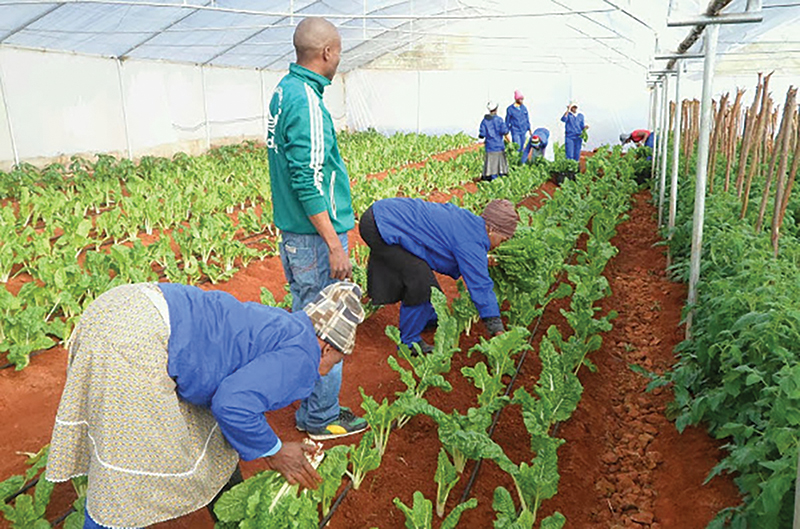
THE VERDICT | Who Kept their Word. Who Did not.
Every week, CSR Reporters holds a mirror up to corporate Africa — not to flatter, but to measure. This week’s Verdict looks at a cement giant whose new name hasn’t yet answered old questions, and a retail group quietly proving that sustainability can be built into the machinery of a business rather than bolted on beside it.
CALL OUT
HBM Nigeria Plc (formerly Lafarge Africa Plc)
In June 2026, Lafarge Africa Plc completed one of the most consequential corporate transitions in Nigeria’s building materials sector, formally adopting the name HBM Nigeria Plc to reflect its new majority ownership under China’s Huaxin Cement, following Holcim’s exit from the business. This was not the company’s first reinvention. It began life as West Africa Portland Cement Company, became Lafarge Cement WAPCO Nigeria Plc after Lafarge’s acquisition of Blue Circle Industries, and took the Lafarge Africa identity in 2014 when Lafarge and Holcim merged their African operations into a single pan-African platform. The move to HBM Nigeria Plc is, by the company’s own account, its fourth major corporate name change — a company that has spent decades rewriting its letterhead in step with whoever sits atop its shareholder register, while its plants, workforce, and host communities remain fixed in place.
The ceremony marking the transition, held in Lagos, was an elaborate affair. The Group Managing Director assured workers, customers, and host communities that nothing of substance would change — no disruption to operations, no effect on the workforce, no dilution of commitment to Nigeria’s economic growth. The Minister of Works attended in person and offered fulsome praise for the company’s contribution to national infrastructure. Traditional rulers from Cross River, Gombe, and Ogun states were present. It had, in short, all the trappings of a company eager to be seen as turning a page cleanly. The difficulty is that a page cannot be turned cleanly while the paragraph above it is still being contested.
Barely weeks after the rebrand was formalised, the Nigerian Senate’s ad hoc committee reviewing the underlying transaction — the sale of an 18 per cent market-share stake to Huaxin’s pan-African investment vehicle — found reason to withhold its full endorsement. Lawmakers pressed for a complete breakdown of who actually holds the shares beyond the disclosed Huaxin and Nigerian-investor stakes, and at least one senator was blunt about it: a transaction of this scale, involving one of the country’s most important industrial assets, deserved a shareholding structure that could be stated plainly on the record, not one that left the identity of the remaining shareholders to inference. The committee ultimately recommended that the transaction be allowed to proceed, with continued regulatory monitoring — a resolution that reads less like a clean bill of health and more like a deferred question.
Separately, and just as pointedly, a senator representing Gombe Central raised a complaint that predates the rebrand and has plainly outlived it: that the company’s operations in Gombe State have not sufficiently benefited the host communities that live alongside its plants. This is not a new grievance dressed up for the occasion of a corporate transaction — it is the same grievance that has long trailed extractive and heavy-industry operations across the region, resurfacing at the one moment when a change of ownership might have offered a natural opportunity to reset the relationship. Instead, the concern was raised as a condition to be monitored going forward, which is Senate-speak for an acknowledgment that it has not yet been resolved.
A rebrand can change a company’s letterhead. It cannot, on its own, change what a community has or has not received.
This is precisely the gap CSR Reporters exists to name. Ownership transparency and host-community benefit are not cosmetic concerns to be addressed after a name change is unveiled and a ribbon is cut; they are the substance of what “stakeholder value” is supposed to mean before, during, and after any change of control. A company can change its name four times in a lifetime and still owe the same debts to the same communities under every one of them. HBM Nigeria Plc inherits Lafarge Africa’s operational footprint, its host communities, and its unresolved questions in equal measure — and it will be judged, fairly, on how it answers those questions under its new identity, not on how convincingly it retires the old one. The test for HBM Nigeria Plc now is straightforward, even if the answer will not be: publish the full shareholding structure without prompting, and show Gombe State something more concrete than another ceremony.
COMMEND
SPAR South Africa
Contrast that with SPAR South Africa’s Rural Hub programme, a quieter story that made the trade press this month for reasons that have nothing to do with a press conference or a ribbon-cutting. SPAR operates a wholesale-led, voluntary-trading model — it does not own its stores outright, and cannot simply issue a head-office directive on sustainability and expect uniform compliance across a network of independent retailers who run their own businesses under its brand. That structural constraint is the kind of thing a company can hide behind for years, and many do. Instead, SPAR appears to have built its sustainability case around the constraint rather than in spite of it, treating the absence of command-and-control as an opening for influence, business value-add, and practical support rather than an excuse for inertia.
Through the Rural Hub, smallholder farmers are brought into SPAR’s commercial supply chain and, as a condition of that relationship, are supported in adopting better soil health, water-use efficiency, and responsible input practices. This is a meaningful distinction from the more familiar corporate social responsibility playbook, in which a company funds an agricultural development project as a discrete, fundable initiative that sits alongside its core business and can be scaled back when budgets tighten. In SPAR’s account of its own model, the sustainable farming practices are not optional extras bolted onto a supply agreement — they are what make the underlying economics work at all once a smallholder transitions from subsistence production into a commercially viable supplier relationship. When the farming practice and the commercial viability are the same thing, the incentive to maintain it survives well beyond any single year’s CSR budget line.
Alongside this, SPAR’s distribution centres have spent the past several years transitioning their energy mix toward a hybrid configuration of grid power backed by rooftop solar. By the company’s own description, the change was invisible to its independent retailers — not because it was hidden, but because it was engineered at the infrastructure level rather than announced as an initiative requiring their participation or sign-off. Replicated across the network, this is precisely the kind of quiet, structural decision that adds up to something larger than any single press release could capture, and it is worth noting that SPAR did not lead with it. It surfaced in an industry trade publication, in an executive’s own words, framed around cost and operational resilience rather than reputational credit.
Sustainability that requires a press release to notice is usually sustainability bolted on. Sustainability engineered into the supply chain rarely needs one.
There is also a harder-nosed commercial argument embedded in SPAR’s own framing that deserves to be taken seriously rather than treated as spin. South African households have absorbed more than a decade of rising electricity costs, with grocery prices following close behind, and the company is explicit that any environmental commitment which pushes up the price of a litre of milk is not a sustainability strategy — it is simply a transfer of cost from the company’s balance sheet onto the kitchen table of the household that can least absorb it. That is a more honest starting premise than most sustainability strategies on the continent are willing to state out loud, and it is precisely the premise CSR Reporters has long argued should govern serious ESG design in African markets: durability over declaration, and affordability as a design constraint rather than an afterthought.
What earns this a commendation, then, is not the ambition of the language — Africa has no shortage of ESG rhetoric, glossy sustainability reports, and conference panels restating the same commitments in slightly different words. It is the design choice underneath the language: a recognition that sustainability which cannot survive contact with a tight household budget, or with a wholesale model that cannot issue commands to its own retailers, has not actually solved anything. SPAR’s model attempts to close the gap between commitment and lived impact at the point where it matters most — the farmer’s field and the store shelf — rather than at the point where it is easiest to photograph, which is the boardroom or the conference stage.
CSR Reporters is Africa’s independent accountability and sustainability intelligence platform. The Verdict appears weekly.
Have a company we should be watching? Write to us at csrreporters.com.
[give_form id="20698"]