admin
admin 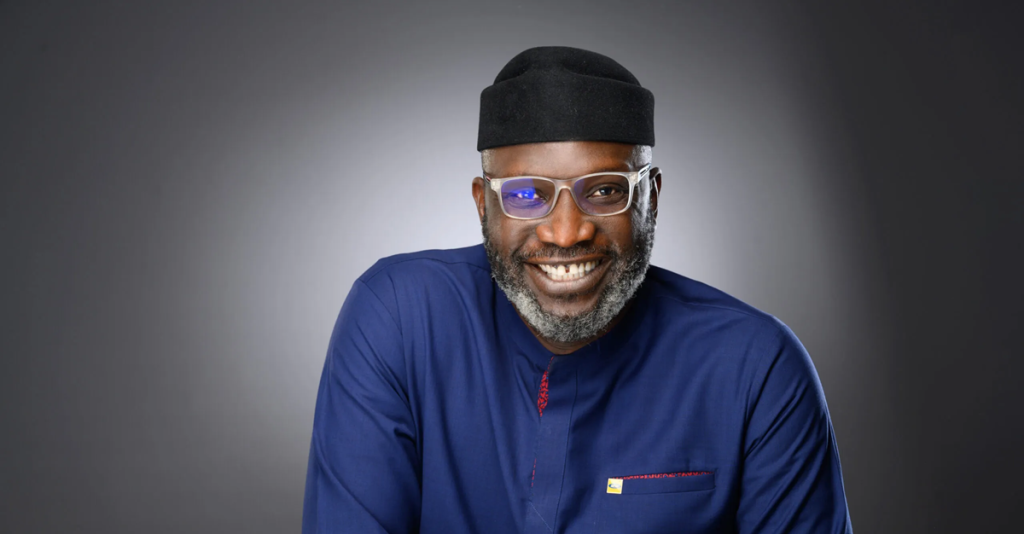
Many people still associate sustainability with climate action alone. They often think about carbon emissions, renewable energy, or tree planting. However, Tobechukwu “Tobe” Okigbo, Chief Corporate Services and Sustainability Officer at MTN Nigeria, believes the conversation should go much further.
Speaking at an event recently, Okigbo argued that sustainability extends beyond environmental concerns and even beyond the traditional environmental, social and governance framework. Instead, he believes businesses must deliberately work with governments to build stronger economies and more resilient societies. As a result, he has become one of Nigeria’s leading voices advocating a broader understanding of corporate sustainability.
Rather than treating corporate social responsibility as a standalone department, Okigbo sees it as a strategic responsibility that should shape how businesses operate. Consequently, his perspective is influencing conversations about sustainability across Nigeria’s corporate landscape.
His position is not based on theory alone. Instead, it reflects more than two decades of experience navigating the complex intersection of law, regulation, corporate affairs and public policy in Nigeria’s telecommunications industry.
From the Courtroom to the Boardroom
Okigbo was called to the Nigerian Bar in 1990. Since then, his legal background has influenced nearly every stage of his professional journey. He earned a Bachelor of Laws degree from the University of Maiduguri before obtaining an MBA from the University of Liverpool. In addition, he attended executive programmes at Harvard University.
Furthermore, he is a certified dispute resolution professional accredited by the UK’s Centre for Effective Dispute Resolution. That qualification reflects a career built around finding common ground among governments, regulators, businesses and stakeholders.
His telecommunications career began in 2005 when he joined Vmobile as Manager of Legislative Affairs. After the company transitioned into Airtel Nigeria, he remained with the organisation and steadily rose through the ranks. Eventually, he became General Manager of Government and Environmental Affairs.
During that period, Okigbo helped shape Airtel’s engagement strategy with government institutions at federal, state and local levels. Therefore, he developed deep expertise in managing relationships that often determine how large organisations succeed in highly regulated industries.
In 2015, he moved to Smile Communications as Chief Corporate Services Officer. There, he oversaw legal, communications and regulatory affairs under a single leadership structure. The role also expanded his experience in corporate governance and stakeholder engagement.
Later, he joined MTN Nigeria, where his responsibilities have continued to grow. Today, beyond serving as Chief Corporate Services and Sustainability Officer, he chairs the board of Yello Digital Financial Services Limited, MTN’s agency banking subsidiary. He also serves on the board of Bayobab Nigeria Limited and previously sat on the pioneer board of MoMo Payment Service Bank.
Across these appointments, one quality remains consistent. Okigbo approaches business challenges with a lawyer’s analytical mindset while balancing commercial realities with long-term sustainability goals. That combination has helped position him as one of MTN Nigeria’s most influential executives.
Redefining Government’s Role in Sustainability
His contributions have earned recognition beyond the telecommunications sector. Recently, he was the recipient of a 2025 Corporate Person of the Year Award. The honour recognises his leadership achievements and his lasting contribution to corporate Nigeria.
However, perhaps Okigbo’s most distinctive contribution is his determination to expand the sustainability conversation. Recently, he observed that many people immediately think of climate change whenever sustainability is mentioned. Others widen the discussion to include environmental, social and governance issues. Nevertheless, he believes both perspectives remain incomplete.
According to Okigbo, sustainable business also depends on productive partnerships between the private sector and government. Rather than viewing regulators as obstacles, companies should recognise them as essential partners in building resilient economies.
He argues that businesses thrive when governments function effectively. Likewise, governments deliver better outcomes when responsible companies actively contribute to national development. Therefore, collaboration should become a long-term strategy instead of a short-term necessity.
MTN Nigeria’s partnership with the Nigerian Meteorological Agency illustrates this philosophy. Through the collaboration, weather information reaches farmers and millions of Nigerians directly on basic mobile phones. As a result, communities receive timely forecasts that can improve agricultural planning, strengthen disaster preparedness and protect livelihoods.
For Okigbo, this project demonstrates how public institutions and private companies can combine their strengths to create shared value. Instead of working independently, both sectors amplify each other’s impact. That same philosophy also shapes MTN’s efforts to close Nigeria’s digital divide.
Closing the Digital Gap Through Sustainability
Okigbo is also notable for highlighting another challenge that often receives less attention than climate change. Although Nigeria enjoys approximately 87 percent 4G network coverage, more than half of MTN Nigeria’s customers still do not use the internet regularly. According to him, device affordability remains one of the biggest barriers to digital inclusion.
Therefore, MTN developed a strategy to make smartphones and connectivity services more affordable for lower-income Nigerians. Rather than viewing internet access as only a commercial opportunity, Okigbo presents it as a sustainability issue because millions of people remain excluded from education, healthcare, financial services and economic opportunities without reliable digital access.
His argument is straightforward. Sustainable development cannot happen if people are disconnected from the digital economy. There are also multiple other campaigns and strategies
Sustainability as a Business Strategy
Okigbo has consistently reinforced this broader perspective across several public engagements. For example, during the launch of MTN Nigeria’s biodegradable eco-SIM cards, he stressed that sustainability is not limited to reducing carbon emissions. Instead, he described it as a practical strategy that enables businesses to remain competitive while creating lasting value for society.
The eco-SIM initiative seeks to reduce the significant plastic waste generated annually by the global telecommunications industry. Consequently, it reflects MTN’s effort to combine environmental responsibility with product innovation.
That philosophy also featured prominently during the presentation of MTN Nigeria’s 2024 Sustainability Report at the Nigerian Exchange in May 2025.
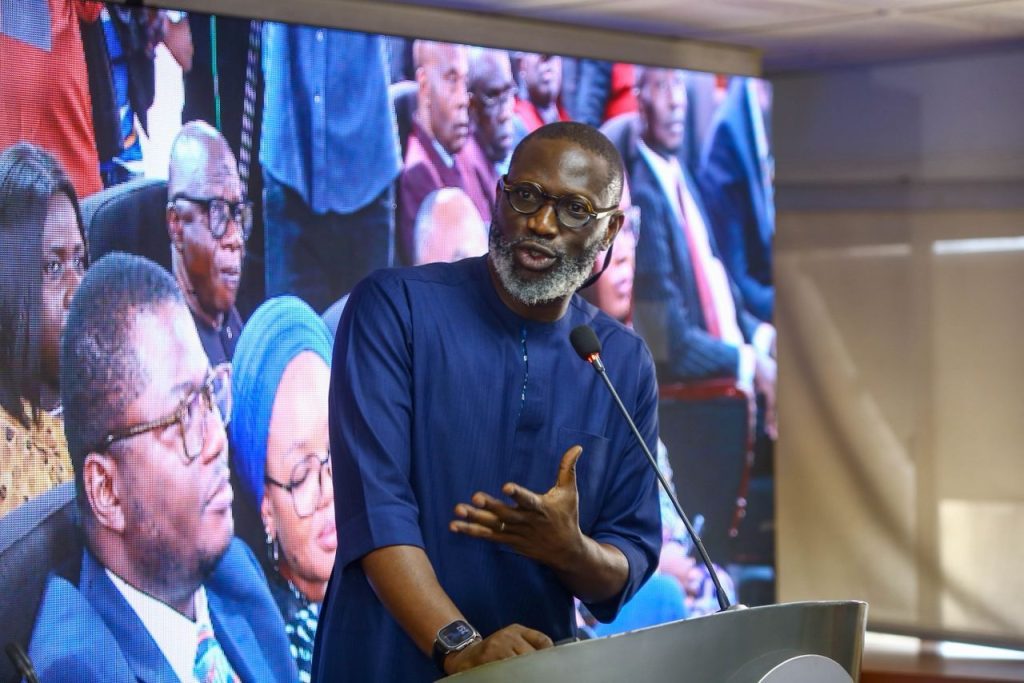
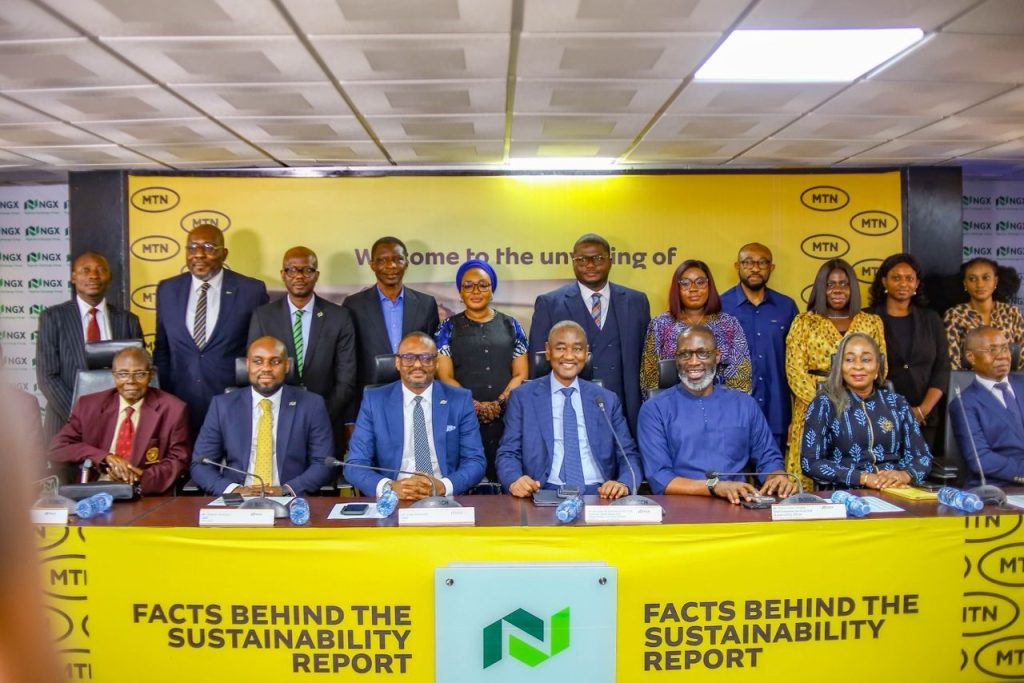
The report highlighted measurable achievements across several areas. MTN recorded a 50.3 percent reduction in its carbon footprint across all emissions scopes. In addition, broadband access expanded to reach 95 percent of Nigerians.
Furthermore, the company reported zero regulatory infractions from the Nigerian Communications Commission for the seventh consecutive year. At the same time, the MTN Foundation positively impacted approximately 600,000 lives through its various interventions.
For Okigbo, these figures demonstrate that sustainability should be measured through tangible outcomes rather than corporate promises. Therefore, he continues to emphasise that environmental, social and governance commitments must produce real results that stakeholders can verify.
Speaking Honestly About Industry Challenges
While celebrating progress, Okigbo has also shown a willingness to discuss difficult realities. For instance, he has openly addressed concerns about network quality in Nigeria instead of relying on carefully scripted corporate responses.
He explained that fibre optic cables are cut repeatedly across the country, disrupting services almost every day. In addition, he pointed to lengthy delays between ordering telecommunications equipment and installing it because of global supply chain constraints and regulatory processes.
Such explanations may not eliminate customer frustration. However, they reflect a leadership style built on transparency rather than public relations language. That openness strengthens stakeholder trust because it acknowledges challenges while outlining the steps being taken to address them.
Why He Matters Right Now
Nigeria’s sustainability conversation is evolving rapidly. Nevertheless, much of the discussion still revolves around climate targets, ESG ratings and disclosure frameworks. Those tools remain valuable. However, Okigbo believes they should not define the full scope of sustainability.
Instead, he argues that businesses must strengthen the institutions around them. They should work alongside governments, regulators and communities to create environments where companies and societies can prosper together.
Managing legal affairs, corporate services, regulatory engagement and sustainability under one executive portfolio is no small responsibility. Yet Okigbo has demonstrated that these disciplines can reinforce one another instead of operating in separate silos.
His career suggests that sustainability is no longer simply about compliance or corporate philanthropy. Increasingly, it is becoming a framework for building resilient businesses, stronger institutions and more inclusive economies. That broader vision is precisely what distinguishes Tobe Okigbo from many of his peers. More importantly, it explains why he is the CSR Personality of the Week.
[give_form id="20698"]