ROSEMARY IMOBHIO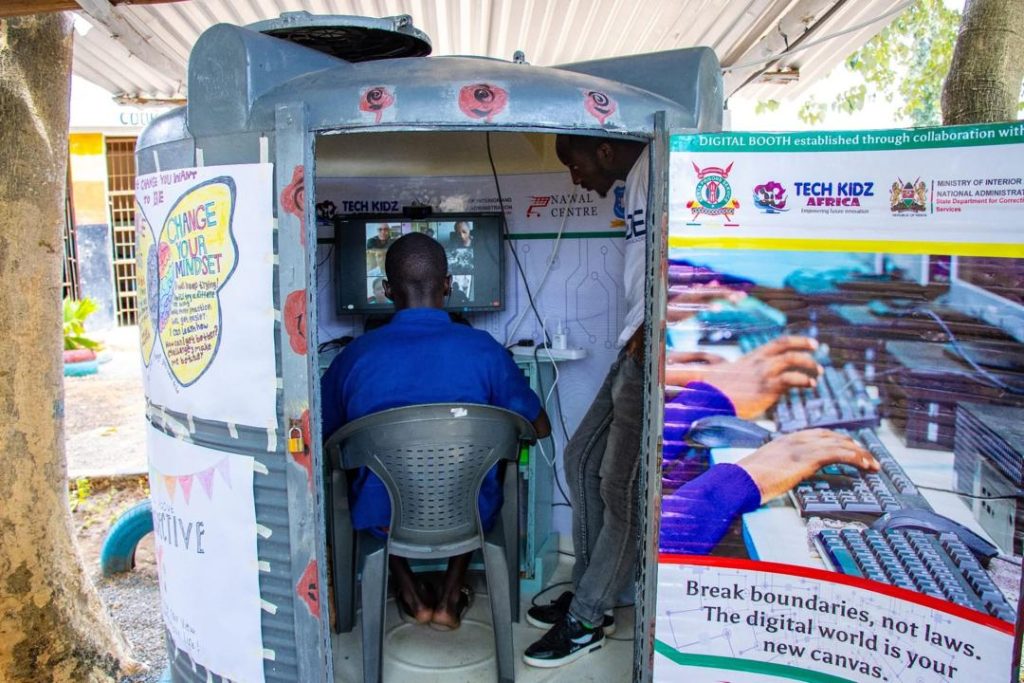
Behind the walls of Shimo La Tewa Borstal Institution on the outskirts of Mombasa, a quiet experiment is rewriting what rehabilitation looks like for Africa’s incarcerated youth. Instead of only workshops for carpentry or tailoring, boys aged 15 to 18 now sit before computer screens, learning to code, design websites, and repair hardware.
The shift is small in scale but large in implication. It signals a growing recognition among African social enterprises that digital skills, not just manual trades, may hold the key to breaking cycles of poverty and reoffending.
The initiative is led by TechKidz Africa, a Mombasa based technology academy founded by entrepreneur Paul Akwabi. It is in partnership with Close the Gap Kenya, a nonprofit that refurbishes and donates IT equipment. Since 2024, the two organizations have run a three month digital literacy course inside the facility, and their story offers a compelling case study in what corporate social responsibility can achieve when it moves beyond donations and into genuine capacity building.
A Founder Who Saw Himself in the Learners
Akwabi’s motivation is deeply personal. He was raised in Kibera, one of the largest informal settlements in the world. There he once ran errands for older boys involved in petty crime before technology gave him another path. Consequently, when he first visited Shimo La Tewa, he did not see criminals in front of him.
That empathy has translated into a curriculum built from the ground up. Because most learners had never touched a computer, the program begins with basic digital literacy before advancing to hardware repair, Microsoft Office skills, coding, web design, robotics, and graphic design. Of the first 25 participants, 21 had no prior exposure to computers at all.
Why This Matters as a CSR and ESG Story
For companies and foundations across Africa, the Shimo La Tewa program is more than a heartwarming anecdote. It is a working model of how private and nonprofit capital can address a measurable social gap. Kenya’s digital divide remains stark despite the country’s reputation as East Africa’s innovation hub. Government survey data cited by TechKidz found that just over half of Kenyans use mobile phones. Yet only 11.6 percent use computers, a gap that falls hardest on rural and low income communities.
That gap has direct consequences for employability. According to the International Labour Organization, youth unemployment across Sub Saharan Africa remains stubbornly elevated. Researchers have repeatedly linked joblessness among young men to higher involvement in crime.
Meanwhile, Mastercard Foundation research estimates that roughly 420 million young Africans between 15 and 35 will need pathways into decent work over the coming decade. Against that backdrop, teaching digital skills inside a correctional facility is not charity. It is workforce development aimed squarely at a demographic that mainstream training programs often overlook.
From Vocational Skills to Digital Marketing
Notably, the program does not replace traditional vocational training. Instead, it layers digital capability on top of trades the boys already have. Akwabi explained that many learners arrive with practical skills in carpentry, barbering, farming, or masonry, yet lack the tools to market themselves after release. “When they come out, they don’t know how to market themselves,” he said.

One 20-year-old learner from Kilifi County said he now expects to grow his tailoring business through a website he built during the course. Another, from Meru County, hopes to use his new graphic design skills to promote a plumbing business once he is released. These are not abstract outcomes. They represent tangible income pathways built through a short, targeted training investment, a return on impact that few corporate social investment programs can claim with such clarity.
Kenya’s Broader Digital Momentum
The timing aligns with Kenya’s wider digital trajectory. Communications Authority data shows that smartphone penetration in the country climbed past 90 percent by the end of 2025. While mobile money subscriptions reached roughly 51 million users, or 98 percent of the population.
Kenya’s ICT sector has also been growing faster than most other segments of its economy. This positions digital fluency as an increasingly essential employability skill rather than a luxury. In that context, equipping incarcerated youth with basic computer competence is less about novelty. It is more about ensuring they are not permanently locked out of the economy they will re-enter.
Lessons for Nigeria’s Correctional System
Nigeria offers an instructive point of comparison. The Nigerian Correctional Service already runs vocational programs across its 241 custodial facilities. It covers fashion design, computer training, and agriculture. The federal government has piloted skills grants for inmates nearing release. Civil society groups have also begun introducing tech training inside facilities like Lagos’s Ikoyi and Kirkiri correctional centers. They argue that digital exclusion, not just lack of vocational skill, is what keeps many ex-offenders locked out of formal reentry.
Still, researchers studying Nigerian correctional facilities consistently flag the same obstacles. Outdated equipment, too few trained instructors, and unreliable power supply. Kenya’s model suggests a way around some of these constraints through structured partnership.
TechKidz supplied the curriculum and instructors, Close the Gap supplied refurbished hardware, and the prison service supplied access and buy-in. No single actor bore the full cost, which is precisely the kind of shared investment model Nigerian telecom firms, fintechs, and corporate foundations could replicate.
Scaling the Model Across the Continent
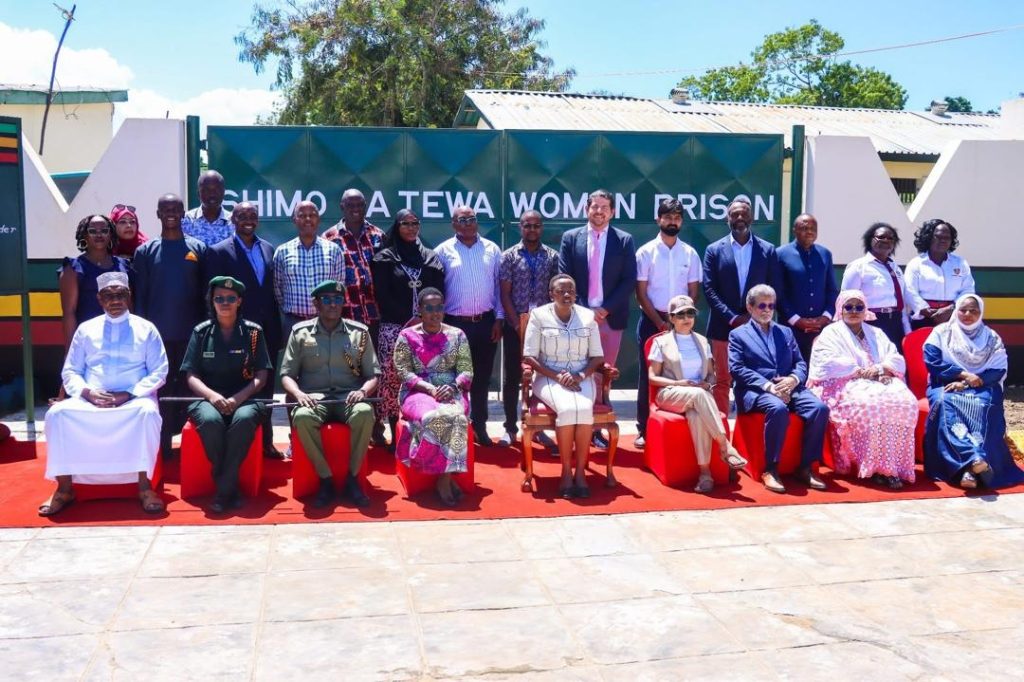

TechKidz and Close the Gap are now working with the Kenya Prison Service to extend the program to 14 more facilities, including additional juvenile institutions and women’s prisons. Training days for prison officers are planned so that more staff can become digital literacy educators themselves, reducing long term dependence on outside volunteers.
“Digital literacy is a flat battleground that doesn’t choose where you’re coming from,” Akwabi said, summing up the philosophy driving the expansion.
Why Digital Inclusion Is Becoming a CSR Priority
As African companies rethink their social investment strategies, initiatives like this point toward a maturing definition of corporate responsibility. One measured not by the size of a donation but by the durability of the outcome it produces. Reducing recidivism lowers public costs.
Equipping young people with marketable digital skills expands the tax base and consumer economy. And restoring a young person’s belief that they still have a future arguably delivers a return no spreadsheet can fully capture.
For companies, foundations, and technology firms watching from Lagos to Johannesburg, the message from Shimo La Tewa is straightforward. Digital inclusion is no longer a peripheral CSR gesture reserved for schools and startups. It is becoming a central tool for social repair and the organizations willing to invest in the hardest to reach communities, including those behind prison walls, may end up writing the next chapter of Africa’s inclusive growth story.
[give_form id="20698"]