The Tariff Is Not the Story: What Washington’s Forced-Labour Penalty Reveals About Nigeria’s Accountability Deficit
 Eche Munonye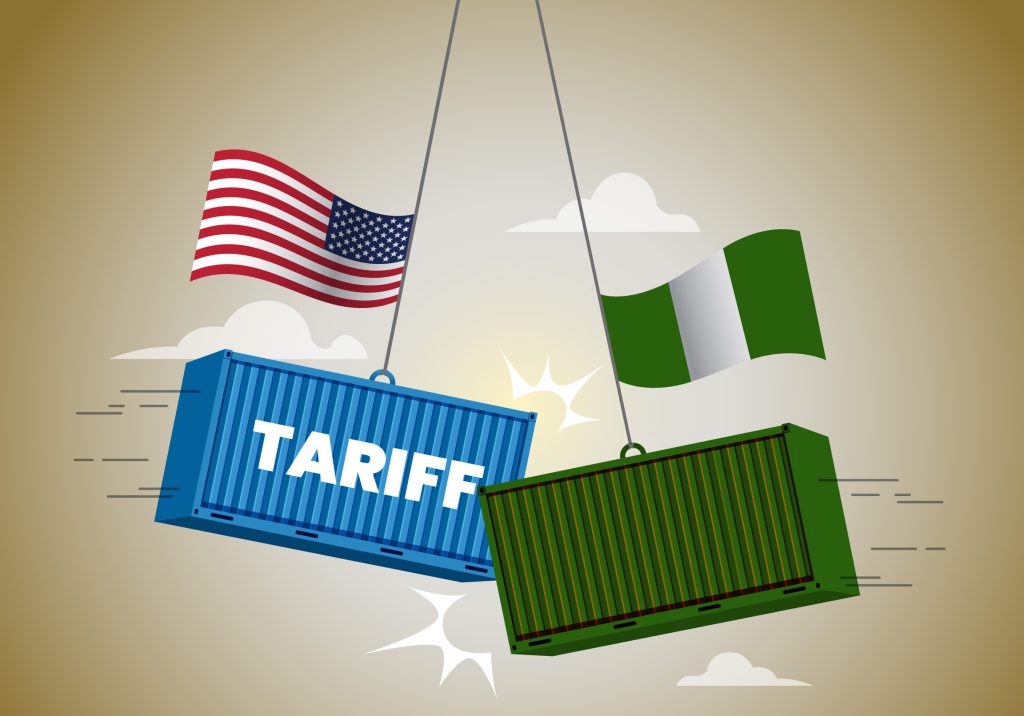
The Tariff Is Not the Story: What Washington's Forced-Labour Penalty Reveals About Nigeria's Accountability Deficit
On July 24, 2026, the United States began collecting a 12.5 percent tariff on most Nigerian exports. The Office of the United States Trade Representative framed it as a trade remedy — one line item in a Section 301 action against 54 economies accused of failing to prohibit the importation of goods made with forced labour. Nigerian commentary has, predictably, framed it as a trade war story: another blow from an unpredictable American president, another line in the ledger of a relationship already strained by a BRICS-linked surcharge earlier this year and a fresh wave of US visa restrictions on Nigerian nationals.
That framing is not wrong. But it is incomplete, and the incompleteness matters.
Read the USTR’s own language closely and a different story emerges — one CSR Reporters has been documenting for years under a different name: an accountability deficit. Nigeria did not receive the harsher 12.5 percent rate because of trade volume, tariff retaliation, or diplomatic friction. It received the harsher rate because it has not established and enforced a prohibition on the importation of goods produced with forced labour. Countries that had done so, or credibly committed to doing so — India, Indonesia, Malaysia, Mexico, the United Kingdom — paid two and a half points less. The gap between 10 percent and 12.5 percent is, in effect, a governance premium. It is what unaddressed accountability gaps now cost, denominated in dollars, at the border.
THE MECHANICS OF THE DECISION
The Section 301 investigation behind this tariff was not improvised. USTR opened it in March 2026 covering 60 of America’s largest trading partners, drew more than 1,600 written submissions, heard testimony from over 100 witnesses, and consulted more than 45 governments before issuing its determinations. This is worth stating plainly because it cuts against the instinct to dismiss the tariff as arbitrary or purely political. It is political — Section 301 gives the US president wide latitude, and the administration is using it partly to rebuild a tariff architecture the Supreme Court gutted earlier this year when it struck down Trump’s emergency-powers tariffs. But the forced-labour standard applied within that architecture was investigated, documented, and differentiated country by country. Nigeria was not swept up by accident. It was assessed against a specific bar, on specific evidence, and found short of it.
The practical exposure is real. Nigeria’s oil, gas, fertiliser and select food exports carry exemptions, which shields the country’s dominant revenue line. But manufactured goods, agricultural products outside the carve-outs, and other export categories will now carry a real cost disadvantage against competitors paying 10 percent or nothing at all. For exporters already navigating naira volatility, elevated logistics costs, and thin margins, 2.5 additional points is not abstract. It is the difference between a competitive bid and a lost contract.
THE RELATIONSHIP, NOT JUST THE TARIFF
Context matters here. This tariff lands on a relationship already under pressure. In 2025, Nigeria was assessed an additional 10 percent tariff over its posture toward BRICS. In the same week as this forced-labour determination, a new US visa restriction targeting Nigerian nationals surfaced. Individually, each of these is a discrete policy action with its own legal basis. Together, they read as a pattern — and patterns shape how a relationship is perceived, negotiated, and ultimately priced by markets and investors, regardless of the technical merits of any single decision.
For Nigerian policymakers, the temptation will be to treat this as another instance of unilateral American pressure requiring diplomatic protest. That response is not wrong, but it is insufficient on its own. The USTR has effectively published a remedy alongside the penalty: countries that impose and enforce a forced-labour import prohibition, or commit to doing so through a reciprocal trade agreement, pay the lower rate. That is a lever Abuja can pull. It requires legislative and enforcement action, not just a diplomatic note. Whether that happens will say more about the seriousness of Nigeria’s institutions than any communiqué will.
THE ACCOUNTABILITY QUESTION NIGERIA HAS NOT ANSWERED
This is where the story becomes CSR Reporters’ story, not just a trade story.
Forced labour in supply chains is not a hypothetical concern invented in Washington to justify protectionism, however convenient that framing might be for critics of the tariff. It is a documented, persistent feature of parts of Nigeria’s informal economy and of segments of its agricultural, mining, and manufacturing supply chains — from artisanal mining sites to informal domestic labour arrangements to under-regulated agro-processing. The gap the USTR identified is real, even if the tariff mechanism used to respond to it is blunt, self-interested, and applied with obvious inconsistency across the 54 countries penalized.
The uncomfortable truth is that Nigeria has spent years treating supply chain governance and labour accountability as a compliance afterthought rather than a strategic exposure. Corporate sustainability reporting in Nigeria remains, for the most part, a narrative exercise — glossy claims about community investment and environmental stewardship, produced for stakeholder relations rather than independently verified against ground realities. Few companies conduct rigorous supply chain labour audits. Fewer still publish them. Regulatory enforcement of existing labour protections is inconsistent, under-resourced, and rarely tied to trade competitiveness in the way this tariff now makes explicit.
This tariff should be read, then, not primarily as an American trade weapon but as an external price signal on an internal governance failure Nigeria has been able to postpone addressing because the costs were previously diffuse — reputational, ethical, eventually generational — rather than immediate and quantifiable. Now they are quantifiable. 2.5 percentage points, applied at the border, on every non-exempt export, indefinitely, until the underlying prohibition exists and is enforced.
WHAT CREDIBLE RESPONSE LOOKS LIKE
A credible Nigerian response to this tariff has three components, and none of them is a strongly worded statement.
First, the legislative one: Nigeria needs an actual, enforceable prohibition on the importation and, more importantly, the domestic production and export of goods made with forced or coerced labour — not a restatement of existing labour law, but a targeted instrument that maps to what USTR is explicitly asking for, so the pathway to the lower tariff rate is not ambiguous.
Second, the enforcement one, which is harder and more important than the legislative one. Laws that exist on paper without inspection regimes, whistleblower protections, and consequences for non-compliant firms will not move Nigeria off the 12.5 percent list, because USTR’s own language distinguishes between countries that have merely “committed” to a prohibition and those “effectively enforcing” one.
Third, the corporate one. Nigerian exporters — particularly in agriculture, extractives, and manufacturing — should not wait for Abuja to act before auditing their own supply chains. Independent, evidence-based verification of labour practices is no longer a reputational nice-to-have; it is now, demonstrably, a trade competitiveness requirement. Companies that can document clean supply chains have a genuine commercial argument to make, both to US buyers navigating their own compliance exposure and to a future Nigerian trade negotiating position.
Washington’s tariff is self-interested, imperfectly applied, and entangled with a broader — and more nakedly political — American tariff strategy. All of that can be true simultaneously with a second fact: the specific deficiency it names in Nigeria’s case is real, unaddressed, and has been sitting in plain sight for years, largely ignored because no one was pricing it.
Someone is pricing it now. The question CSR Reporters will be watching is whether Nigeria’s response is diplomatic theatre aimed at the symptom, or institutional reform aimed at the cause. Trade penalties tied to labour and human rights standards are not going away as a feature of global commerce — the European Union’s own forced-labour import ban is advancing on a similar track, independent of anything happening in Washington. Nigeria can treat this tariff as an isolated grievance to be protested, or as the first of many accountability-linked trade instruments it will need to be ready for. Only one of those postures will still be useful in five years.
CSR Reporters is Africa’s independent accountability and sustainability intelligence platform, reporting, measuring, and building the case for evidence-based responsible leadership across the continent.
[give_form id="20698"]