Can Nigeria Become Africa’s Next Energy Investment Hub?
 ONYINYECHI NWAIGBA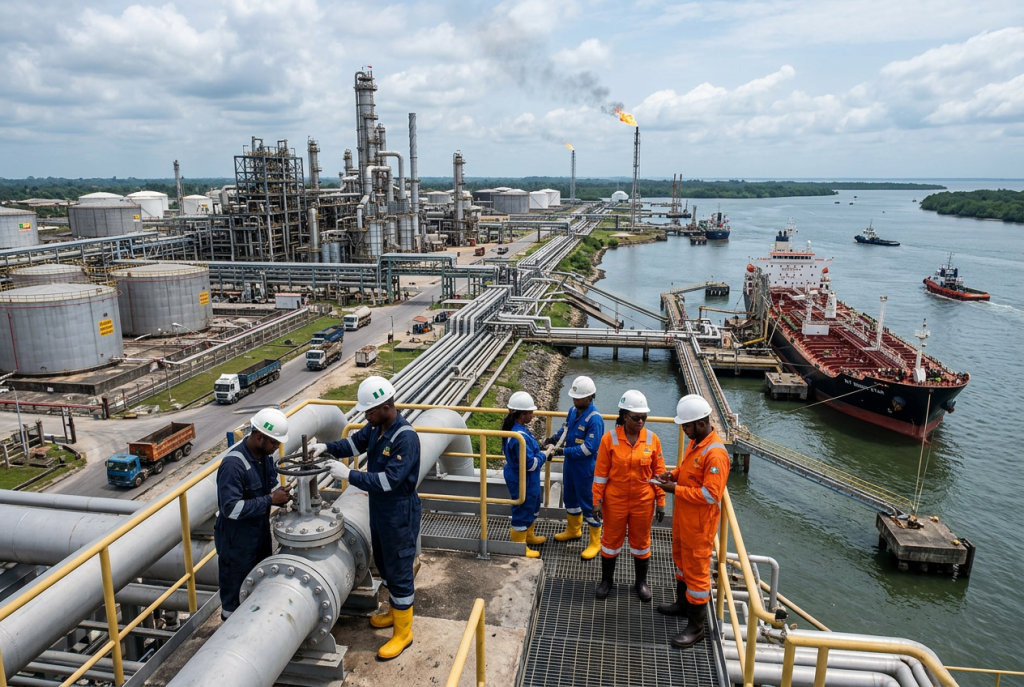
As Africa’s largest oil producer and home to one of the world’s biggest natural gas reserves, the country has long been seen as an energy giant. Yet for decades, crude oil theft, pipeline vandalism, regulatory uncertainty, delayed investments and governance concerns have prevented the sector from reaching its full potential.
Today, however, the conversation appears to be shifting.
The Nigerian National Petroleum Company (NNPC) Limited is pursuing an ambitious reform agenda aimed at transforming the company into a commercially driven energy enterprise capable of attracting global investment while supporting Nigeria’s long-term economic development.
Speaking at the 2025 NOG Energy Week in Abuja, the Group Chief Executive Officer of NNPC Limited, Engr. Bashir Bayo Ojulari, outlined plans to attract US$30 billion in oil and gas investments by 2027 and US$60 billion by 2030.
The targets are ambitious. But beyond the numbers lies a bigger question: Can Nigeria finally create the stable, transparent and investor-friendly environment needed to become Africa’s leading destination for energy investment?
Why Investors Have Been Cautious
Nigeria’s petroleum industry has historically been one of the continent’s most attractive investment destinations. Yet over the years, several structural challenges have weakened investor confidence.
Persistent crude oil theft, pipeline vandalism, project delays, policy uncertainty and governance concerns have made investment decisions increasingly difficult for both local and international energy companies.
The financial impact has been enormous. Billions of naira have been lost to crude theft and attacks on critical infrastructure, reducing production, affecting government revenues and increasing operational risks.
In today’s global energy market, investors no longer assess opportunities based solely on the size of a country’s oil reserves. They also consider regulatory stability, institutional transparency, security, operational efficiency and long-term policy consistency.
For Nigeria to compete effectively, strengthening these fundamentals has become just as important as discovering new oil fields.
Signs That Reforms Are Taking Shape
Recent developments suggest that NNPC is placing greater emphasis on execution rather than promises.
One of the most notable achievements has been improved pipeline security. After years of disruptions caused by vandalism and illegal oil theft, the company recently announced full operational availability across its major crude oil pipeline network.
While sustaining this level of performance remains the bigger challenge, the achievement signals progress in protecting critical national infrastructure and improving operational reliability.
Infrastructure development has also continued across the gas sector.
Projects such as the Ajaokuta-Kaduna-Kano (AKK) Gas Pipeline and the Obiafu-Obrikom-Oben (OB3) pipeline are expected to strengthen domestic gas transportation, improve energy supply for industries and support Nigeria’s broader gas commercialisation strategy.
These projects are more than engineering milestones. They represent long-term investments that could improve industrial productivity, reduce energy shortages and create new economic opportunities across several sectors.
Production Growth Sends Positive Signals
Operational performance remains one of the strongest indicators investors monitor when evaluating energy markets.
NNPC has reported improvements in both crude oil and gas production, with crude output reaching approximately 1.71 million barrels per day, including condensates the highest production level recorded in several years.
Gas production has also increased, reflecting renewed activity across Nigeria’s upstream sector.
Several major projects, including Madu First Oil, Akpo West, the Soku Gas Optimisation Project and the Gbaran Nodal Compression Train, have contributed to improved production capacity.
Although production targets alone cannot transform the industry, consistent operational improvements help build confidence that investments are translating into measurable results.
Governance Is Becoming a Competitive Advantage
Perhaps the most significant aspect of NNPC’s ongoing transformation is its growing emphasis on transparency and corporate governance.
For many years, the company faced criticism over limited public disclosure and concerns surrounding financial accountability.
Recent developments suggest a different direction.
NNPC has strengthened financial reporting, published audited financial statements and held its first-ever Group Earnings Call, providing investors and stakeholders with greater insight into its financial performance.
This shift reflects a broader understanding that governance is no longer simply a compliance requirement, it has become a competitive advantage.
Global investors increasingly evaluate environmental, social and governance (ESG) performance alongside financial returns. Companies that demonstrate accountability, transparency and sound governance are generally better positioned to attract long-term investment.
For a national oil company seeking global partnerships, institutional credibility is becoming just as valuable as production capacity.
Gas Could Shape Nigeria’s Energy Future
While crude oil remains central to Nigeria’s economy, natural gas is emerging as one of the country’s biggest growth opportunities.
Nigeria possesses one of the world’s largest proven natural gas reserves, yet much of this resource has remained underutilised due to infrastructure deficits, limited investment and policy inconsistencies.
Recent reforms aim to unlock that potential.
The continued development of gas infrastructure is expected to expand domestic energy supply, support electricity generation, improve manufacturing competitiveness and reduce dependence on more expensive energy sources.
Gas also occupies an important position within the global energy transition.
Although renewable energy continues to grow, many countries increasingly view natural gas as a transition fuel capable of supporting industrial development while contributing to lower-carbon energy systems.
For Nigeria, expanding gas utilisation could improve energy security while creating opportunities for industrialisation, exports and economic diversification.
However, achieving these outcomes will require sustained investment, efficient project execution and policies that encourage greater private sector participation.
The Road to Becoming an Investment Hub
Nigeria’s ambition to attract billions of dollars in energy investment will depend on far more than announcing ambitious targets.
Investors are looking for consistency.
They want predictable regulations, secure operating environments, efficient institutions and evidence that reforms will outlast changes in political leadership.
The progress recorded over the past year from improved pipeline security and stronger production to greater financial transparency and continued infrastructure development suggests that the foundation for renewed investor confidence is gradually being built.
Yet challenges remain.
Infrastructure gaps, energy financing needs, regulatory implementation and community engagement will continue to shape investor perceptions in the years ahead.
Maintaining reform momentum will therefore be just as important as initiating it.
A Defining Moment for Nigeria’s Energy Sector
Nigeria stands at an important crossroads.
The country possesses the natural resources, technical expertise and market potential needed to become one of Africa’s leading energy investment destinations.
What has often been missing is the institutional consistency required to convert those advantages into sustainable economic growth.
The reforms currently underway at NNPC suggest a recognition that attracting investment requires more than abundant resources. It demands transparency, accountability, operational excellence and long-term policy stability.
Whether Nigeria achieves its investment ambitions will ultimately depend on its ability to sustain these reforms, strengthen investor confidence and deliver measurable results over time.
If that momentum continues, the country’s greatest energy story may no longer be the size of its oil and gas reserves, but its ability to transform those resources into lasting economic prosperity for businesses, communities and future generations.
[give_form id="20698"]