ROSEMARY IMOBHIO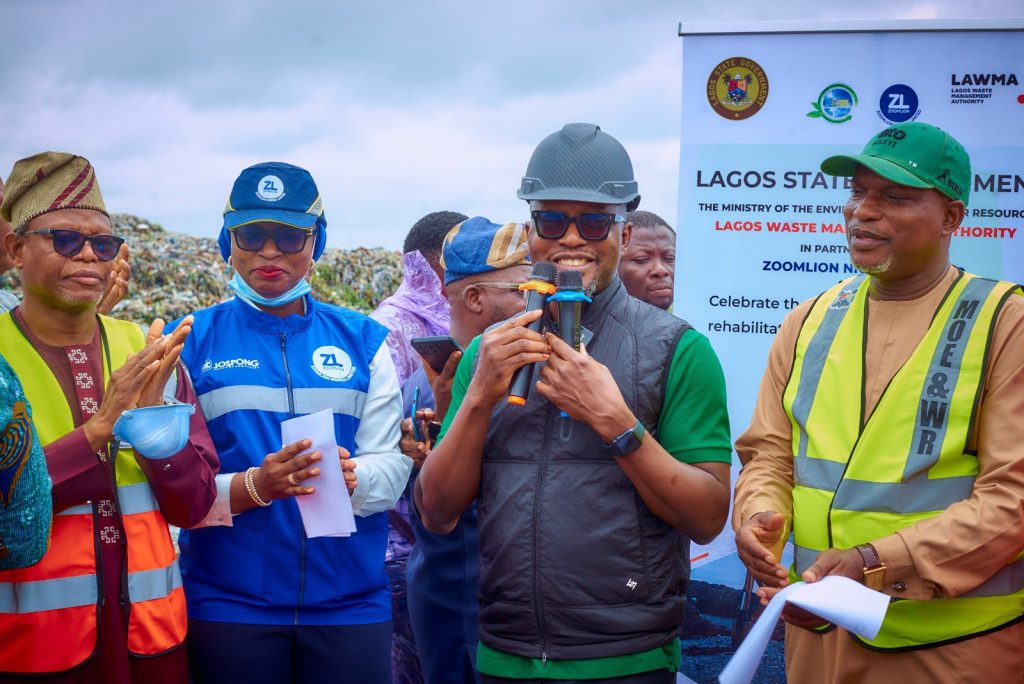
For weeks, Lagos residents watched refuse pile up on roadsides. Private waste operators blamed one culprit: a collapsed access road at the Olusosun disposal site. Therefore, when the Lagos State Government confirmed on Tuesday that the road had finally been rehabilitated, the announcement landed as more than routine infrastructure news. It arrived as a direct answer to a crisis that CSR Reporters had flagged weeks earlier.
In June, our publication reported that a Private Sector Participation operator could not complete its scheduled evacuation runs for a second consecutive month. The operator cited severe congestion at an unnamed dumpsite. Trucks reportedly spent five to six days waiting to offload, and some fell over because of deteriorating ground conditions. Consequently, households across several Lagos communities faced mounting backlogs with no clear timeline for relief.
That congestion has now been traced to the Olusosun facility in Ojota, Lagos’ largest and most heavily used landfill. According to the Lagos Waste Management Authority, prolonged rainfall damaged sections of a route known as Road E. This slowed compactor trucks and created a bottleneck that rippled across the entire collection chain.
A Corporate Response to a Public Problem
LAWMA’s Managing Director, Dr Muyiwa Gbadegesin, disclosed that the agency turned to ZoomLion Nigeria Limited for an emergency intervention. The company rebuilt the 1.2 kilometre road and constructed two engineered tipping platforms. Engineers chose hard rock and laterite for the platforms, materials selected specifically to withstand Lagos’ rainy season. Officials say the work finished in 26 days, five days beyond an initial 21 day target, after crews met subsurface conditions worse than expected.
Because the intervention came under the company’s corporate social responsibility mandate rather than a paid contract, it offers a useful test case. CSR commitments, in cases like this, can be measured against tangible outcomes rather than press statements alone. A repaired road is verifiable. Trucks either move faster or they do not. Residents either see fewer uncollected bins, or they keep waiting.
Gbadegesin also used the event to correct what he called public misunderstanding about the landfill’s future. Contrary to widespread speculation, he said, Olusosun remains open. Instead, the state is gradually winding down active dumping over eighteen months. Transfer loading stations and material recovery facilities will come online during that period, a process meant to reclaim space rather than abandon the site outright.
What the Rehabilitation Changes on the Ground
The immediate effect, according to LAWMA and the Association of Waste Managers of Nigeria, should be shorter queues at the tipping platforms. Turnaround time for PSP trucks should also fall. Since operators can now offload without days-long delays, drivers should return to routine door-to-door collection more consistently. Furthermore, the rehabilitated platforms allow multiple trucks to unload at once. That addresses a specific complaint operators raised repeatedly in recent months.
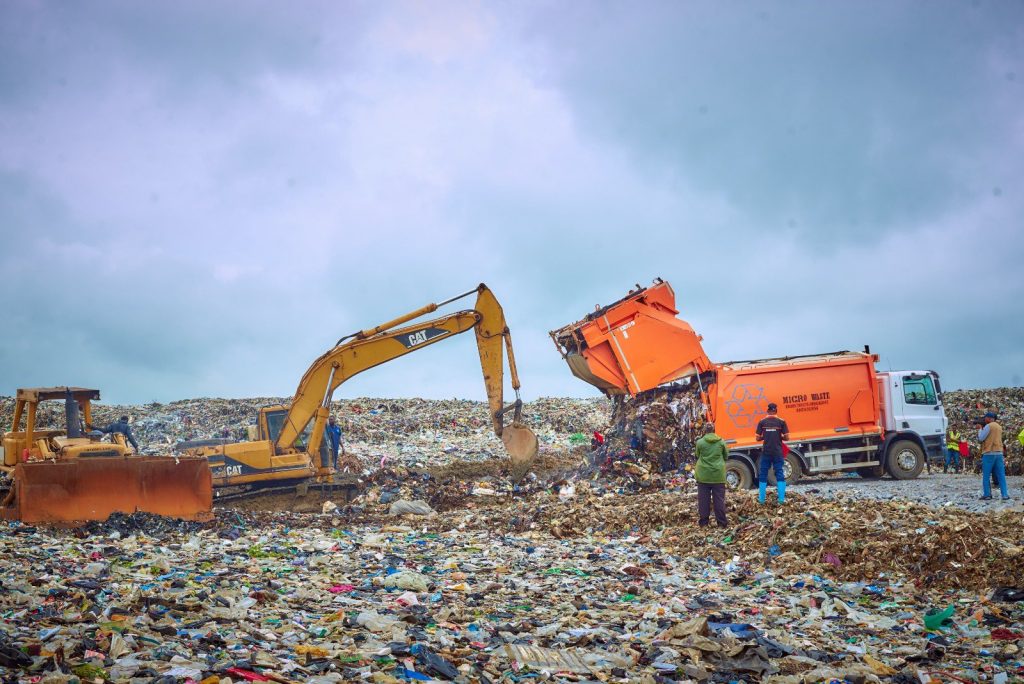
However, a deeper structural question remains only partially resolved. The road fix addresses access, not capacity. Lagos generates an estimated 13,000 tonnes of waste daily. A single access route, however well built, cannot indefinitely absorb growth in that volume without new processing infrastructure behind it.
On that point, LAWMA disclosed that ZoomLion is separately building Transfer Loading Stations at Olusosun and at Solous III. Each station will process 2,500 metric tonnes daily. Material recovery facilities, waste-to-energy plants and biogas projects are also reportedly in development. Officials additionally plan to acquire more compactor trucks over the next three years. Nonetheless, none of these larger facilities operate yet. The road rehabilitation, in that sense, functions as a stopgap rather than a permanent fix.
Why the Timing Matters for Lagos ESG Credibility
This episode illustrates why waste infrastructure sits close to the centre of Lagos’ sustainability ambitions, not at its periphery. A city positioning itself as a hub for climate resilient investment cannot afford recurring breakdowns in something as basic as refuse collection. Such failures stay highly visible to residents. They also draw notice from outside observers assessing governance quality.
The episode touches directly on several Sustainable Development Goals. These include Goal 3 on health and wellbeing, Goal 11 on sustainable cities, and Goal 12 on responsible consumption. Uncollected waste breeds disease vectors and clogs drainage ahead of flooding season. It also undermines any downstream ambition around recycling or the circular economy that Lagos officials frequently reference in public forums.
Meanwhile, private sector operators have consistently argued that dumpsite access, not collection capacity, has been their binding constraint. Their public complaints throughout May and June, which this publication documented, appear to have accelerated attention toward Olusosun. In that sense, the rehabilitation reflects responsiveness as much as routine maintenance.
Accountability Questions That Remain
Even so, several questions deserve continued scrutiny. First, durability matters most. Officials themselves acknowledge that the road’s longevity will depend on ongoing maintenance and stakeholder cooperation, not a single construction event. Second, replication is a fair worry. If similar failures occur at other Lagos dumpsites, residents will reasonably ask whether emergency CSR interventions can substitute for planned, budgeted infrastructure spending indefinitely.
Third, and perhaps most importantly, the underlying rainfall damage deserves closer examination. Roads built for a full rainy season should not fail so severely that trucks fall over. A fuller public account of why the original infrastructure proved inadequate would strengthen confidence in whatever replaces it.
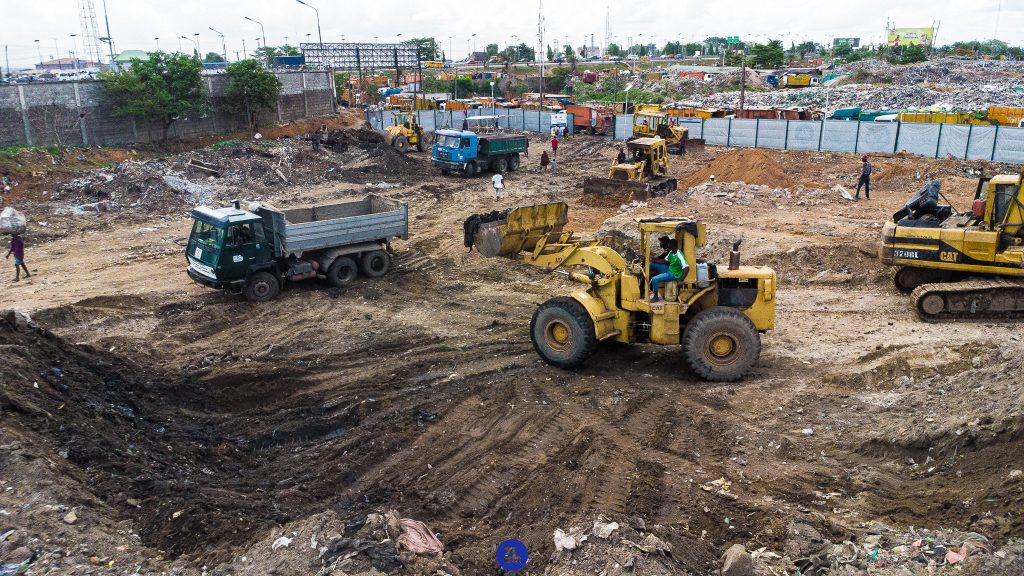
For now, PSP operators and residents in previously affected communities have reason for cautious optimism. Still, this newsroom will keep monitoring collection patterns in the coming weeks. The real test is whether the Olusosun fix produces consistent service, or whether Lagos simply resets a cycle that has repeated itself before in the city’s waste management history.
Voices From the Ground
At the commissioning, at least one waste truck driver welcomed the repair directly. He said the rebuilt road and platforms would cut turnaround time and make daily operations safer for drivers and sanitation workers alike. That frontline testimony matters. Policy announcements often arrive dressed in technical language, yet the people who queue at the tipping platforms every day offer the clearest signal of whether an intervention actually works.
Similarly, the Association of Waste Managers of Nigeria welcomed the rehabilitation as evidence that public-private collaboration can move quickly when pressure builds. Its Lagos leadership has, for months, pressed authorities for exactly this kind of access fix. Consequently, the association now faces its own accountability moment: monitoring whether member operators actually resume full collection schedules across the communities that reported disruptions earlier this year.
Ultimately, the Olusosun intervention offers Lagos a template worth studying, not a finished solution. Corporate social responsibility can plainly deliver fast, visible fixes when a state agency and a private partner align quickly around a defined problem. Whether that model scales into the sustained, budgeted infrastructure Lagos needs for a growing megacity remains the more consequential question, and one CSR Reporters intends to keep asking.
Follow CSR Reporters for timely news and expert insights on CSR, sustainability, climate policy and ESG developments influencing businesses across Africa. Visit our website to stay ahead of the latest trends.
[give_form id="20698"]