CSR Personality of the Week: How Ayodeji Lawal Is Turning Sustainability Into Measurable Outcomes at Access Holdings
 csrreporters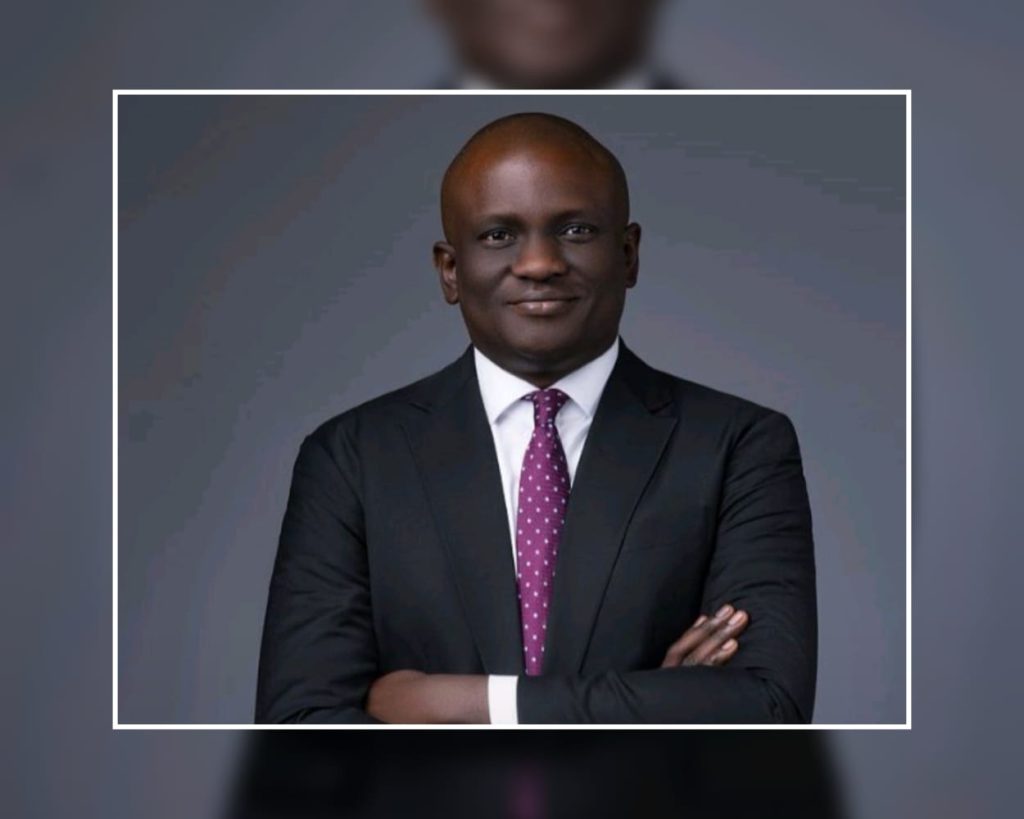
Sustainability in Nigerian banking often gets reduced to glossy reports and big numbers. However, for Ayodeji Lawal, Head of Sustainability at Access Holdings, the real work happens long before any report reaches print. He does not treat disclosure as an annual event. Instead, he approaches it as a continuous discipline.
This shapes how one of Africa’s largest financial groups allocates capital, manages risk and engages communities. Consequently, his portfolio sits close to the center of a strategy. That strategy increasingly defines how the bank presents itself to regulators, investors and the public.
Lawal’s role places him at the intersection of finance and impact. Access Holdings recently published its Sustainability Report for the year ended December 2025, and the document carries his fingerprints throughout. Therefore, understanding his work means understanding what that report actually says.
Ayodeji Lawal has become a familiar figure within the sustainability profession . He appears at the events where Access Holdings collects its awards and unveils its numbers. Moreover, his presence at these moments signals something important. It shows how the bank now separates genuine sustainability practice from public relations.
From Business Operations to Sustainability Strategy
Lawal’s career at Access has moved through several functions before settling into sustainability leadership. He describes himself professionally as a senior business management executive with more than nineteen years of experience. In addition, public profile records point to earlier spells in strategic procurement and business support within the Access Group. That background gave him early exposure to how a large financial institution allocates resources across markets.
That grounding in operations appears to matter now. Sustainability work inside a banking group rarely stays confined to writing policy documents. Instead, it requires coordinating between finance teams, risk officers, communications departments and country subsidiaries. Each of those units often operates under different regulatory regimes. Consequently, someone who already understands how the institution allocates resources internally sits in a strong position. He can embed sustainability targets into everyday decisions rather than treating them as an afterthought.
Lawal also completed a leadership programme at London Business School focused on leading emerging teams. Furthermore, that training aligns with the scale of his current mandate. His mandate spans a banking group with operations across several African countries plus the United Kingdom.
Turning Disclosure Into Measurable Outcomes
The scale of the numbers behind Access Holdings’ latest report helps explain why sustainability now sits close to the center of strategy. Access Holdings published the report on the Nigerian Exchange on August 3, 2026. It shows a green asset portfolio of ₦92.14 billion. That figure has grown steadily, rising from ₦22 billion in 2021 to ₦72.32 billion in 2024. The trend points to a sustained push rather than a one-off achievement.
Operational emissions tell a similar story. The group reported a 28.47 percent reduction in operational greenhouse gas emissions, measured against its 2022 baseline. Meanwhile, the report also highlighted expanded access to finance for roughly 2.53 million low income individuals. That figure speaks directly to financial inclusion rather than environmental metrics alone.
Importantly, the group prepared the report using IFRS S1 and IFRS S2 as its primary framework. GRI and SASB standards served as complementary references. In addition, the report was independently assured using selected disclosures under ISAE 3000. That step adds a layer of external scrutiny that self-reported figures often lack. A sustainability function rarely pursues that kind of assurance without someone internally pushing for rigor over convenience. Lawal’s role sits precisely at that pressure point, where ambition has to survive contact with auditors.
Recognition on a Global Stage

Banking and Mortgages), Access Bank UK; Oyebode Omotoye, Unit Head, SME
Banking, Product Team, Access Bank; Esther Graham, Programme Manager,
Sustainability, Access Holdings; Eric Frimpong, Head, Marketing and
Communications, Access Bank Ghana; Ayodeji Lawal, Head, Sustainability,
Access Holdings; Ama Sarpong Bawuah, Board Chair, Access Bank Ghana;
Pearl Nkrumah, Country Managing Director, Access Bank Ghana; Dr. Iheanyi
Nwogu, Country Managing Director, Access Bank Zambia, Ginika Onyechi,
Deputy Head, Commercial Banking (Corporates), Access Bank UK, after
winning 16 awards at the Euromoney Awards for Excellence in London,
United Kingdom…Thursday night.
Lawal’s work has not gone unnoticed beyond Nigeria’s borders. In July 2026, Access Bank secured sixteen honours at the Euromoney Awards for Excellence in London. That tally was unprecedented for an African financial institution. Lawal appeared among the delegation that received the awards. He stood alongside colleagues from the bank’s UK, Ghana and Zambia operations.
Among the honours, Access Bank Africa received the best bank for corporate responsibility in 2026. The award body said the recognition reflects a framework built around four pillars, namely health, education, entrepreneurship and the environment. Furthermore, the citation pointed to the bank’s healthcare interventions. Those programmes reached more than 800,000 people in 2024, addressing malaria, HIV, cancer and other conditions.
Consequently, the award reinforced what the sustainability report already suggested. Access Holdings has moved past treating corporate responsibility as scattered goodwill gestures. Instead, the bank increasingly frames these efforts as core business strategy. Lawal’s team carries much of the responsibility for keeping that framing honest.
Why He Matters Right Now
Nigeria’s sustainability conversation increasingly rewards visibility. Executives who speak at conferences and appear in glossy annual reports often receive most of the credit. However, harder work happens away from the stage. Building assurance processes, tracking emissions baselines and expanding access to finance for millions of low income customers rarely happens in public view.
Lawal represents that less visible layer of sustainability leadership. His mandate requires him to translate boardroom commitments into figures that external auditors can verify. That is a demanding standard, and many corporate sustainability functions in Nigeria still avoid it. Therefore, his work matters less because of any single headline. It matters more because of what it protects against, namely the gap between what companies claim and what they can prove.
Access Holdings continues expanding its green asset portfolio and pursuing further emissions reductions. As a result, Lawal’s function will likely grow rather than shrink. That trajectory, combined with the scrutiny built into his current reporting framework, explains why Ayodeji Lawal is this week’s CSR Personality of the Week.
[give_form id="20698"]