


 ROSEMARY IMOBHIO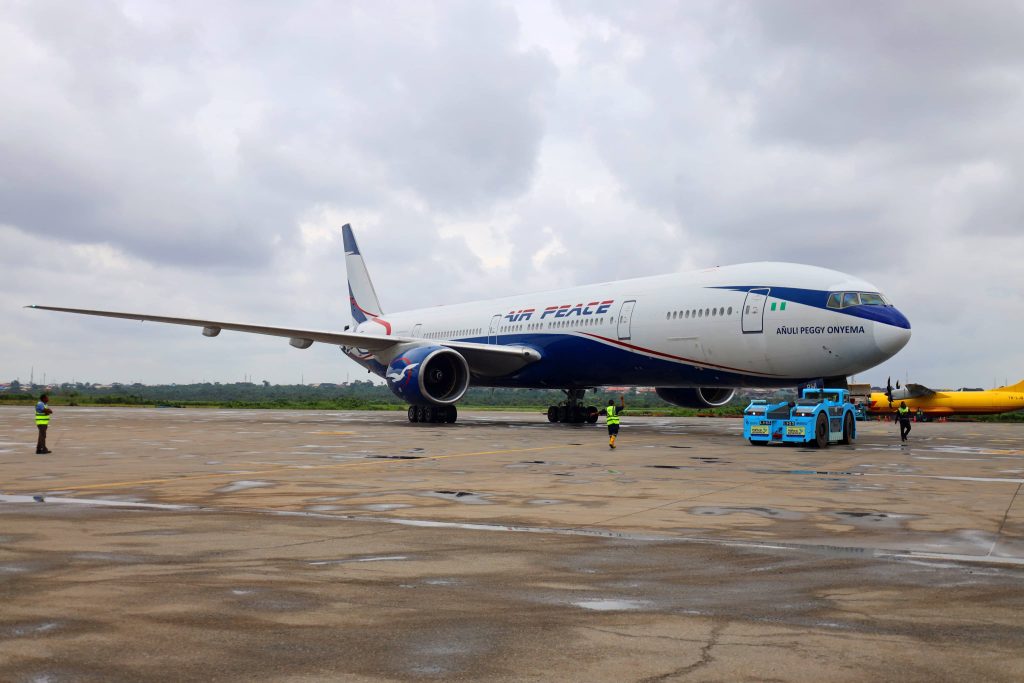
Air Peace operations were disrupted in Lagos and Abuja on Tuesday after three aviation unions began picketing the airline. The action stranded passengers and reopened questions about workers’ rights and financial accountability in Nigeria’s aviation sector.
The National Union of Air Transport Employees (NUATE), the Air Transport Services Senior Staff Association of Nigeria (ATSSSAN) and the National Association of Aircraft Pilots and Engineers (NAAPE) led the action. The Nigeria Labour Congress (NLC) and the Trade Union Congress (TUC) backed the unions. They barricaded terminal entrances at the Murtala Muhammed International Airport in Lagos and the Nnamdi Azikiwe International Airport in Abuja from the early hours.
Consequently, Air Peace confirmed that flights across its network were affected. Other airlines operating from the same terminals also reported delays. As a result, hundreds of travellers were left waiting for updates. Some flights were cancelled outright, while others were rescheduled throughout the day.
Why Labour Unions Took Action on Air Peace
According to the unions, Tuesday’s picketing followed weeks of unresolved grievances. It also followed a formal notice issued on August 4. Then, the unions warned that they were prepared to strike “at any time without further notice.”
Rather than move immediately to a full shutdown, the unions said they granted airlines a further three-day ultimatum. They described this as a final opportunity for dialogue before industrial action began.
In a joint statement, the unions alleged that Air Peace had continued to make it difficult for staff to join trade unions freely. They said this continued despite repeated efforts to secure recognition of that right. Additionally, they alleged that the airline had not remitted the statutory five per cent Ticket Sales Charge owed to the Nigerian Civil Aviation Authority.
Speaking on behalf of ATSSSAN, General Secretary Frances Akinjole said the union had exercised restraint for as long as possible. He added that Air Peace had been singled out because it was, in his words, “the most stubborn.”
The Dispute Over the Ticket Sales Charge
The Ticket Sales Charge, commonly referred to as the TSC, is a five per cent statutory levy. It is built into the cost of commercial airline tickets in Nigeria. Airlines collect the charge directly from passengers. They are required to remit it to the NCAA. The Authority then shares the proceeds among aviation agencies.
These agencies are responsible for safety oversight, regulation and industry infrastructure. Because the charge funds their operations, unions argue that delayed or withheld remittances can affect regulatory capacity. They also argue that such delays can affect the implementation of collective bargaining agreements already negotiated for aviation workers.
Reports circulating online have referenced a specific outstanding figure running into billions of naira. However, the NCAA, Air Peace and other official sources have not independently confirmed the amount as being solely attributable to the airline.
The dispute also involves multiple domestic carriers and the broader Airline Operators of Nigeria. Therefore, any specific naira figure tied to a single airline should be treated as unverified for now.
Workers’ Rights at the Centre of the Dispute
Freedom of association sits at the heart of the disagreement. The unions maintain that some airline employees have been discouraged from joining unions of their choice. They say this touches on protections guaranteed under Section 40 of Nigeria’s 1999 Constitution.
However, a group identifying itself as Air Peace workers pushed back publicly on Tuesday. They said the picketing did not reflect their position. A spokesman for the group, Comrade Aminu Suleiman, said staff had always had a voice in how the company was run. He pointed to the company’s twelve years of operation.
He also argued that union membership remained voluntary under both the constitution and the TUC’s own rules. This split between the unions’ allegations and some Air Peace staff shows how contested representation has become. Both sides, however, invoke the same constitutional protections to support opposing conclusions.
NCAA Calls for Dialogue
The NCAA responded on Tuesday by appealing to the unions to suspend the action and return to negotiations. In a statement signed by Director General Captain Chris Najomo, the Authority said it was aware of the disruption. It also acknowledged the effect on passengers.
The NCAA urged all parties to “sheathe their swords” pending the return of the Minister of Aviation and Aerospace Development, Festus Keyamo. The Authority said the minister had been working to resolve the underlying issues.
The NCAA also disclosed that a meeting convened by the minister the previous week had failed to hold. It said airline operators did not attend the meeting. Importantly, the Authority reassured the travelling public that flight safety had not been compromised. It said it continued to exercise its statutory oversight responsibilities throughout the disruption.
For its part, Air Peace confirmed that its operations had been temporarily affected. The airline said terminal entrances had been barricaded. Air Peace described the situation as beyond its control and apologised to passengers. It also said it was contacting affected travellers with updates as the day progressed.
Passengers Bear the Immediate Cost
Meanwhile, passengers at both airports bore the brunt of the standoff. Some arrived at scheduled departure times only to find gates locked. Others faced long waits with limited communication from ground staff. The situation was further complicated by the ripple effect on connecting flights to other airports.
Although the NCAA and Air Peace reassured travellers that normal operations would resume, the disruption highlighted a wider problem. Disputes between employers and organised labour can quickly spill over onto people with no direct stake in the underlying disagreement.
What the Dispute Means for Corporate Responsibility
Beyond the immediate inconvenience to travellers, Tuesday’s shutdown raises broader questions about corporate responsibility. These questions extend beyond Air Peace alone. Genuine freedom of association, transparent handling of statutory charges and responsive engagement with regulators all matter.
They are not simply legal obligations. They also form part of how companies demonstrate accountability to workers, regulators and the public. When remittance disputes drag on despite repeated warnings, questions about stakeholder engagement naturally emerge. The collapse of a scheduled ministerial meeting adds another layer to the dispute.
At the same time, some workers have rejected the unions’ characterisation of the dispute. Their position shows that labour representation questions in Nigeria’s aviation sector are not always straightforward.
Ultimately, the episode illustrates a wider truth about corporate and regulatory disputes. When negotiations between companies, unions and government bodies break down, ordinary passengers often absorb the consequences first. The underlying issues, however, can remain unresolved long after the immediate disruption ends.
[give_form id="20698"]



1 thought on “Air Peace Grounded: Unions Strike Over Pay, Rights”